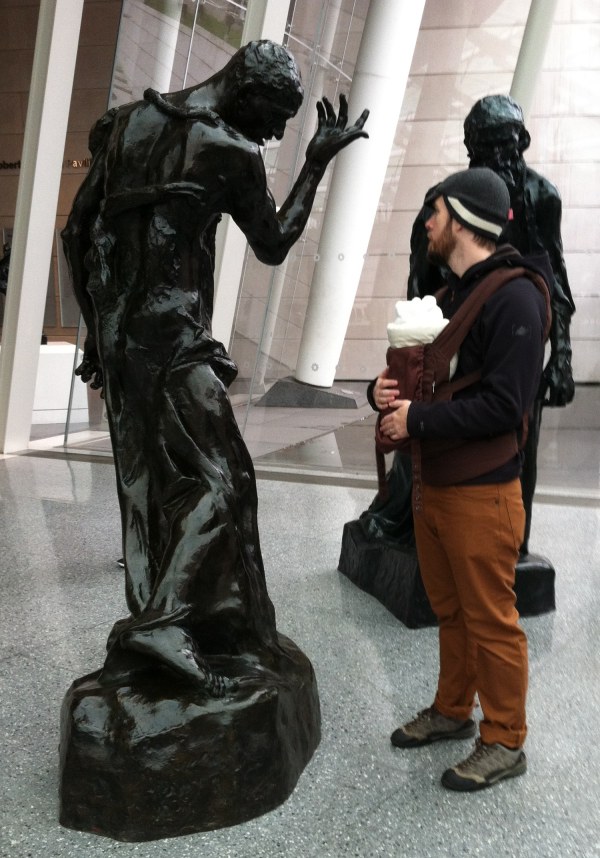
“THEY ARE VOLUNTARILY BOUND TO THE SAME SACRIFICE, but each of them plays the role suited to his individuality, his age and position,” Auguste Rodin said about the heroic citizens of Calais; four of his six bronzes of the “Burghers of Calais” are currently on view in the Brooklyn Museum courtyard. The work was commissioned in 1875 by the Calais town council to commemorate events more than 500 years in the past (see Backstory, below), and Rodin’s winning proposal was solidly within the academic tradition of French Beaux Arts. Also, the story goes, he promised to deliver six statues for the price of one. But, as anyone on any side of the Atlantic Yards development can attest, what you think is approved is not necessarily how it turns out.
As delivered, the work was a major break with traditional Beaux-Arts monumental statuary. (Just a short walk from the Brooklyn Museum, an example of neo-classical Beaux-Arts style sits atop Grand Army Plaza’s Soldiers’ and Sailors’ Arch, complete with the pyramid-shaped arrangement of figures led by the allegorical figure of Columbia who represented the Nation.) In developing his work, Rodin drew on the account of a contemporary of the historic events in Calais, Jean Froissart, and learned the personal histories and social background of the six men who volunteered as hostages to save their city. Rodin worked from carefully chosen live models – including a descendant of one of the six heroes – and then deliberately oversized the hands and feet to make gestures and stance more expressive. These figures show the suffering, humiliation and humanity of their situation. Greatness has been thrust upon them, and it is agonizing. [Read more…]
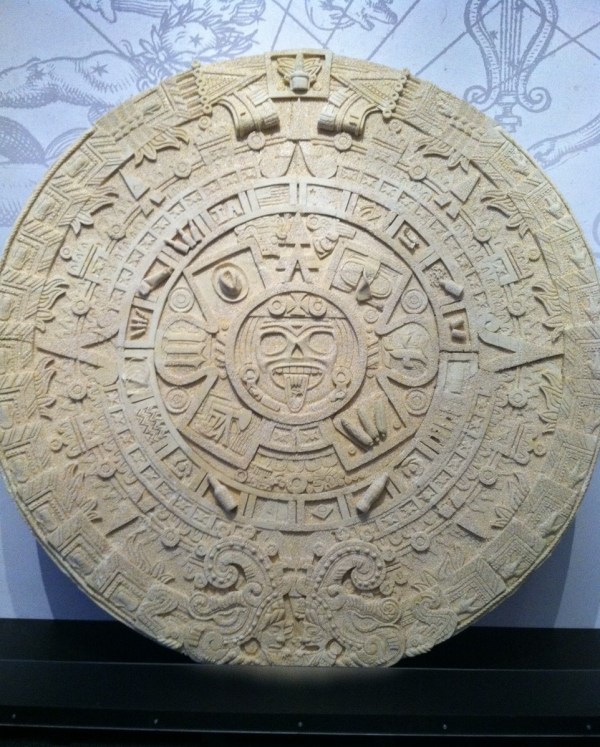 IT’S A SHOW-STOPPING GRAND FINALE TO BROOKLYN MUSEUM’S GREAT-HALL EXHIBIT





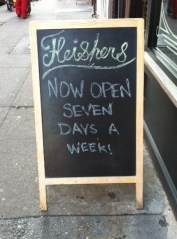 NEWSFLASH! Expanded openings to seven days at
  I HAD A PREPAID TICKET TO SEE THE NEW DOCUMENTARY MY BROOKLYN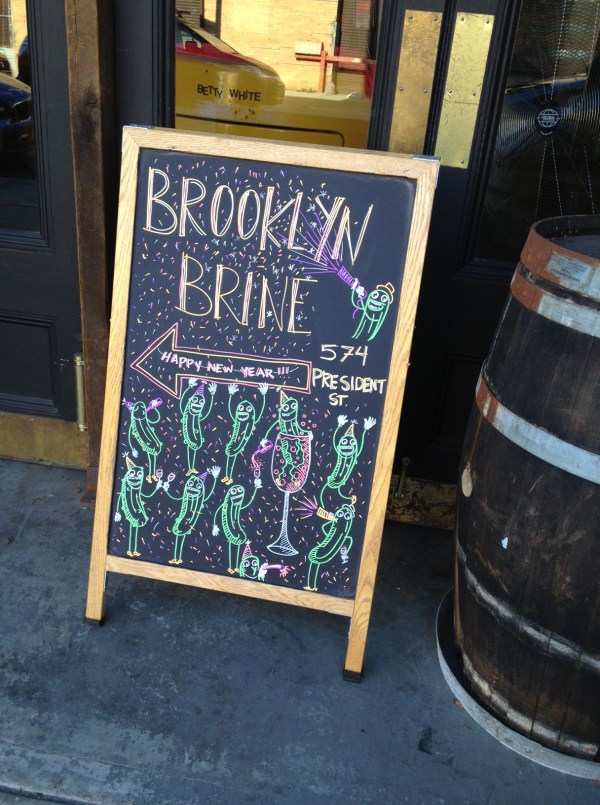










 Brooklyn Artisan
You must be logged in to post a comment.