12 DAYS OF BROOKLYN: Diversity Is in Our Cultural DNA

Day Five  12 Views of Brooklyn

Peace Detail from a mural in Park Slope, boy and girl

dec10THE GREAT 20TH CENTURY ANTHROPOLOGIST DR. MARGARET MEAD observed in one of her magazine columns in the late 1960s that the only true citizens of a culture are the children born into it, not the adults who have created it. You have only to see a three year old with an iPad to get her point. The self-consciousness of the peace movement of the 60s, of affirmative action, of busing and political correctness have made a difference. Out of that tradition comes this panel of a larger mural. The little girl has a peace symbol on her shirt; the little boy’s shirt says, “Shalom. Salaam. Adios” – all of them versions of Peace and go with God. Society’s problems of racial and religious intolerance have not been solved, but they’ve certainly been  shrunk. The signature for the artist (s) for this multi-panel mural in Park Slope, on 8th Street and the corner of 6th Avenue, is not on the wall; the message is everything. (More from this mural in Who’s Who.)

The Red Terroir

Day Four 12 Sips of Brooklyn
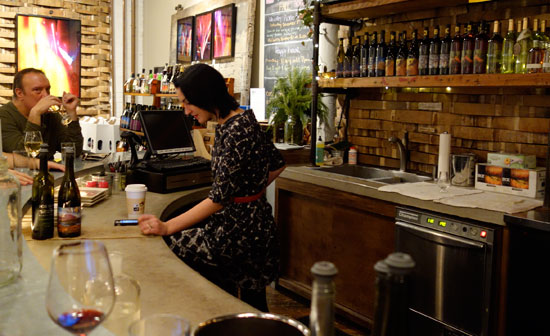
The Brooklyn Oenology tasting room.

The Brooklyn Oenology tasting room.

dec9HERE IN CONCRETE-LANDSCAPED NEW YORK, we tend to think of wine as a product of elsewhere;  foreign lands with exotic cultures and languages, like California or France. But in the past four years, two wineries have sprung up in Brooklyn alone: Red Hook Winery (established 2008) and Brooklyn Winery (2010), committed to actual production within the borough limits. Another approach is that taken by Brooklyn Oenology, which focuses on regional grapes and produces its wines outside the city. But it has set up a tasting room in Williamsburg to help promote its production.

Wine has a long history of being made in one place and consumed in anotherremember all those ancient amphorae dredged up from the bottom of the Mediterranean? But local production has its merits. It is one of those tropes of the wine culture that to be in the know, one has to taste those wines that “never get shipped outside the little town in [insert name of region here] where they are made,” with the implication that the locals snare the best for themselves, leaving the rest of us to sip the leavings from the barrels. As well, in our increasingly environmentally aware culture, many question whether it is a good idea to be shipping quite so many goods, including wine bottles, thousands of miles, burning fossil fuels and polluting the planet.

When the French use the term terroir to refer to the effect of a geographical region on its agricultural products, they sometimes elevate that to a mythical level. But they are on to something. The number of steps in getting a wine from a little vineyard in Europe to our dinner table can appear daunting. Very different from the winemaker leaning over and drawing off a bottle for you from the barrel.

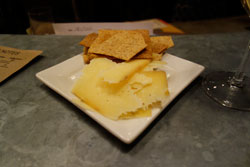
Cheese pairing at Brooklyn Oenology

Cheese pairing at Brooklyn Oenology

A good place to begin to sample the local terroir is the Brooklyn Oenology tasting room. They have a nice selection of wines they are making from New York State grapes. They have three reds currently, with two 2006 vintages (unlike the other Brooklyn wineries, which haven’t been around long enough to actually have wines more than a couple of years old).

  • 2006 Merlot: 93% Merlot with 5% Cabernet Sauvignon and 2% Petit Verdot (all grapes from Long Island’s North Fork).
  • 2008 Motley Cru: 40% Petit Verdot, 37% Cabernet Sauvignon,18% Syrah, and 5% Merlot (all North Fork grapes, as well).
  • 2006 Social Club Red: a blend of 62% Merlot, 26% Cabernet Franc, 8% Cabernet Sauvignon, 3% Malbec, 2% Petit Verdot, 1% Syrah. I would categorize this last as outside the terroir as 2/3 of the grapes are from the Finger Lakes region and hence had to cross bridges to get here.

The staff at the tasting room are helpful and friendly, there is a variety of regionally sourced cheeses and charcuterie on the menu, and the facility hosts a number of events including movie nights and a happy hour on weeknights before 7 pm that offers two glasses of wine for the price of one.

We’ve talked about Brooklyn Winery elsewhere, and they have a nice selection of reds, including the 2010 North Fork Blend (81% Merlot and 19% Cabernet Franc), which we’ll be saving for our Christmas table. The winery encourages you to bring your own growler so you can enjoy that “out-of-barrel” experience directly.

These Red Hook Winery bottles at the Brooklyn Wine Exchange survived Sandy. Collector's items?

These Red Hook Winery bottles at the Brooklyn Wine Exchange survived Sandy. Collector’s items?

The Red Hook winery was badly damaged during Sandy and is currently offering “survival packs” of their wine in an effort to rebuild. Their wines are also available at the Brooklyn Wine Exchange on Court Street.

And some time soon, perhaps some wine connoisseur will lean over his dinner table to whisper of a wine bottle he snagged “that, you know, never even gets across the BQE.”

Postscript: Noticed on an old Brooklyn Historical Society blog post that December 7 th was the anniversary of the repeal of Prohibition. That reminded me that although we now welcome the new winemakers to Brooklyn, we are probably far from the high point of Brooklyn winemaking. Many immigrant families, particularly from Italy, were used to making wines. During Prohibition, thousands of personal winemaking operations went on in the borough, taking advantage of a loophole that allowed manufacture for personal or religious consumption. The grape consumption in the borough must have been truly spectacular through the 1920s and early 1930s.

Brooklyn Oenology
209 Wythe Avenue, Williamsburg
718-599-1259

Brooklyn Winery
213 North 8th Street, Williamsburg
347-763-1506

Red Hook Winery
175 – 204 Van Dyke Street, Red Hook
347-689-2432

Brooklyn Wine Exchange
138 Court Street, Cobble Hill
718-855-9463

Photographs by Basia Hellwig. Date stamp typographic design by Joy Makon Design. The font is Cochin, by Georges Peignot, Linotype, 1912.

The New Artisan Butchers

Day Four 12 Tastes of Brooklyn
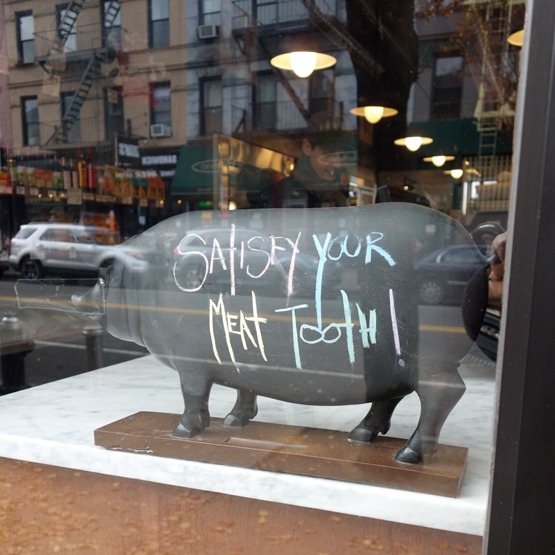
Window at Fleisher's Grass-fed and Organic Meats

Window at Fleisher’s Grass-fed and Organic Meats

dec9IT’S BEEN A LONG TIME SINCE EVERY NEIGHBORHOOD in the city had its own butcher—someone who took a whole animal carcass (or even slaughtered the animal) and then dressed and cut it into sellable meat. By the early 1960s, meat was being packed and boxed in the Midwest, for handy delivery to supermarkets in plastic wrap. (See Robin Shulman’s Eat the City for more about the fascinating history of meat production in New York City.) Some butchers have hung on in the borough, of course—places like Staubitz Market in Carroll Gardens since 1917, and Paisanos Meat Market in Park Slope, established in 1960.

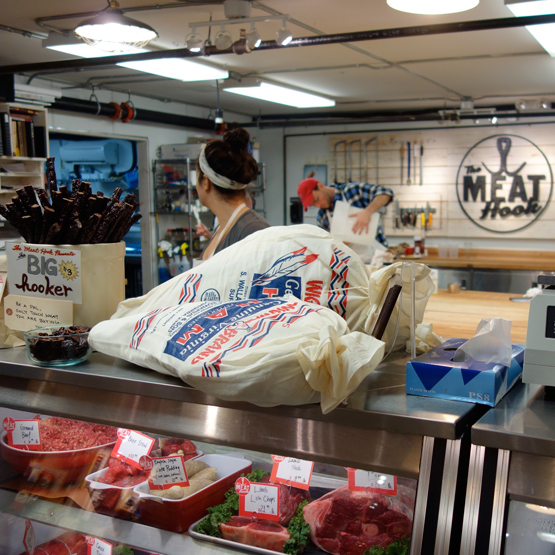
The meat counter at The Meat Hook, where you can see butchers dressing the meat.

The meat counter at The Meat Hook, where you can see butchers dressing the meat just behind.

But in the last five years or so, new artisan butchers have been popping up all over it seems—Fleisher’s, originally in Kingston, NY, now in Park Slope, too; Marlow & Daughters, The Meat Hook. For these butchers, the artisan label is well earned: This is handcrafted meat, using time-honored skills that take a lot of practice to do well. They get grass-fed and pastured whole animals from small, local farms (even a New York City farm, in the case of pigs from Queens County Farm Museum) and are careful not to waste any part, from nose to tail. They are all active in training and apprenticing new butchers—and educating the public, whether in an extensive professional program  or individual classes. Tom Mylan, of The Meat Hook (and before that, of Marlow & Daughters), apparently spent a year sleeping at the home of Jessica and Joshua Applestone, owners of Fleisher’s, in Kingston, as he apprenticed with Josh. At The Meat Hook, we met a young woman butcher apprentice who told us her grandfather had been a butcher.

meat-counter-at-fleishers

One of two meat counters at Fleisher’s, in Park Slope

Handcrafted meat will cost 15 percent more a pound, but the customer gets something  for that: meat from a sustainable source, advice on cuts that work best for different dishes—or how to cook more inexpensive cuts, and the exact cut you need, trimmed the way you want it.

If you know you’ll need a particular cut of meat for a particular day, do call ahead. Holiday orders, especially, will need to be made at least a week ahead, to be safe.

Fleisher’s Grass-fed and Organic Meats
192 Fifth Avenue, Park Slope
718-398-6666
Holiday order deadline: “as soon as possible, since things may go”
Special items: standing rib roast, rack of lamb, goose, duck, plus “all your other holiday favorites”

Marlow & Daughters
95 Broadway, Williamsburg
718-388-5700
Holiday order deadline: at least a week ahead; they may be able to do something with less notice, but no guarantee
Special items: local NY goose, pheasant, turkey (must be preordered); dry aged beef; house-made foie gras terrines

The Meat Hook
100 Frost Street, Williamsburg
718-349-5033
Holiday order deadline: Sunday, December 16
Special items: rib roast, rack of lamb, goose, guinea hen, capon, Muscovy duck, broad-breasted white turkeys, whole rabbit

Paisanos Meat Market
162 Smith Street, Cobble Hill
718-855-2641

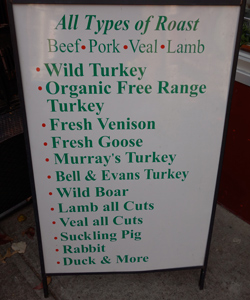
Paisanos Meat Market sign outside store advertises what's available.

Staubitz Market
222 Court Street, Carroll Gardens
718-624-0014

Sidewalk chalkboard outside Staubitz.

Photographs by Basia Hellwig. Date stamp typographic design by Joy Makon Design. The font is Cochin, by Georges Peignot, Linotype, 1912.

12 DAYS OF BROOKLYN: Families in the Winter Wonderland

Day Four  12 Views of Brooklyn
Painting by Ella Yang; see Who's Who

Painting by Ella Yang; see Who’s Who

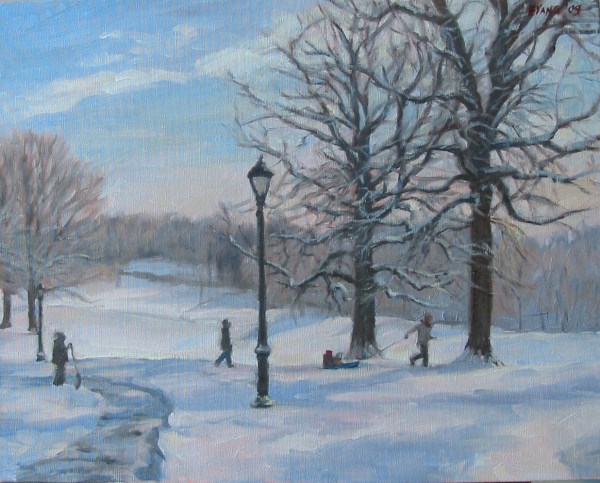
BROOKLYN CHILDREN AND GROWNUPS are blessed to be able to play in beloved Prospect Park. The 585 acres include Brooklyn’s only lake, the lovely Lullwater. In 1861, after Frederick Law Olmsted and Calvert Vaux had practiced up on Central Park on Manhattan, the great design team moved on to Brooklyn to start work on their masterpiece. There’s plenty of credit to go around,  but some say the true father of the park was James S. T. Stanahan, city parks commission from 1860 to 1885, who championed its creation and expansion. (Stanahan also favored the merger into New York City, which some grumblers still say was the very, very worst possible thing to happen to Brooklyn – until the Dodgers left town, that is.) This snow scene, like yesterday’s, dates from the spectacular snowfall of 2009. The artist who captured it, Ella Yang, explains, “We finally had enough snow to transform Prospect Park into a winter playground. I was taking a somewhat slippery walk through the Park when I ran across this family heading home after an afternoon of sledding. The sun was low and threw pinks, ochres and purples across the different snowy surfaces. Great fun to paint!”

Dreams of Egg Creams

Day Three 12 Sips of Brooklyn
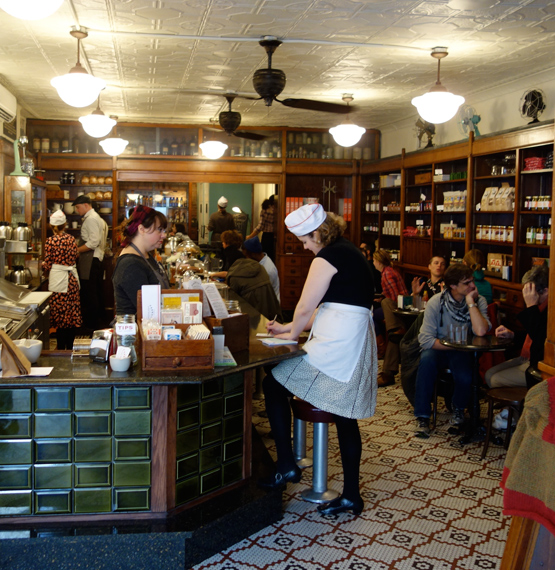
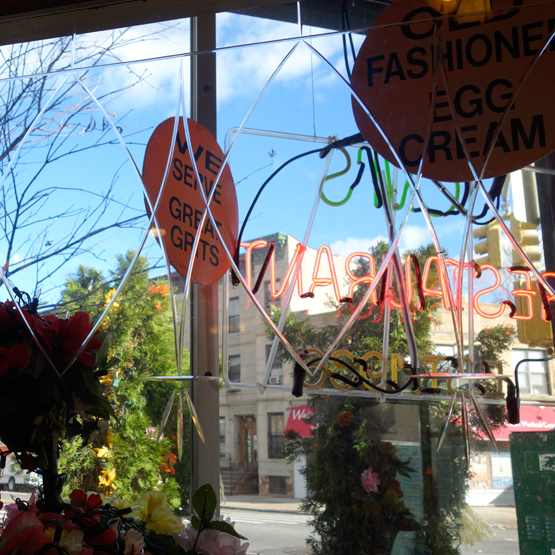
Brooklyn Farmacy, located in a former pharmacy/soda fountain that had been shuttered for decades, is a lovely throwback. It hits the right notes, with attention to detail, and use of authentic materials and techniques. This is not Disney, but a return to something real and evocative of old Brooklyn.

Brooklyn Farmacy, located in a former pharmacy/soda fountain shuttered for decades, is a lovely
throwback. It hits the right notes, with attention to detail and use of authentic materials
and techniques. This is not Disney, but a return to something real and evocative of old Brooklyn.

dec8

THE SCENE: A QUIET NIGHT ON A BATTLEFIELD half a globe away, a harmonica warbles mournfully. The hard-bitten combat veteran turns to the embedded reporter: “What do you miss most from home, Brooklyn?” “Sarge, when I get stateside, I’m gonna grab me a girl and my dog and get the biggest egg cream in town.” Well, maybe it didn’t go quite like that, but Phil Scott’s essay of return from Afghanistan nails that sense of longing for a Brooklyn of dream and legend. The boisterous city of today jostles with an older Brooklyn of memory that breaks through when you least expect.

A fair chunk of my childhood was spent as an urchin roaming the city on 15 cent subway tokens bought with nickels scrounged from pay phones. I often sojourned in Brooklyn, so when I started to work and play here as an adult, eventually came a hunt for the drink of my childhood, the ambrosia, the very essence of Kings County—the chocolate egg cream.

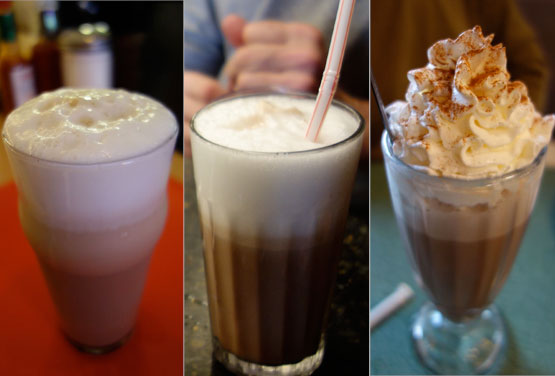
Egg creams, from left: Hinsch's, Brooklyn Farmacy, Tom's Restaurant

Egg creams, from left: Hinsch’s, Brooklyn Farmacy, Tom’s Restaurant

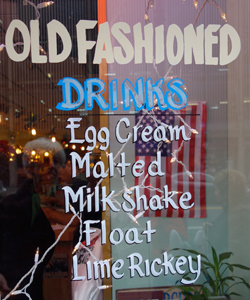
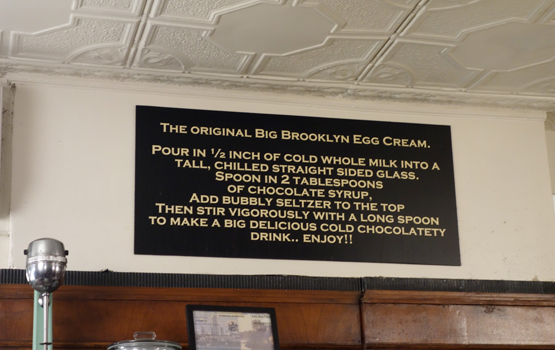
Craft beers and pour-over coffees are fine beverages but are essentially imports and upstarts; for artisanal beverages, the granddaddy has to be the egg cream. Its origin is shrouded in legend and many lay claim to patrimony, but no one doubts its Brooklyn DNA (a straightforward description is found in Fix the Pumps by Darcy O’Neil, a history of the soda fountain). A simple drink which contains neither egg nor cream, it is long on seltzer (cheap) and parsimonious in milk and chocolate syrup (costly), suited to the working class city of the early 20th century. The craft is in the construction, detailed in this post by Jay Keller. Making an egg cream is testimony to a time when soda jerk was a job and required more skill than pushing a button to dispense prepackaged milk shake. The foamy head that is the glory of the egg cream is achieved with application of technique with spigot and spoon.

250-phil-brooklyn-farmacy

Phil heads into Brooklyn Farmacy in Carroll Gardens to try his first egg cream.

So, this fall I took up the hunt to find my dream egg cream. First stop was Brooklyn Farmacy, a gem of an eating place at the corner of Henry and Sackett in Carroll Gardens. The tin ceiling and the wooden cabinetry are straight from the early 20th century. The store, an old pharmacy, was closed and left virtually untouched for decades until reopened in 2010 by Peter Freeman and Gia Giasullo, a brother-sister team that like to wear T-shirts proudly proclaiming themselves as “Jerk.” Such chutzpah!

Brooklyn Farmacy has taken a stand for authenticity, with fine attention to details. They use a carbonator and spigot to dispense the soda water and their chocolate syrup is the quintessential Fox’s U-bet. The store demonstrates a commitment to locally sourced and artisanal foods with a strong showing in Brooklyn products, including serving Brooklyn Cured ham in their grilled ham and cheese sandwich, and stocking many other small-batch products for sale.

My childhood obsession drove me to the chocolate egg cream, while my companions chose vanilla and maple (both were excellent, and the last appealed to my Canadian roots, despite its sacrilegious blend). Gia talked to us knowledgeably about the drink, noting that the egg cream must be made with a carbonator and served quickly, as the foam starts to disappear rapidly when the drink sits on the counter. She also eschews the drinking straw: “The straw pulls up the material at the bottom. It is better to drink it straight down so you taste each layer starting with the foam.” She also touted the obvious health benefits: “An egg cream has the same number of calories as a slice of buttered toast” with far less sugar than a similarly sized cola drink. Of note, the Farmacy charged the least for their egg cream: $2.50. As I remember it, the price of the egg creams I used to drink were about equal in cost to the subway ride to get to them, so the Farmacy’s price appears historically accurate.

555-Toms-window-1163

Tom’s Restaurant is an anchor on Washington Avenue in Prospect Heights.

Next up was Tom’s Restaurant, the friendly anti-slick breakfast palace on Washington Avenue. Tom’s has an authentic feel of continuity with the past. And the egg cream was near-classic (they also use U-bet, for one) in taste and texture. The real problem, Tom… Tom… why the whipped cream on top? It killed the start of the egg cream experience—nose to foam spray. Are you doing it to justify the $3.50 price (nearly 3 times the inflation-adjusted price from 1962)? Tom’s: great for breakfast, ditch the whipped cream.

Hinschs-window

Hinsch’s window sign: These drinks would be history if white knights hadn’t rescued the soda fountain from closure in 2012.

Finally, an R train ride away (what I knew as the RR on the BMT line, children, for historical accuracy) in Bay Ridge, we tested the egg cream at Hinsch’s. I have to say I loved Hinsch’s the place; it really kicked up the nostalgia meter recreating the early ’60s of my first Brooklyn experience. On that, Hinsch’s scored; its egg cream was less than it could have been. The counterman was deft and skilled, but the soda issued from the standard soda gun seen in every bar and lunch counter these days and it felt wrong. I had planned my journey for what I hoped was to be the Mecca of fountains and was underwhelmed. Ah well, I will return to Hinsch’s, but will stick with the milk shakes.

Brooklyn Farmacy, I salute you. May your egg cream reign in the Brooklyn of dream and memory. For now, I gotta go grab Phil—there have to be more memorable Brooklyn egg creams out there and I must find them.555-brooklyn-farmacy-recipe

Brooklyn Farmacy
513 Henry Street, Carroll Gardens
718-522-6260

Tom’s Restaurant
782 Washington Avenue, Prospect Heights
718-636-9738

Hinsch’s
8518 5th Avenue, Bay Ridge
718-748-2854

Photos by Basia Hellwig; Bruce Campbell (Tom’s, window menu, recipe). Date stamp typographic design by Joy Makon Design. The font is Bauhaus, by Ed Benguiat and Victor Caruso, ITC, 1975.

Sufganiyot: Jelly Donuts for Hanukkah

Day Three 12 Tastes of Brooklyn
Ostrovitsky-sufganiyot1581

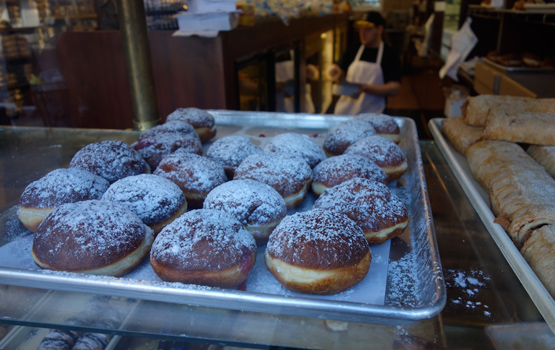
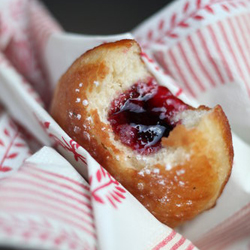
Sufganiyot in the window of Ostrovitsky Bakery in Midwood.

dec8POTATO LATKES FRIED IN HOT OIL may be the iconic dish to eat at Hanukkah, but we hold a special place in our heart for sufganiyot, the deep-fried jelly-filled donut that Israelis go crazy about during this holiday. In The Book of Jewish Food, author and food scholar Claudia Roden tells us that the “Austro-Hungarian peasant carnival doughnut, which became a “royal” delicacy at the French court of Marie Antoinette has been adopted in Israel to celebrate Hanukkah because it is fried in oil”—oil to commemorate the miracle of a small flask of oil keeping the flame in the Temple alight for eight days. Like many famous dishes, though, its origins are the subject of Talmudic debate. 

But never mind about that. How do I get my hands on some? The answer you’ll hear from Brooklyn connoisseurs will more likely than not be Ostrovitsky Bakery in Midwood. “We make thousands of them at Hanukkah,” the bakery owner tells me when I pay a visit, “thousands. We’ve been doing it every Hanukkah for 18 years.” To get a jump on the lines that will later form out the door, I bring home a supply to do a little early taste-testing with my friends. Our verdict: Maybe you could almost feed a family with one of them…but Hanukkah only comes once a year. Sweet, scrumptious.

Mile-End-Sufganiyot

Sufganiyot, in The Mile End Cookbook: Redefining Jewish Comfort Food from Hash to Hamantaschen. (Photo by Quentin Bacon)

Mile End Delicatessen in Boerum Hill has developed quite a fan club, too, for its sufganiyot, but sadly there will be none this year, co-owner Rae Bernamoff tells us. Sad for us, maybe; she certainly has bigger problems: Mile End’s central commissary kitchen, where it does all its baking (and curing and smoking and pickling) was flooded during Sandy. It’s in a Civil War era building on Pier 41 in Red Hook and “as with most of the waterfront,” she said, “the high tide surge pushed about four feet of water into our space. We’re still rebuilding.”

mile-end-book-coverAs a consolation, and to show solidarity, head to the deli itself for what sounds like a gut-busting $16 “surf and turf” latke special:  two open-faced latkes—potato, celery root and parsnip pancakes—one topped with chopped liver, pickled eggs and gribenes (chicken or goose skin cracklings), the other with creamy whitefish salad with trout roe.

And if your heart is really set on some Mile End sufganiyot, then you’ll have to make them yourself. You’ll find the recipe in the very appetizing The Mile End Cookbook, by Noah and Rae Bernamoff. Latkes, too, and a lot more dishes “redefining Jewish comfort food.”

One more stop: Brooklyn Larder in Park Slope also has tasty jelly donuts (along with a full Hanukkah catering menu) but shhh, don’t tell anyone, they’re baked not fried.

Ostrovitsky Bakery
1124 Avenue J, Midwood
718-951-7924
The bakery is Shomer Shabbos: closes before sundown on Friday, reopens on Sunday. 

Mile End Delicatessen 
97A Hoyt St, Boerum Hill
718-852-7510 

Brooklyn Larder 
228 Flatbush Avenue, Park Slope 
718-783-1250

Photograph (top) by Basia Hellwig. Date stamp typographic design by Joy Makon Design. The font is Bauhaus, by Ed Benguiat and Victor Caruso, ITC, 1975.

Lighting the Night to Celebrate Hanukkah

Day Three  12 Views of Brooklyn
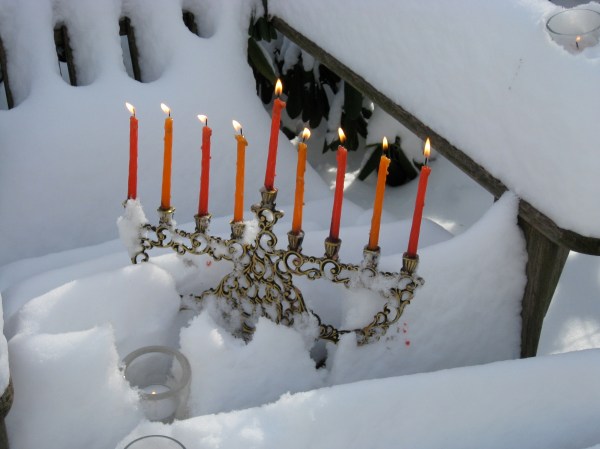
Photograph by Joy Makon; see Who's Who.

Photograph by Joy Makon; see Who’s Who.

dec8DATING FROM THE SECOND CENTURY BCE, the beautiful tradition of lighting candles in the eight arms of a special candelabrum calls for using the candle from the ninth position, the shamash (usually at the center), to light each of the others day by day . It is part of the eight-day celebration of Hanukkah, which begins today. It commemorates the rededication of Jerusalem’s Holy Temple after a victory reclaiming the city from domination by the Maccabees. The spreading of light against the darkest time of year lifts spirits everywhere, and the intimacy of joining together to share a circle of light makes a powerful bond. This image was captured in Windsor Terrace in 2009, when all of Brooklyn was hushed and blanketed by a thick snowfall.

A Christmas Visit to the Rieslings of Williamsburg

Day Two • 12 Sips of Brooklyn

Brooklyn-Winery-Flight1474

dec7

ON OUR FIRST VISIT TO BROOKLYN WINERY, the Brooklyn Artisan taste/sip squad donned hard hats and clambered around a raw construction site. In the two years since then, the winery has developed into a first class facility with a terrific wine bar integrated with the winemaking facilities. The B-A squaddies stopped by again recently to check out a flight of wines and some charcuterie. We didn’t have time for the winery tour (with 10 tasting/sipping stops that day, food journalism can be brutal, I tell you), but we are definitely going back. Brooklyn Winery takes wine very seriously and with classes and tours, they are committed to educating and informing as well as entertaining.

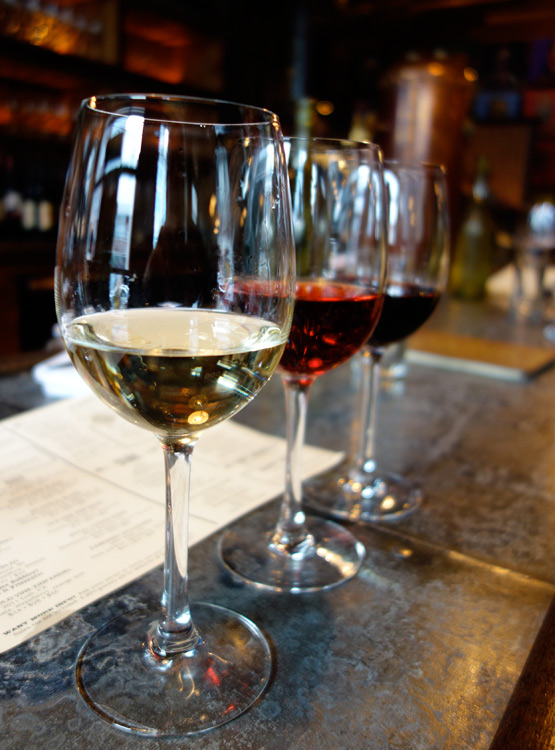
The main room is outfitted with long wooden farmhouse tables in beer garden style, with the upstairs rooms more lounge-like. Very comfortable settings for various sizes of groups, but we opted for the zinc bar, with its copper wine dispenser and proximity to Lex Kiefhaber, the knowledgeable manager. Lex helped us select our flight—the 2011 Stainless Steel Riesling for a white, the 2011 Rosé of Merlot, and the 2010 North Fork Blend red, all made with New York State grapes and all terrific young wines.

Lex then enthusiastically insisted on our comparing a glass of the 2011 Barrel Aged Riesling toe-to-toe with the same grape fermented in stainless steel. Brooklyn-Winery-ToursThe Barrel Aged, with grapes from the Finger Lakes region, is fermented and aged in old oak barrels which Lex explained allows the tart malic acid to convert to smoother lactic acid (a process logically called malolactic fermentation), providing a richer mouthfeel. The Stainless Steel has a more crisp fruit taste characteristic of a modern Riesling. Two distinctly different variations on a common theme, and either is definitely a pick for a Christmas white.

Brooklyn Winery
213 North 8th Street, Williamsburg
347-763-1506

Photographs by Bruce Campbell. Date stamp typographic design by Joy Makon Design. The font is Mrs Eaves, by Zuzana Licko, Emigre, 1996.

Fresh Fish, Smoked Fish—Any Way You Like It

Day Two  12 Tastes of Brooklyn
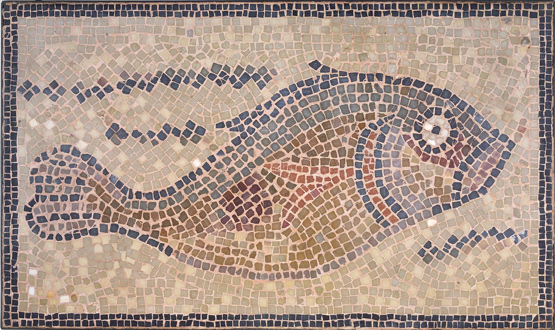
Wouldn’t this make a perfect tile in the subway station at Sheepshead Bay, home to Brooklyn’s own 50-boat fishing fleet? But no, the mosaic is by an unknown Roman artist, 3rd to 5th century A.D. Found in Tunisia, it now resides in Brooklyn Museum.


Wouldn’t this make a perfect tile in the subway station at Sheepshead Bay, home to Brooklyn’s
own 50-boat fishing fleet? But no, the mosaic is by an unknown Roman artist, 3rd to
5th century A.D. Found in Tunisia, it now resides in Brooklyn Museum. (Photo courtesy Brooklyn Museum)

dec7THE FEAST OF THE SEVEN FISHES is an Italian Christmas Eve celebration with as many interpretations as there are families and regions of Italy—and Brooklyn. If you want to create your own feast, you have a treat in store: Mermaid’s Garden, Brooklyn’s first CSF, or Community Supported Fishery, is opening its holiday store to the public. (CSF members—including some Brooklyn Artisan folks—sign up for a weekly drop of delicious sustainable fish and seafood, much of it caught in local waters.) The holiday store will have live Montauk lobsters, Montauk Pearl and wild Maine Belon oysters, fish fillets, clams, squid and more. How about Siberian sturgeon caviar?! The online store is open from Saturday, December 8 to Monday, December 17. Pickup will be at four Brooklyn spots on Saturday, December 22.

For full details about the fish (and fishermen), how to buy, and addresses for pickup, go to the Mermaid’s Garden website.  And on the Mermaid’s Garden Facebook page, you’ll find wonderful recipes from co-owner and chef Mark Usewitz.

If you’d rather someone else do the cooking, Chef Saul Bolton will be serving a Feast of the Seven Fishes on Dec. 24 at his Michelin-starred Saul Restaurant in Cobble Hill, as he has for the last eight years—and for the first time this year, he tells us, at his new Italian restaurant, Red Gravy, in Brooklyn Heights. Call 718-935-9842 for more information on menus and for reservations.

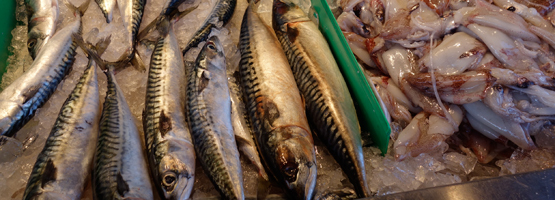
mackerel-squid-bensonhurst

Mackerel and squid at a Bensonhurst fish market, where you could also find sardines and eel,
popular choices for the Feast of the Seven Fishes.

Don’t forget, too, that Brooklyn is known as the smoked fish capital of America. Acme Smoked Fish has been at the center of that world since the early 1900s when Harry Brownstein, an emigrant from Russia, took a job as a “wagon jobber,” picking up hot fish from smokehouses with his horse-drawn wagon and hand-delivering them to small grocery and appetizing stores. Eventually he got his own smokehouse, which four generations later has grown into a Brooklyn institution that smokes, cures, slices, packs and ships 7 million pounds of fish a year.

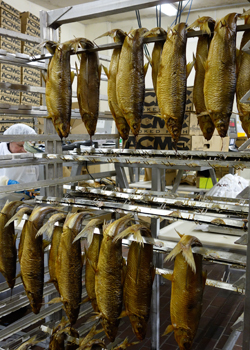
Acme Smoked Fish and their more recent brand, Blue Hill Bay, are both for sale at the company's Fish Friday.

Acme Smoked Fish and Blue Hill Bay smoked seafood are both available at wholesale prices at the company’s Fish Friday.

The fish, which except for the sturgeon is certified kosher, is sold all around the city (Zabar’s, Costco)—and well beyond. But for a real feel for where it comes from—and great bargains—get yourself out to the Greenpoint plant on a Friday morning between 8 and 1, the only time sales are open directly to the public. A room just off the plant floor is filled with racks of smoked whitefish, boxes of brook trout, smoked salmon laid out on the table—all perfect for holiday entertaining.

Mermaid’s Garden
info@mermaidsgardennyc.com 

Saul Restaurant
140 Smith Street, Cobble Hill
718-935-9842

Acme Smoked Fish Corporation
25-56 Gem Street, Greenpoint
718-383-8585

Photographs by Basia Hellwig. Date stamp typographic design by Joy Makon Design. The font is Mrs Eaves, by Zuzana Licko, Emigre, 1996.