Ask the Experts: Food and Drink Entrepreneurs Dish About the Hard Times – and the Good

WHAT’S IT TAKE TO TRY TO MAKE IT AS A SMALL FOOD MANUFACTURER in New York City? That was the theme of a panel discussion last Tuesday at Leonard Lopate’s popular annual event series about the New York food scene. Three entrepreneurs came together with the broadcaster at WNYC’s Greene Space in Manhattan: Steve Hindy, cofounder of Brooklyn Brewery, Mark Rosen, a family member from the second of three generations making Sabrett hot dogs, and Anna Wolf, founder/owner of My Friend’s Mustard.
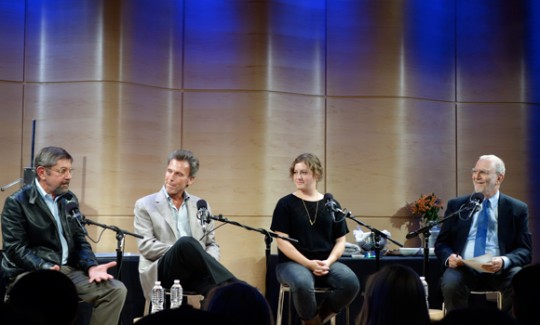
Lopate and Locavores: Discussing the ups and downs of running a food or drink business in NYC, with (from left) Steve Hindy of Brooklyn Brewery, Mark Rosen of Sabrett hot dogs and Anna Wolf of My Friend’s Mustard.

Later in the evening, Scott Bridi of Brooklyn Cured gave a lesson in sausage making, and Siggi Hilmarsson demo’d how to make Siggi’s Icelandic strained yogurt.
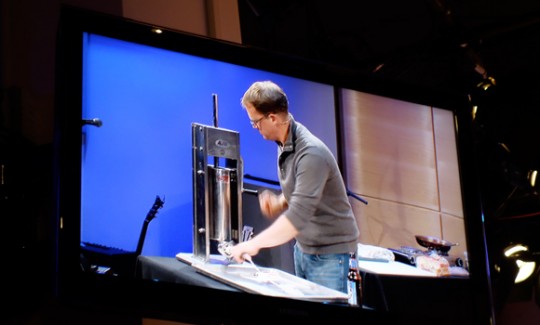
Sometimes, you do want to see the sausage being made. Before launching his company, Brooklyn Cured, Scott Bridi ran Gramercy Tavern’s charcuterie program for two years, then moved to Marlow and Daughters butcher shop in Williamsburg. Born in Bensonhurst, Bridi says “the borough with all its diversity is endlessly beautiful and important to me.”

The evening’s conversation frequently circled back to two pressing issues: distribution and struggles finding the right space to work in. Here are some snippets from the conversation:

How’d they get started?
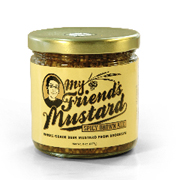
Anna Wolf began making beer mustard as a hobby “for fun, shopping it out at the favorite watering hole,” she said. ‘You’ve gotta’ try my friend’s mustard,’ the bar owner would tell his customers. Hence the name. “He became my partner. We did a Kickstarter campaign. I made my first kitchen batches in March 2009, and we delivered them to the first six customers in his jeep.”
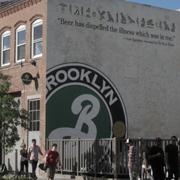
Steve Hindy was a foreign correspondent in the Middle East, where he worked in Beirut and Cairo for six years. It was in Cairo that he met American diplomats who were avid home brewers—a skill developed “out of necessity” when they were posted in Saudi Arabia. Hindy got interested. Back home in Brooklyn, he began to brew beer at home with his young downstairs neighbor Tom Potter, who had an MBA. They founded Brooklyn Brewery in 1987. “We raised $500,000 from colleagues and friends, but that wasn’t enough to build a brewery. We contracted out to a brewery in Utica and then trucked it down to an old warehouse in Bushwick. We went out in a van with our name on it and delivered to our first five customers.”
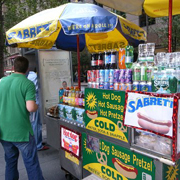
Mark Rosen is part of a family business started in 1926. Founder Gregory Papalexis, Rosen’s father-in-law, was the son of a baker who also had a hot dog business. Sabrett now manufactures 45 million pounds of frankfurters a year out of two plants in the Bronx, selling them up and down the east coast and wherever “New Yorkers are hiding out throughout the country,” said Rosen, but most visibly from pushcarts with the iconic blue and yellow umbrella all over New York City.

Their biggest challenges?
Hindy: “It took a lot longer to get licenses than we planned—six months instead of three—because NY State hadn’t approved a brewery in decades. There used to be 48 in Brooklyn alone, but the last one closed in 1976. To get approved, our investors had to reveal their deepest, darkest financial secrets, they had to be fingerprinted, which turned a lot of people off.” [Read more…]
Move Fast! 50% Off Basic Rate at 3rd Ward Right Now

URGENT UPDATE: The Good News: Will Sansom of 3rd Ward has confirmed with brooklyn-artisan.net that people who join as new Basic Plan (usually $99 a year) members today through midnight, Monday night, October 15, can get a special rate of 50% off. Mention Brooklyn Artisan when you inquire.

The Not-so-good News: Thursday night’s session on using Kickstarter to raise funds for your business project was so packed that even people who’d registered in advance, like us, (but arrived two minutes late) were unable to squeeze in even to stand among the spillover crowd in the back. Craning our necks to peer around the corner, we could see the edge of a chart on a slide, couldn’t hear a bit better, and did become an annoyance to the people we were leaning on to get a peek.

Speaking of numbers, though, here are some stats on 3rd Ward. (Also, scroll or click down to our earlier story, below.)

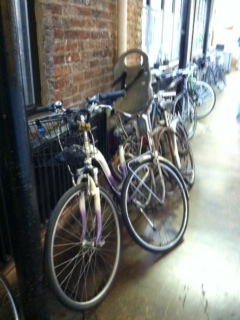
Member transport: Bikes locked to the radiator along a 40-foot hallway.

It’s a story of 2’s. 3rd Ward recently took over Floor Two of the warehouse building, doubling their space overall (to about 30,000 square feet). Staff? Around 20 people. Courses offered? About 200. Membership? 2000. Members who work there fulltime? 200. How long has Will himself worked there? 2 years. Doing what? A lot of construction such as putting down plywood patches on the strip oak floor upstairs.

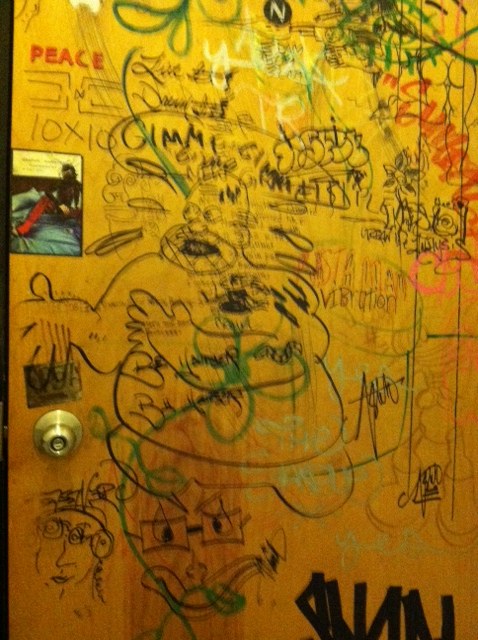
Insider's View of Bathroom Door

A somewhat, er, collegiate aesthetic on a bathroom door.

So all of the old wood strip floors upstairs are rough and patchy, yes, but still kinder underfoot than the gleaming polished concrete downstairs.

You can pay less now, but soon get moreSansom also outlined expansion plans, some visibly under way, others still under (plastic) wraps. A members’ cafe. More classrooms. An expanded shop for metalworkers, to match the new woodshop. A brand new sculpture room. And new, better bathrooms are promised, forgoing the, um, old college radio station aesthetic. [Read more…]

The Makers Find Their Way to Brooklyn’s 3rd Ward

SOME PEOPLE ARE MAKERS, SOME ARE TAKERS: We’ve been hearing that a lot from the top of the Republican ticket this fall. But however you plan to vote, there’s no denying that the hive of activity that is 3rd Ward comes from the makers. It’s a school, it’s workshops, it’s a hangout space. The membership is diverse in age, ability, and skills, but they all come to the repurposed warehouse in Williamsburg to work, to learn, and usually to share. Brooklyn Artisan visited on a recent Sunday evening and the place was buzzing.

3rd Ward customer service specialist Erica Eudoxie

Customer service rep Erica Eudoxie has worked at 3rd Ward for 18 months and taken 13 courses. Her long-term interest is jewelry making.

The only takers, if you can call them that, are the folks taking the classes that range from an intense one-day session up to courses that run over eight weeks. You can take Embroidery 2.0, or choose one of 20 offered in Fashion, or 8 in Welding & Fabrication, or 20 in Woodworking, or 10 in Web Design, or 16 in Drawing, Painting & Illustration.

One category is called simply Bike = Love. offering Basic Bike Mechanics, Intermediate Bike Mechanics, and Badass Bike Lights. (“With the right components, you can build your very own bike light which outshines all the others. In this class, you will make your very own hi-power LED bike-light which runs off a 9v battery.”)

For 3rd Ward members, the pricing structure is an incentive to commit to the community for the long term. (Basic membership, $99 for a year; co-working, $149 a month, or $119 at the annual rate – for the longer stay, you get a lower rate).  There are work stations as simple as library carrels, shared computer stations well equipped with big-screen Macs, conference areas, and even dedicated office spaces for micro businesses. My favorite presently on-site is Susty Parties, which sells colorful party goods made from sustainable materials, of course. (You can see why the business owners might like having this frou-frou stuff  Out. Of. The. House. Please!)

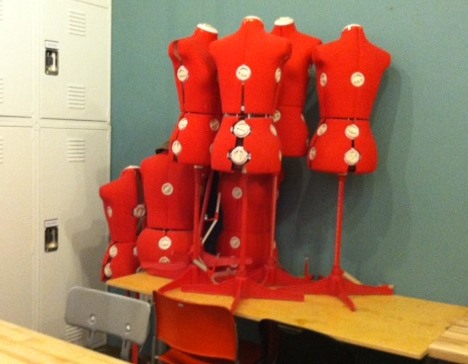
Like wallflowers at the eighth-grade dance, dress dummies huddle against the wall between classes. The sewing room serves some other purposes, too.

The  wood and metal makers’ professional spaces have recently been separated from the student spaces. To work in either area, you must pay the Pro rates ($599 a month, or $479 monthly at the annual rate) and demonstrate your skill level to a shop manager so that you are not a danger to the high-powered tools, to other workers or to yourself.

The metal shop includes a large work area with metal cutting and welding tools and shielded work stations. The even larger woodworking loft has materials-storage racks, table saw, lathe, drill press, mortising machine, an advanced dust-handling system, plus shop brooms and industrial size dustpans neatly stowed in plain sight. Separately vented yellow lockers stash potentially toxic and fume-producing wood finishing chemicals; a covered can that’s emptied every night takes care of oily rags.

Business training is available as well, both in structured classes and in informal, water-cooler consulting. Small-business bookkeeping. Using social media in marketing. Presentation skills for attracting investors.

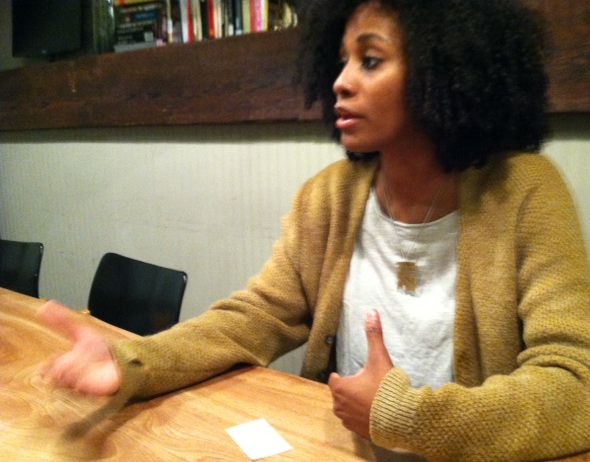
Erica Eudoxie explains why she has taken so many courses herself: 13 and counting. “It’s not just the typical ADD skill set,” she says, laughing. “It’s the impulse to make something. I have it, and most people here do. It’s why they come.”

Have there been any big stars to brag about, any bold-face names who’ve passed through 3rd Ward on the way to success? “It depends on how you define success,” Erica says. “If it’s being able to quit your office job and make a living with your craft, then yes, definitely.

“And I’d say there are a lot here now who’re on the trajectory to success.”


Sipping Moonshine & Bourbon at The Kings County Distillery

YOU GET A NICE DOSE OF HISTORY AND 3 SIPS OF WHISKY for your $8 on a typical Saturday afternoon between 2:30 and 5:30, in Building 121, the old Paymaster quarters at the Brooklyn Navy Yards. Brooklyn Artisan took the tour on Sunday, a special opening for the distillery’s participation in Open House New York.

The Boozeum displays a home-size copper distiller.

The Kings County Distillery bills itself as New York City’s oldest operating whisky distillery – founded in 2010 by Colin Spoelman and David Haskell, on a porch in Bushwick, and relocated last year to the Navy Yard in Williamsburg. In their new-but-old building (built at the turn of the last century), space is given to a modest wall display of photos. It features readably-large repro’s of historic documents and a lively old-newspaper account of a local battle in the “Whisky Wars” fought not long after the Civil War ended.

Triggering the Vinegar Hill riots, troops from the Naval Yard were sent into the “Irishtown” neighborhood to close down 13 illicit stills. Vast quantities of distillery waste water poured out into  the streets. Twenty people were killed. (When a rum-maker’s vat in Boston burst, molasses in an eight-foot wave made a micro-tsunami in the narrow street. Imagine the sticky aftermath. And the flies. No business for sissies.)

The federal action on distilleries was not about temperance, it was about taxes; excise taxes, not taxes on income, had funded the Civil War. After the war, the feds wanted to shut down any stills that weren’t paying up. Only after income-based taxation was legislated early in the 20th century could the country afford Prohibition and the loss of revenue from “sin taxes” on booze.

The history display is called the Boozeum, and I’m glad to report that the same sense of humor about themselves and their “evolving” whisky-hist’ry show pervades the whole operation and spares it any whiff of pretentiousness. They take themselves lightly, but as a native Kentuckian, Colin Spoelman has maintained from the beginning that they are serious about their bourbon. His home state’s Nelson County is widely considered the beating heart of bourbon country. Last year, with the move to the bigger distillery, Colin gave up his day job with an architecture firm to grow the business. Now, that is being serious.

The Mash: Hot water liquifies the starch in corn, then enzymes from sprouting barley seed break down the starches. Bourbon mash is 70% corn, 30% barley.

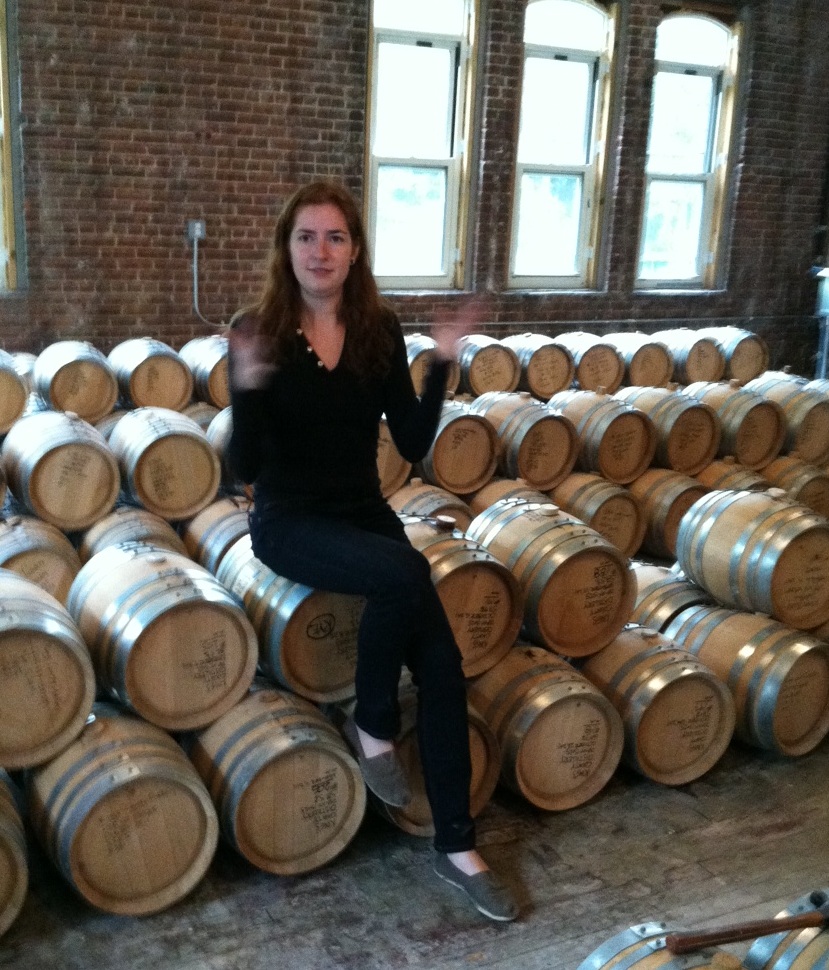
A third partner, Nicole Austin (above), has joined the founders and now oversees operations. She studied chemical engineering in college, though not with this career in mind. “It was kind of like a lightbulb going off,” she says, “I thought, Hey, I bet I know how to make this.” In its early days in Bushwick, the distillery bottled up to 270 liters of corn and barley based whisky a month, less than one tenth of what they now can produce in the Paymaster building.

Nicole also conducted the Sunday tour we joined, discussing the progress of distilling from American corn and Scottish barley “mash,” through yeast-processing, batch-testing and tasting, and then aging in the proper new American-oak barrels that must be used if the spirits are to qualify as legitimate bourbon.

About two years ago New York State started defining “farm distillery “ or Class D licenses more broadly, Nicole explains, which means that small-batch producers legally can distill, bottle and wholesale spirits themselves. Apple producers and farmers lobbied heavily for the change in law. With no more required cut for separately licensed distributors, the economics as well as the legal climate have suddenly become much more attractive. The Kings County Distillery was fast out of the gate. Now, Austin says, there are a dozen licensed distillers in the city (not all of them up and going yet) and two dozen or more in the state. [Read more…]

Making Space for Makers in Brooklyn

THE MARRYING OF COMPUTERS (often just teeny little processors called Arduinos) with older technologies such as lathes and milling machines means an explosion of opportunities for artisans over the next few years, whether the maker is creating for themselves or selling services to other creators. Expect to see more and more automated machines of all sorts landing in the artisan’s workspace. But here in New York, the distribution of such space is uneven. Apartments are generally small, while nearly any making requires space. How do you start garage businesses when you don’t own a garage?

The decline of New York as an industrial city has led to the conversion of much of the old work space into high-end residences in the downtown cores (SoHo, Tribeca, Dumbo). The remaining loft space in those areas is generally pricey in response to uses and users with deeper pockets. Brooklyn still has acres of old industrial spaces, though, that seem ripe for conversion to a new industrial model.

The appearance of hackerspaces and makerspaces in some of those old industrial buildings is providing an opportunity for small makers to get access to tools and expertise as they create, innovate and develop new products or businesses. Several showed up at World Maker Faire 2012 this past weekend and all are open and eager to meet people looking to connect to a creating community. Stay tuned to Brooklyn Artisan in coming months as we cover this exciting new industrial/community model.

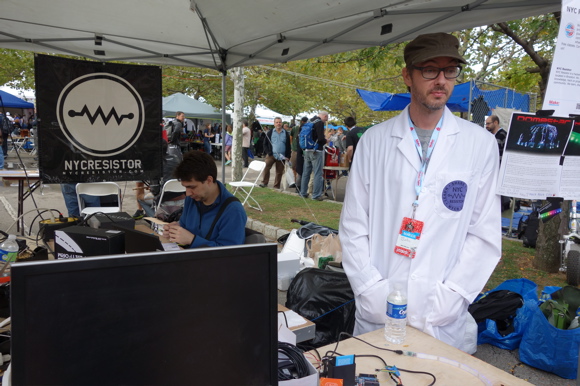
Justin of NYC Resistor brought a pile of electronic gear ideal for scavenging by itinerant robots.

NYC Resistor on 3rd Avenue at Bergen is one of the oldest hackerspaces (and the birthplace of Makerbot), represented at the Faire by an impressive pile of electronic parts threatening to become self-aware at any minute. Alpha One Labs in Greenpoint had a table but I was never quite able to catch up with their representative, Psytek (which I was assured by another hacker is not his given name). I’m looking to cover their space and efforts in future posts.

Gary Oshust, owner of Spark Workshop, started looking for studio space for his sculpture work, ended up as a part-time landlord for other makers and artists in Sunset Park

The arguably newest workspace in the borough (a mere two weeks old) is Spark Workshop in Sunset Park. Owner Gary Oshust, a sculptor looking for studio space, found himself taking on a lot of space that he is renting out to other makers along with access to power tools, photo studio and gallery space. (Warning: the Brooklyn Artisan editorial team may find themselves experiencing flashbacks of their own adventure with running shared workspaces in an ex-industrial loft not so long ago.)

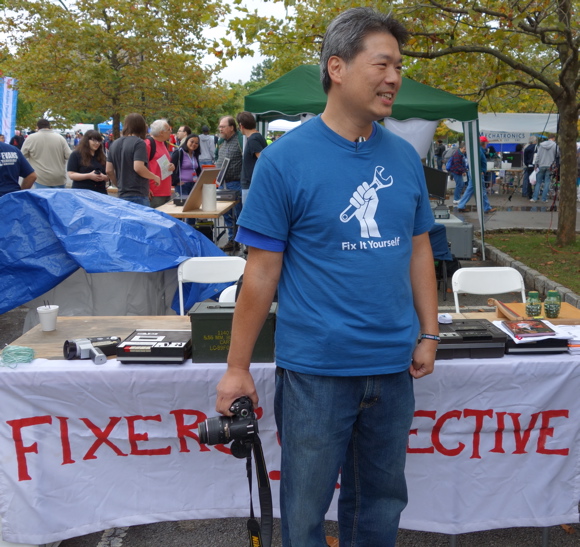
One notable approach to activating tools, expertise and craft in Brooklyn that deserves mention is  Fixers Collective, a group that gathers in Gowanus to repair broken things brought to them by others. As they say on their literature “If you can’t fix it, you don’t own it.”

Fixer Collective: bring them your tired, your broken, your wretched refuse. They will repair it or recast it for imaginative repurpose.

Quick Little Biz Tip # 1: Taking Credit Card $ Via Your Phone

Find a brief rundown of choices on Mediabistro’s AppNewser blog. This framework gives you a starting point to collect info. It matters what kind of phone you have, for one thing. Though it’s said the piper must be paid, LevelUp promises a way around those pesky credit card charges. Hmm. What is your experience? (Use the Contact Us page to answer.)

Tax Tip #1: Mark Your Calendar for March 2013

Better Little Business Practices

WE CAN’T PROMISE you’ll come out singing “All My Taxes Now Are Exes,” but why not get some credentialed free advice? In two hours on March 12, 2013, the NYS Small Business Development Center and SUNY will present “Recordkeeping for Small Businesses.” Official description: “Recordkeeping and bookkeeping methods for getting the best deductions and tax exceptions allowed for businesses. The seminar will be given by an IRS Approved Agent.” You must register ahead of time. Do it soon for space is limited. Registration page has map.

Business Is Cooking at Smorgasburg

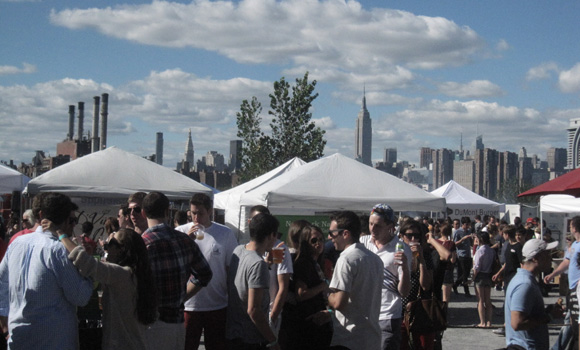
ImageTHE LAST DAYS OF THIS YEAR’S SMORGASBURG food fair are going to be here before we can possibly get our fill (November 17 at the original Williamsburg site, November 18 in DUMBO) so we thought we’d head over while the weather was still beautiful. What better excuse than a houseful of guests last weekend (from France! from Canada!) hungry to sample the wares of Brooklyn food artisans they’d heard so much about. (The New York Times has famously called it the “Woodstock of Eating.”)

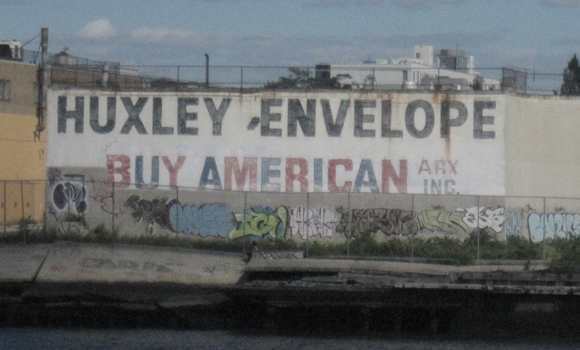
To avoid going underground on such a sunny fall day, we took the East River Ferry from Manhattan and looped our way to the Brooklyn side of the river, past the Long Island City and Greenpoint stops, down to Williamsburg, getting a few peeks at old industrial Brooklyn along the way.

Once we landed at Smorgasburg, we were hit by irresistible smells and sizzles, but before diving in, we paused a moment to take in the stunning Manhattan backdrop to this outdoor market. Location, location, location indeed.

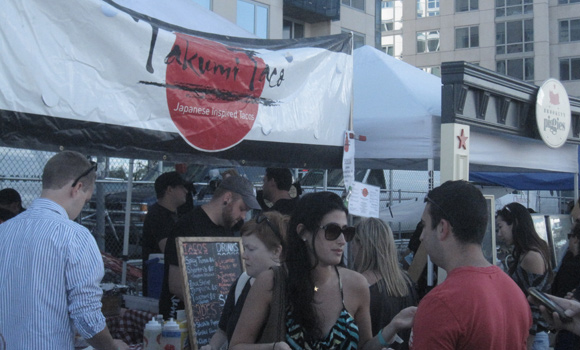
The 75+ vendors at Smorgasburg are wildly diverse—and not just from a culinary point of view. For some, the food fair, started by Brooklyn Flea last year, is a launch pad for bringing a new product to market. In the beginning, it may be a business’s sole distribution point. For a brick-and mortar establishment like Porchetta, the East Village shop where Chef Sara Jenkins sells her “drop-dead delicious” Italian street-food sandwich, it’s an additional sales outlet and marketing vehicle. For others, it’s one of several distribution points: You’ll find Kelso of Brooklyn beers at Smorgasbar (a roped- off drinks area introduced in the middle of the food fair this year) as well as at bars around NYC (especially Brooklyn). Grady’s Cold Brew coffee, available at Smorgasburg, is also sold online and at Whole Foods in NYC and beyond.

How does this distribution puzzle fit together? Finding the right channels—and getting access to them—is always a challenge for small food producers. We look forward to talking more to Brooklyn artisans about what works, what doesn’t and hearing about lessons learned they’d like to share.

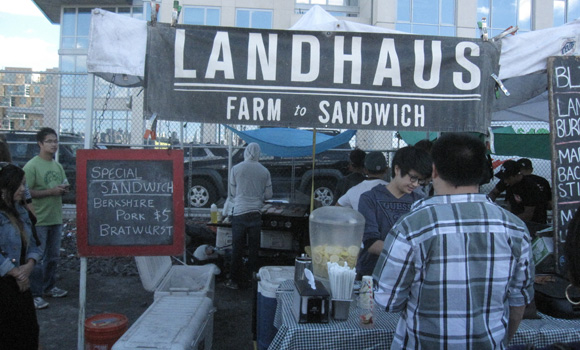
Oh, and the funny thing: After circling the market and winding back and forth, all five of us landed up on line at Landhaus.

ImageMaple bacon on a stick—how could my Canadian heart resist?—and a juicy lamb burger, perfectly cooked. It was BLTs for the boys (maple bacon slab included). Plus Kelso’s Belgian Pale Ale and Sixpoint’s Crisp Lager, capped off by BiteMe mini cheesecakes and Alchemy’s Dark Chocolate vegan frozen dessert.

Even after the November closing dates, Brooklyn Flea assures us that 10 hot/prepared food vendors and about 7 to 8 packaged food vendors will be at Skylight One Hanson, Brooklyn Flea’s winter home. They’ll all be on the lower level of the market toward the back.

Smorgasburg: 8 Weekends Left!
11 am to 6 pm
Saturdays on the Williamsburg waterfront between North 6th and North 7th St., at the East River
Sundays (except September 30) on the DUMBO waterfront at the historic Tobacco Warehouse in Brooklyn Bridge Park
 
                                        Basia Hellwig curates the Food/Drink category for Brooklyn Artisan.

Brooklyn Is Not Just a Brand, It’s a State of Mind

BROOKLYN INDUSTRIES, Brooklyn Bagels, Brooklyn this, Brooklyn that, it’s everywhere–so big a brand that it subdivides. (SmorgasburgThe Gowanus Yacht ClubProspect Park West.) New York Magazine calls Brooklyn’s artisanal foods movement “The Twee Party.” The New York Times writes more respectfully about Brooklyn’s “unique food culture.”

Blogs spring up with names using almost every conceivable spelling of the borough’s name, from the antique-sounding Breuckelen to Brewklyn to Brokelyn.

Individual neighborhoods, even those districted by real estate brokers’ marketing magic, develop enduring public images that perpetuate behaviors and styles and unify a local culture. The stroller moms and chest-pack dads of Park Slope need services and stores that create clusters that attract more young families that need the same things. Playground conversations foster a distinct ethos that endorses fair trade, local, organic, artisanal foods and opposes bottle feeding and certain chain stores.

In the same way, the creative and artisanal businesses of Brooklyn need co-working spaces, fairs to show their wares, and suppliers of their materials — whether CSA partnerships or locally grown plants for natural dyes for fabrics for crafts and fashions. Or rehearsal spaces in Williamsburg. Or film-editing facilities in Greenpoint. Sitting in the middle of all this Brooklyn buzz is pretty exciting.

There’s a baby or a business born here every minute, but it’s definitely not true that what happens in Brooklyn stays in Brooklyn. Up the Hudson Valley, Cold Spring is full of Park Slope ex-pats, and some quaint local wares are Brooklyn exports. Similarly, the seeds of green-mindedness were blown here from other places. Episodes of Portlandia might as well’ve been shot here.

From time to time, Brooklyn Artisan will cover people, events, ideas, products in such places as Portland, OR, Cold Spring, NY, Poultney, VT, Appalachia. You’ll find them slugged “Outer Brooklyn.”