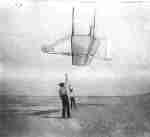
Here’s to Orville and Wilbur: The Makers and Flyers

Yesterday was Kitty Hawk Day, which provoked this reminiscence.

THE WRIGHT BROTHERS NEVER TRUDGED UP THIS DUNE BAREFOOT. That’s what I’m thinking last spring as I try to negotiate the wings of a 1902 Wright glider up a sandy winding trail carved out of Jockey’s Ridge with Kitty Hawk Kites’ clean-cut manager Bruce Weber and assistant recreation manager Andy Torrington. This exact replica was hand-built in 2002 by renown Wrightist Ken Hyde and The Discovery of Flight Foundation–sort of an artisanal business for the aviation set. This glider’s heavy—about 150 pounds—and bulky—302 square foot of flexible, yellowing canvas wing built just like the original—the same ash and spruce and weatherbeaten,  cross-stitched canvas.
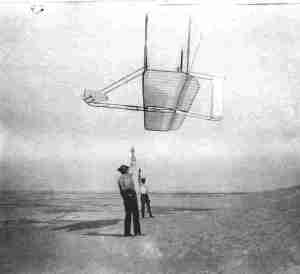
Speaking of kites: Wright Brothers 1902 glider

Speaking of kites: Wright Brothers 1902 glider

The Wright brothers, Orville and Wilbur, were tinkerers; they came along before mass-production. They were the kind of guys who today would be found at the Makers Faire and the 3rd Ward or taking their kids over to the Robot Foundry in Gowanus. While the closest they ever got to flying in Brooklyn was Governor’s Island, they did own a small bicycle shop in Dayton, Ohio, a city that produced more than its share of earth-shattering inventions. (The cash register? Yup, that was born in Dayton.) Everything the brothers did was hand-crafted, from their bicycles to their first powered airplane.  If there’s anything to learn about growing an artisanal business, just read a biography of the Wrights.

So far as the ’02 replica goes, fewer than 30 people had ever flown it, but last year Hyde loaned it to Kitty Hawk Kites.  It looks fragile, it flexes, creaks, but it always bounces back into shape. It’s tougher than it looks. [Read more…]

Cookie Heaven

Day Eleven 12 Tastes of Brooklyn
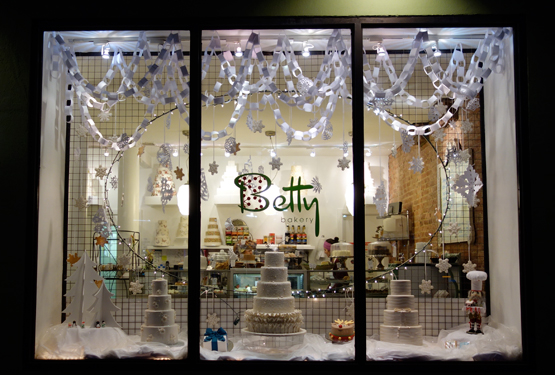
The window at Betty Bakery one recent December evening. Cookie heaven.

The window at Betty Bakery on Atlantic Avenue one recent December evening.

dec16I WAS INVITED TO MY FIRST COOKIE-EXCHANGE holiday party this year, but alas, now it’s been cancelled and all motivation to cover myself in flour and sugar has gone out the window. Luckily, Brooklyn is rich in cookies—beautiful ones made by hand with the finest ingredients by the most ingeniously creative bakers. Here are just a few to tempt you.

Vintage Santa Postcard Cookies and Holiday Cookie Tin, from Betty Bakery
Bakers and cake designers Ellen Baumwoll and Cheryl Kleinman entice you with their beautiful store window and win you over with their delicious flavors and inventive designs. A large vanilla sablé decorated with a vintage Santa postcard image will be available during the holidays. I have my eye on the Holiday Cookie Tin, filled with 40 chocolate-chocolate trees, small gingerbread men, walnut linzer wreaths, lemon shortbread stars, sugar snowflakes plus a decorated cookie. Or how about gingerbread girls and boys, or some adorable little marzipan penguins and snowmen, or rugelah? Happy times.

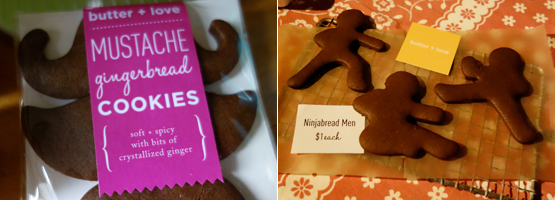
Ninjabread and Mustache Cookies, from Butter + Love
We met Alison Walla of Butter + Love at Brooklyn Flea and fell in love with her Mustache gingerbread cookies, which have bits of crystallized ginger rolled into the dough—and her fun Ninjabread cookies, gingery and sweet.

Butter-Love-Ninja-Mustache

The Ninjas were named as one of the “Best Holiday Cookies”  this year by Timeout. We have to agree. And we love the story of how Alison, who came to New York to be a Broadway actress and singer, developed her cookie business.

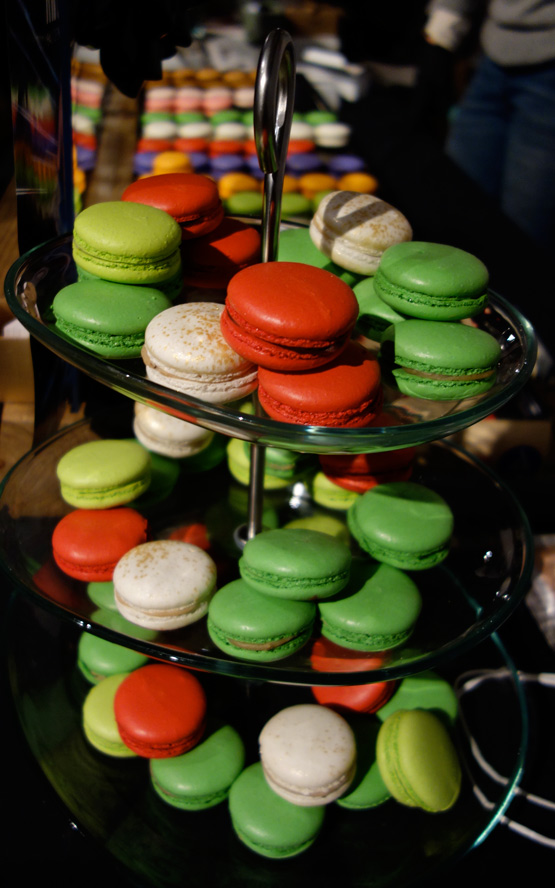
Macarons, from Vendôme Patisserie
The Parisian pastry house Ladurée is credited with having invented the macaron—two airy almond meringue confections united by cream in the middle. Now we have Brooklyn-based Vendôme Patisserie, whose macarons “are the only ones in New York to rival the French forebear’s…Ladurée and Vendôme touch the hem of heaven,” a New York Times reviewer effuses.

Vendôme Patisserie macarons at Brooklyn Flea

Vendôme’s macaron flavors roll off the tongue: Campari Pamplemousse, Limoncello, Black Truffle and Roasted Chestnut, Kaffir Lime, Champagne Cocktail, and then melt in the mouth. We spied the beautiful red and green tower above at Brooklyn Flea. Vendôme Patisserie doesn’t have its own shop, but you’ll find their macarons at Bacchus Patisserie on Atlantic Avenue, and at the Columbus Circle Holiday Market until, yikes, December 16. Macarons are gluten-free.

Holiday Tea Collection and Whoopie Pies, from One Girl Cookies
The holiday season is always busy for bakers, but One Girl Cookies founder Dawn Castle and co-owner Dave Crofton really have had their hands extra full since last month when their second store, in DUMBO, which had been open just nine months, was damaged by Sandy flooding. One Girl Cookies is back up and running now, turning out their sweets.

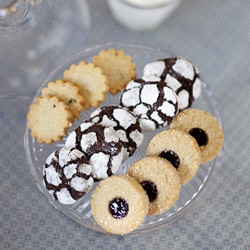
Holiday Tea Collection (Photo courtesy One Girl Cookies)

Holiday Tea Collection
(Photo courtesy One Girl Cookies)

The cookies all have names—Lucia, Lana, Sadie. You’ll find descriptions (and can buy them) online.  For their Holiday Tea Collection, the bakers came up with three limited edition tea cookies with flavors inspired by the season: Lena, a rosemary shortbread named after One Girl’s mom; Kris, a chocolate cherry crinkle cookie and Fiona, a “sugar plum” thumbprint cookie filled with plum jam. And for a true Brooklyn experience, how about a Whoopie Pie—cream cheese frosting sandwiched between pumpkin or chocolate cake? You’ll find the recipe in the One Girl Cookies Cookbook, along with 66 others. Maybe I’m feeling a little motivation coming on after all.

What’s your favorite Made in Brooklyn cookie?

Betty Bakery
448 Atlantic Avenue, Boerum Hill
718-246-2402

Butter + Love
Fort Greene
info@butterpluslove.com
Butter + Love Etsy Shop

Vendôme Patisserie
Available at Bacchus Patisserie
411 Atlantic Avenue, Boerum Hill, and at Brooklyn Flea
917-892-2127, 917-602-2251

One Girl Cookies
68 Dean Street, Cobble Hill
212-675-4996
33 Main Street, DUMBO
347-338-1268
Photographs (except One Girl Cookies) by Basia Hellwig. Date stamp typographic design by Joy Makon Design. The font is Industria, by Neville Brody, Linotype, 1989.


The Comforts of Tea

Day Nine 12 Sips of Brooklyn
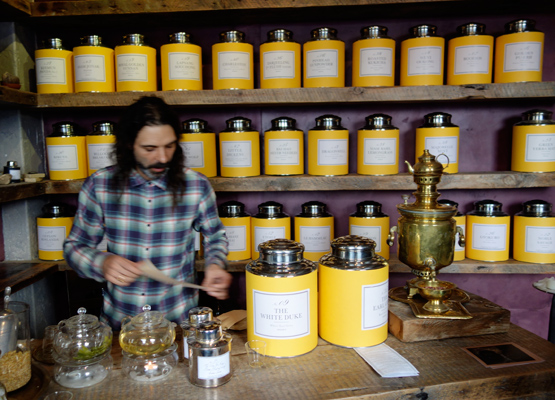
Michael Shannon of Bellocq Tea Atelier

Michael Shannon of Bellocq Tea Atelier brewing tea so visitors can taste.

dec14TAXONOMY, CLADISTICS, SYSTEMATICS, PHYLOGENETICS—so many ways to group and divide living things. Darwin famously sundered the world into “lumpers and splitters”: those who are happy with the general gist, and those who are obsessed with specifics.

The tea trade is one where splitters can run riot: green or black, white or yellow, oolong or pu-erh—all the varieties of Camellia sinensis that have descended through 3,000 years of recorded history. But even within those broad categories, there are nuances piled on subtleties, geography and climate, blends and additives, methods and styles of preparation. Japan and China have elaborate and precise rituals of preparing and serving tea that can last for hours. Even the pragmatic English have woven the drink into their culture and mythology.

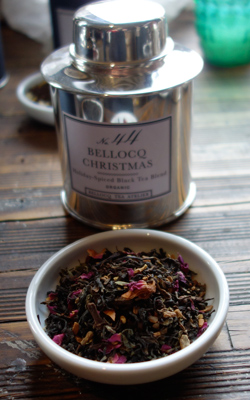
bellocq-christmas-1422

Bellocq Christmas blend in its silver plate caddy

Visit Bellocq in Greenpoint during their limited shop hours and you immediately recognize that here be tea splitters. The neat rows of silver containers with the bold yellow and white labels signal that tea is taken very seriously in these precincts. Yes, you think, this is what a tea shop should be. It is a transport to a quiet and calm that seems centuries and leagues away from the busy streets of North Brooklyn 2012.

It can be a bit daunting. I admit I remain a bit of a lumper and my knowledge of tea is an inch deep and an inch wide, but I stand in awe of the level of awareness and sophistication about the product that is evident at an emporium like Bellocq.

On the day we visited, co-owner Michael Shannon presided in an unhurried manner that was helpful and deeply informative. He brewed tea and explored the intricacies of sourcing teas to avoid the hucksters and scams that abound in that market. He methodically poured samples while revealing a refined sense of the aesthetics of his product. He cracked open canisters to appreciate the aromas while speaking in the same calm fashion about the frenzy the business endured when it was recently cited in O, The Oprah Magazine as one of Oprah’s favorite things. An hour at Bellocq is as warming and refreshing to the spirit as the product they sell.

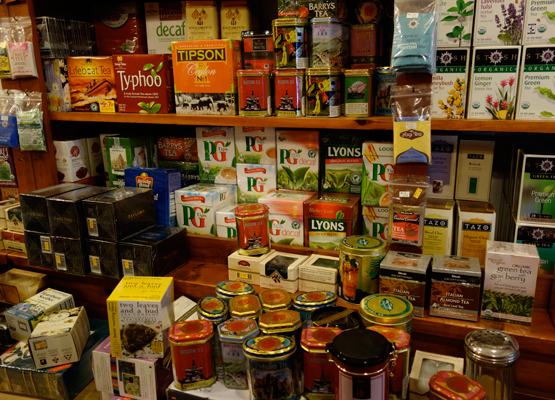
P-and-S-Teas-1197PS Coffee Tea N Spices in Park Slope is a different cup of tea. This store might appeal more to the lumpers among us. Stacks of boxes, cans and jars filled with teas and tisanes and infusions jostle for attention with spices and coffees. Here you feel awed less by the depth of tea esoterica and more by the breadth of stock in a little space. When asked how many teas the store carries, the manager responds, “Two hundred”, which I suspect is a conservative guesstimate. This is a diverse collection, with the old-fashioned packaging of Ty-phoo hard by the elegant boxes of Republic of Tea.tea-pot-p-and-s-1201 I am certain you can find your heart’s desire, a tea for every condition of the spirit. But I like it because most of the time I remain a lumper: “Tea. Earl Grey. Hot.”

Bellocq Tea Atelier
104 West Street, Greenpoint

800-495-5416

PS Coffee Tea N Spices
368 5th Avenue, Park Slope
718-768-5561

Photographs by Basia Hellwig. Date stamp typographic design by Joy Makon Design. The font is Rockwell, by Morris Fuller Benton and Frank Pierpont, Monotype, 1934.

Wednesday Night at the Movies: Soda Fountain Series

OUR GANGNEIGHBORHOOD MOVIES DISAPPEARED FROM THE BIG APPLE in the 90s, bankrupted by mega-Loews showing this week’s poorly acted action films in eye-splitting 3D. Forget about finding old-timey silent movies that have stood the test of time and reached across language  barriers, except late at night on Turner Movie Classics. And except at the Brooklyn Farmacy & Soda Fountain.

Strange? Maybe not. Ben Model, silent film curator and accompanist and the evening’s host, says the earliest movie theaters were converted storefronts like the wonderfully preserved turn-of-the-last-century Farmacy. Wednesday night was the last in the Farmacy’s 2012 soda-fountain film festival, and by the time the show was about to begin, the place was packed with people in their 20s, begging one another for their tables’ empty chairs, sitting on the step where the almighty pharmacist used to hold court, leaning against the soda fountain, and slurping down their famous chocolate egg creams and hot chocolate.

The show Model assembled consisted of four comedy shorts, each 20 minutes in length (or 2 reels long), each converted from flammable acetate to 16 millimeter film (which, he explained, once were mailed to private homes, shown in parlors, then returned—a service much like Netflix). Then decades later each was converted from 16 millimeters to DVDs like the kind sent out by Netflix, and exactly what we would be watching. Before the movies started the Farmacy’s Gia Giasullo warned everyone that fountain service would be suspended during the movies, and then the lights went down.

big business posterCharlie Chaplin’s silent short Behind the Screen kicked off the festival. The print, crisp and clear, shows the hero’s antics as an assistant at a movie production company, with typical Chaplin slapstick. The next, Buster Keaton—the Human Medicine Ball, Model labeled him—was up with The Goat, featuring a mistaken identity and police chases galore. Then it was Good Cheer, a sentimental Hal Roach comedy featuring The Gang (sort of a prototype of Our Gang), an archetypical bunch of tenement-dwelling kids who wonder if Santa Claus really exists. This print was poor, but it was a lesson in film preservation, and how acetate film stock decays when the original is not copied to a more permanent material. A huge percentage of silent films have been lost, mostly because there’s no profit motive. (By the way, according to Good Cheer, Santa’s the real deal.) The last on the bill was arguably the most hilarious: Big Business, a rare Laurel and Hardy silent two-reeler (most of their movies were talkies), and a portrayal of Reciprocal Destruction: The pair’s attempt to sell a Christmas tree starts with an irate would-be customer clipping the tree’s top and ends with his house and their car reduced to rubble.

After the show Model took a couple of questions from the audience, and said that like most accompanists back in the day, he doesn’t play by a score. Fascinating stuff for the film buff, and a cheap date for the twentysomethings: the night at the movies was free. If you’re lucky, you can get to go next year.

Executive Editor Phil Scott often writes about travel and aviation.

Ask the Experts: Food and Drink Entrepreneurs Dish About the Hard Times – and the Good

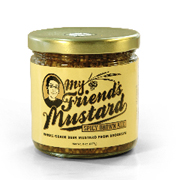
WHAT’S IT TAKE TO TRY TO MAKE IT AS A SMALL FOOD MANUFACTURER in New York City? That was the theme of a panel discussion last Tuesday at Leonard Lopate’s popular annual event series about the New York food scene. Three entrepreneurs came together with the broadcaster at WNYC’s Greene Space in Manhattan: Steve Hindy, cofounder of Brooklyn Brewery, Mark Rosen, a family member from the second of three generations making Sabrett hot dogs, and Anna Wolf, founder/owner of My Friend’s Mustard.

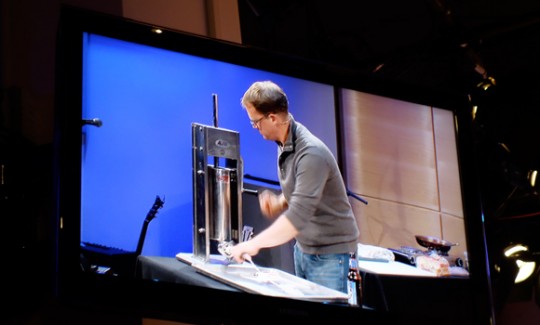
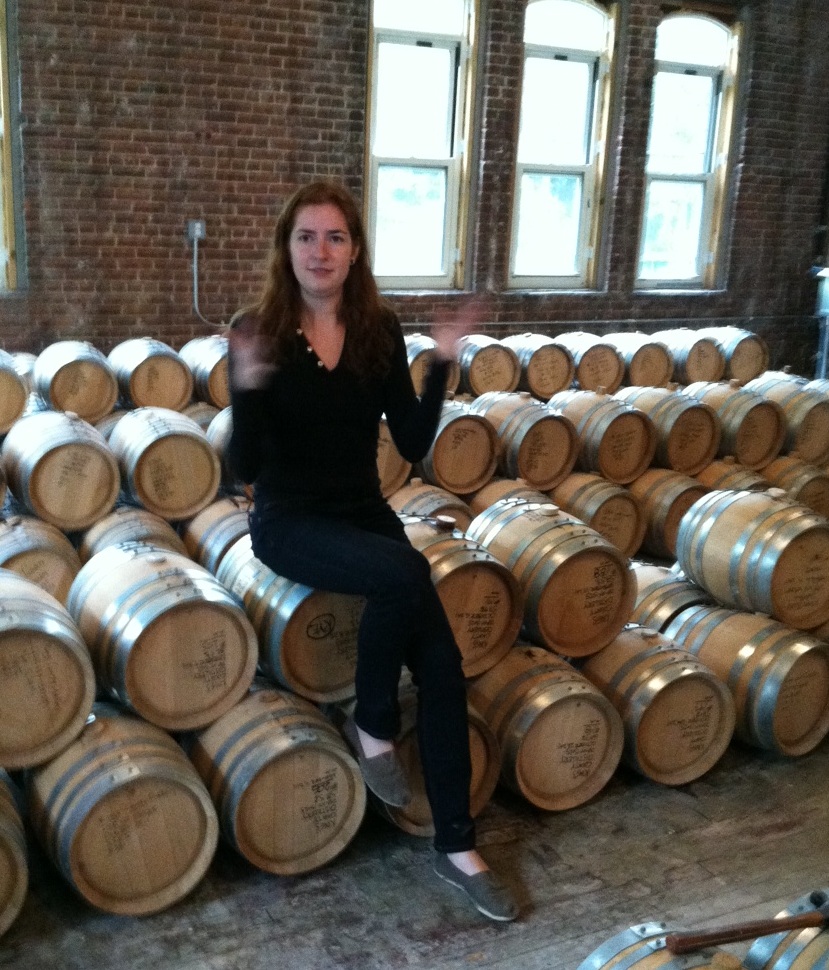
Lopate and Locavores: Discussing the ups and downs of running a food or drink business in NYC, with (from left) Steve Hindy of Brooklyn Brewery, Mark Rosen of Sabrett hot dogs and Anna Wolf of My Friend’s Mustard.

Later in the evening, Scott Bridi of Brooklyn Cured gave a lesson in sausage making, and Siggi Hilmarsson demo’d how to make Siggi’s Icelandic strained yogurt.

Sometimes, you do want to see the sausage being made. Before launching his company, Brooklyn Cured, Scott Bridi ran Gramercy Tavern’s charcuterie program for two years, then moved to Marlow and Daughters butcher shop in Williamsburg. Born in Bensonhurst, Bridi says “the borough with all its diversity is endlessly beautiful and important to me.”

The evening’s conversation frequently circled back to two pressing issues: distribution and struggles finding the right space to work in. Here are some snippets from the conversation:

How’d they get started?
Anna Wolf began making beer mustard as a hobby “for fun, shopping it out at the favorite watering hole,” she said. ‘You’ve gotta’ try my friend’s mustard,’ the bar owner would tell his customers. Hence the name. “He became my partner. We did a Kickstarter campaign. I made my first kitchen batches in March 2009, and we delivered them to the first six customers in his jeep.”

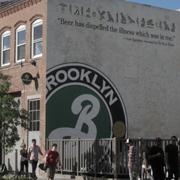
Steve Hindy was a foreign correspondent in the Middle East, where he worked in Beirut and Cairo for six years. It was in Cairo that he met American diplomats who were avid home brewers—a skill developed “out of necessity” when they were posted in Saudi Arabia. Hindy got interested. Back home in Brooklyn, he began to brew beer at home with his young downstairs neighbor Tom Potter, who had an MBA. They founded Brooklyn Brewery in 1987. “We raised $500,000 from colleagues and friends, but that wasn’t enough to build a brewery. We contracted out to a brewery in Utica and then trucked it down to an old warehouse in Bushwick. We went out in a van with our name on it and delivered to our first five customers.”

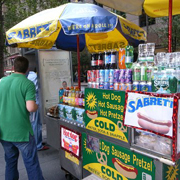
Mark Rosen is part of a family business started in 1926. Founder Gregory Papalexis, Rosen’s father-in-law, was the son of a baker who also had a hot dog business. Sabrett now manufactures 45 million pounds of frankfurters a year out of two plants in the Bronx, selling them up and down the east coast and wherever “New Yorkers are hiding out throughout the country,” said Rosen, but most visibly from pushcarts with the iconic blue and yellow umbrella all over New York City.

Their biggest challenges?
Hindy: “It took a lot longer to get licenses than we planned—six months instead of three—because NY State hadn’t approved a brewery in decades. There used to be 48 in Brooklyn alone, but the last one closed in 1976. To get approved, our investors had to reveal their deepest, darkest financial secrets, they had to be fingerprinted, which turned a lot of people off.” [Read more…]

The Littlest Makers at Maker Faire

FOR A MOVEMENT THAT THE ECONOMIST magazine has declared may “herald a new industrial revolution,” there appears to be an inordinate amount of fun in the maker world, at least in the examples on view at the recent World Maker Faire 2012. Apart from the rolling cupcake-mobiles and the explosive “science” involving Diet Coke and Mentos, there were robots dancing Gangnam Style, a range of steampunk gadgetry and clothing, and a large number of—not to put too fine a point on it—toys.

Play appears to be a central value for makers, for many it may be a blast of fresh air from the spreadsheets and word processors of “adult” worklife. Get in your garage, create a robot or an autonomous helicopter, assemble a music machine that uses sunlight to generate music, put some flashing lights on your t-shirt that advertise your heartbeat. Why not?

Robot makers engineering the future at the booth of Brooklyn Robot Foundry.

In fact, of the many perspectives on fun at Maker Faire, the one from sub-four-feet was ever-intriguing, as thousands of children can attest. Brooklyn Robot Foundry was a substantial presence at Maker Faire, winning two Educator Awards, [Read more…]

Sipping Moonshine & Bourbon at The Kings County Distillery

YOU GET A NICE DOSE OF HISTORY AND 3 SIPS OF WHISKY for your $8 on a typical Saturday afternoon between 2:30 and 5:30, in Building 121, the old Paymaster quarters at the Brooklyn Navy Yards. Brooklyn Artisan took the tour on Sunday, a special opening for the distillery’s participation in Open House New York.

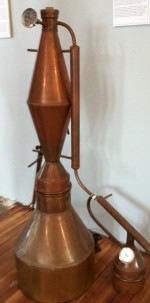
The Boozeum displays a home-size copper distiller.

The Kings County Distillery bills itself as New York City’s oldest operating whisky distillery – founded in 2010 by Colin Spoelman and David Haskell, on a porch in Bushwick, and relocated last year to the Navy Yard in Williamsburg. In their new-but-old building (built at the turn of the last century), space is given to a modest wall display of photos. It features readably-large repro’s of historic documents and a lively old-newspaper account of a local battle in the “Whisky Wars” fought not long after the Civil War ended.

Triggering the Vinegar Hill riots, troops from the Naval Yard were sent into the “Irishtown” neighborhood to close down 13 illicit stills. Vast quantities of distillery waste water poured out into  the streets. Twenty people were killed. (When a rum-maker’s vat in Boston burst, molasses in an eight-foot wave made a micro-tsunami in the narrow street. Imagine the sticky aftermath. And the flies. No business for sissies.)

The federal action on distilleries was not about temperance, it was about taxes; excise taxes, not taxes on income, had funded the Civil War. After the war, the feds wanted to shut down any stills that weren’t paying up. Only after income-based taxation was legislated early in the 20th century could the country afford Prohibition and the loss of revenue from “sin taxes” on booze.

The history display is called the Boozeum, and I’m glad to report that the same sense of humor about themselves and their “evolving” whisky-hist’ry show pervades the whole operation and spares it any whiff of pretentiousness. They take themselves lightly, but as a native Kentuckian, Colin Spoelman has maintained from the beginning that they are serious about their bourbon. His home state’s Nelson County is widely considered the beating heart of bourbon country. Last year, with the move to the bigger distillery, Colin gave up his day job with an architecture firm to grow the business. Now, that is being serious.

The Mash: Hot water liquifies the starch in corn, then enzymes from sprouting barley seed break down the starches. Bourbon mash is 70% corn, 30% barley.

A third partner, Nicole Austin (above), has joined the founders and now oversees operations. She studied chemical engineering in college, though not with this career in mind. “It was kind of like a lightbulb going off,” she says, “I thought, Hey, I bet I know how to make this.” In its early days in Bushwick, the distillery bottled up to 270 liters of corn and barley based whisky a month, less than one tenth of what they now can produce in the Paymaster building.

Nicole also conducted the Sunday tour we joined, discussing the progress of distilling from American corn and Scottish barley “mash,” through yeast-processing, batch-testing and tasting, and then aging in the proper new American-oak barrels that must be used if the spirits are to qualify as legitimate bourbon.

About two years ago New York State started defining “farm distillery “ or Class D licenses more broadly, Nicole explains, which means that small-batch producers legally can distill, bottle and wholesale spirits themselves. Apple producers and farmers lobbied heavily for the change in law. With no more required cut for separately licensed distributors, the economics as well as the legal climate have suddenly become much more attractive. The Kings County Distillery was fast out of the gate. Now, Austin says, there are a dozen licensed distillers in the city (not all of them up and going yet) and two dozen or more in the state. [Read more…]

Understanding the Hollywood Smoke

I WAS REMINDED by John J. Kochevar’s comments in An Artisanal Author Confronts His Pencils of how many traditional skills are fast disappearing these days. Here is another.

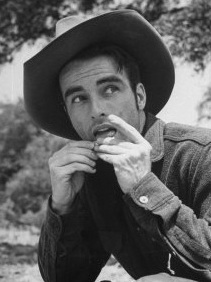
Montgomery Clift shows the classic cowboy roll on the set of Red River.

How to Roll a – uh, a Cigarette like a Pro.

The intent here is not to skirt Mayor Bloomberg’s efforts to ban public smoking in New York City , but rather to address the high cost of a pack of cigarettes as well as record some ways of working with one’s hands once glamorized by Hollywood. 

Rolling  a smoke is a two-handed operation (see inset). Remove the cigarette rolling paper from its pack. Gently spread the paper horizontally,  and delicately grasp it between the tips of both index fingers and thumbs, roughly at the paper’s midpoint. The gummy strip should run along the top facing you. Carefully—yet  confidently—roll the paper back and forth three or four times with your thumbs and index fingers until it forms a U, with the gummy strip higher than the un-gummy side.

Gently now, gently, very gently, grasp the paper by one end. Remove one hand and take a pinch of tobacco. The tobacco should not be lumpy (and chewing tobacco should not be substituted. Nor should hamster food or your grandmother’s loose black tea—you will be discovered and publicly humiliated). [Read more…]

How to Shave with a Brush and Soap in Today’s World

EVER NOTICE HOW some people can smuggle an AK-47 in their checked luggage but you can’t sneak a can of shaving cream past alert Transportation Security Agents without them tossing that and your toothpaste in a large plastic garbage can? Well, I have. Also, and this is more important, I’m so cheap I won’t even pay attention.

That’s why, after wasting my third can or so in the TSA trash, I’ve taken to shaving with the old-fashioned brush and shaving soap. Not only have I never been wrestled to the ground and handcuffed by alert agents trying to confiscate my beaver-hair shaving brush, but past the initial investment I’m pretty much home free.

Plus – and this is a big plus – I’ve found it gets my day off to the proper artisanal start, taking this time to work with my hands. So here’s how you pull off that close shave the authentic, old-fashioned way.

BB00 96.tif

The man seen shaving here is not Phil Scott, nor does he play him on TV.

1. You’re going to need a shaving brush, a ceramic mug of some sort, and a bar of soap. I prefer a thick china mug with an old Air Force logo, but you can maybe find one with a Brooklyn Dodgers logo or a Yogi Berra quote. Whatever you choose, the majority of the mug must be a light color.

And don’t forget the razor. That’s really the most important part, the razor. I prefer the triple-blade types. Disposables blow. Straight razors are dangerous and scary and you’ll never get one through an airport anyway.

2. Place the soap inside the mug somehow. I prefer to nuke the combination in the microwave (no need to carry this authenticity thing too far) for maybe 20 seconds until the soap gets a little soft, then flatten it with my thumbs into what is called a soap puck. You’ll have to do this each time you add a new bar of soap, which means maybe twice a year. (See, it’s already less expensive than canned shaving cream.)

Even toss in soap scraps from the sink or shower. If your mug’s dark (see no 1. above) it will block the magic hot rays that are supposed to turn the soap into a soft goo. Same with metallic elements, like gold rims. I’m not sure why, just take my word for it.

Now you’re ready to shave! Fill the mug to the top with hot water, and work up a lather with the brush. Brush the lather all over the area destined for shaving. Really work it in there, too – coating those whiskers makes for a smooth shave.

3. It is not strictly necessary to don long pants, a dirty wifebeater, and suspenders that you can drop off your shoulders while you lather up, like in those early episodes of Mad Men. Today you can do this in boxers, briefs, boxer-briefs, or a towel, or less.

4. Scrape all the soap lather off with the razor. And there you have it! You’re done! And your face is smoother than if you’d used shaving cream, or an electric razor.

NOTE: A styptic pencil is what you need to control the bleeding.

Executive Editor Phil Scott has written seven book and numerous articles for national magazines.