Bring Back the Soda Fountain!

Day Ten 12 Sips of Brooklyn
P-and-H-sodas-at-The-Bklyn-Kitchen1453

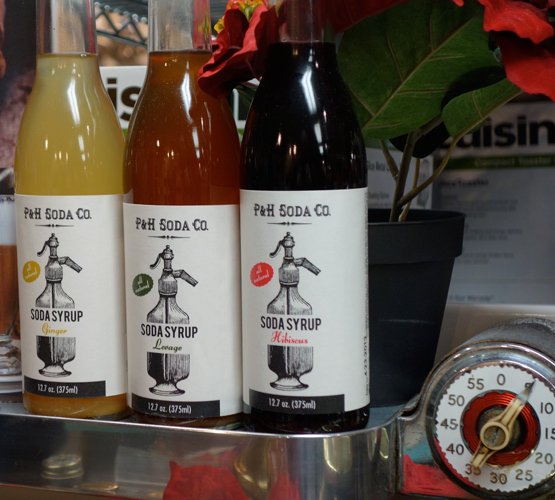
P&H Soda syrups for sale at The Brooklyn Kitchen. From left, Ginger, Lovage, and Hibisicus

dec15HOW DID SODA GET TO BE PUBLIC ENEMY NO. 1? There was a time when the soda fountain was the shining emblem of wholesomeness and American values. Wasn’t that the place where The Beaver could go and conduct his heart-to-heart talks with dad Ward Cleaver? But here in New Bloomberg City 2012, that talk might land Ward with a referral to child protective services. Or at least pointed looks from the local moral guardians.
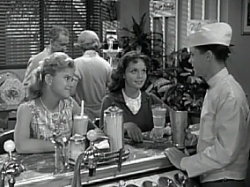
The Beaver's brother Wally working at the soda fountain.

The Beaver’s brother Wally working at the soda fountain in a “simpler” America

Hard to be a soda entrepreneur these days, with City Hall intimating that your product ranks with cigarettes and racy magazines in the corruption of the kiddies. On the other side, the big guys, the Pepsis and Cokes of the world, have been laying down heavy fire in their war on limiting soda sizes. It’s frankly hard to know which side to root for in that struggle. May both sides lose.

Things look far rosier to Anton Nocito, whose dream was to open his own soda fountain but who along the way became a fabricator of artisanal soda syrups. P&H Soda Co. started about three years ago when Nocito sold sodas at the now-defunct Greenpoint Market. Customers and stores like The Brooklyn Kitchen expressed interest in the syrups, so Nocito obliged. Then he taught classes on making syrups and landed on the Martha Stewart Show teaching Martha herself to make Cream Soda. In that appearance, he certainly doesn’t come across like a corrupter of youth.

P&H syrups are all natural and come in exotic flavors like Lovage, Hibiscus and the old stand-by Ginger. From the humble start in Greenpoint and Williamsburg, the product is now available in stores across the country, including in Georgia, Massachusetts and California, as well as on menus in restaurants and bars as far afield as Florida and Minnesota. A list of locations is available on the P&H Soda Co web site.

Locally, Nocito likes to get out to venues like the New Amsterdam Market to share special fabrications that can’t be bottled “because we don’t use preservatives, so the flavor tends to fade too quickly.”

Small-batch soda is getting to be an active market in Brooklyn, with Brooklyn Soda Works and Q Drinks making their own products focused on natural ingredients. Brooklyn Artisan will follow all the developments with interest.

As for his original dream, Nocito remains steadfast: He wants to “open a soda fountain with all natural sodas and a menu consisting of locally sourced ingredients. The manufacturing of the syrups definitely sent us in another direction and we’re currently trying to get back on track with our original goal.”

With any luck, The Beaver will be there for more heart-to-hearts, and not have to sneak around with back-alley natural sodas.

P&H Soda Co.

Brooklyn Soda Works

Q Drinks
718-398-6642

Photograph (top) by Basia Hellwig. Date stamp typographic design by Joy Makon Design. The font is American Typewriter, by Joel Kaden and Tony Stan, ITC, 1974.
The New Corner Grocers

Day Ten 12 Tastes of Brooklyn
salumi-platter-brooklyn-winery

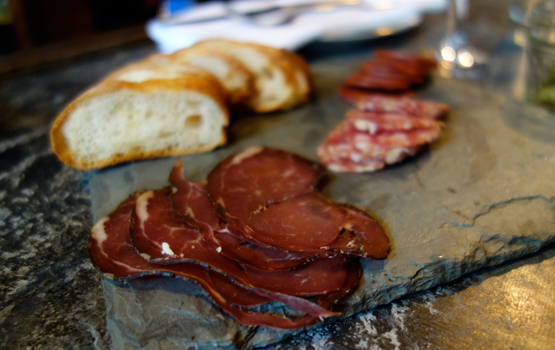
Charcuterie and cheese plates, often with products from small local grocers, are offered up at Brooklyn’s wine and brew bars. This one at Brooklyn Winery.

dec15WITH SO MANY ARTISANAL FOOD MAKERS in Brooklyn, it’s good to also find some wonderful small grocery stores where you can buy their small-batch products. These are the anti-supermarket—you really want to call them shops because they often conjure up the feeling of a village shop where customers and proprietor greet each other by name. The selections in these diminutive stores are carefully chosen (dare I say curated?) from producers that the proprietors often know personally. They’ve tasted the cheese, or the salumi, or the sauces or pickles and they like them! And they want you to have them (for a price). I was on the hunt, recently, for salumi and cheeses and meze for a holiday gathering.

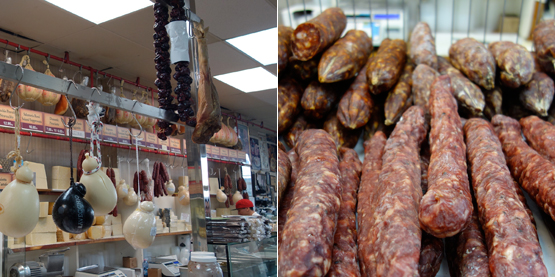
d-coluccioI’d already bagged my baba ganoush at Sahadi’s and some soppressata and Italian cheese from D. Coluccio & Sons (above), a store and importing/wholesale business that’s been around for half a century. (Like Sahadi’s, it has been an anchor in its neighborhood bringing hard-to-find artisanal and specialty products to a discriminating audience.) Now I’m ready to explore some of the small grocers.

Beth Lewand and Chris Gray opened Eastern District two years ago to bring their favorite beers and cheeses to Greenpoint. The shelves are stocked with plenty of local products, but the store sources farther afield too. The cheese selection will keep you there for half an hour trying to decide.

Mmmm....what to take? Great choices at Eastern District.

Mmmm….what to take? Great choices at Eastern District.

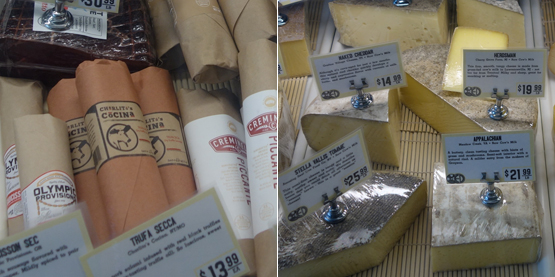
Salumi comes from such respected producers as Olympic Provisions in Seattle, Creminelli in Salt Lake City and Charlito’s Cocina in Queens. I sampled Charlito’s salumi earlier this summer at Smorgasburg. Charlito (Charles Samuel Wekselbaum), who was raised in a Cuban-American household, draws on the curing traditions of Spain and uses 100% pasture-raised heritage breed pork. (Check out his fig salumi, too.) Each week, there’s a different cheese/beer pairing at Eastern District, with rotating beers on tap (and growlers to take some home).

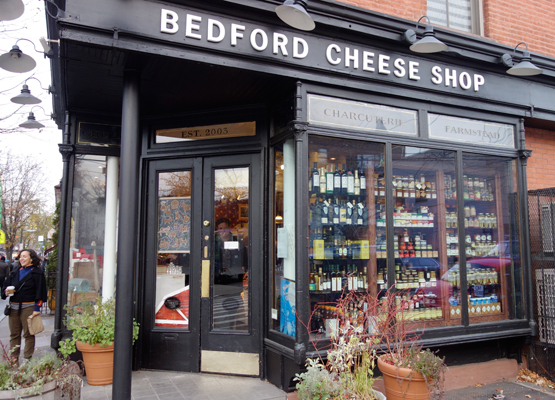
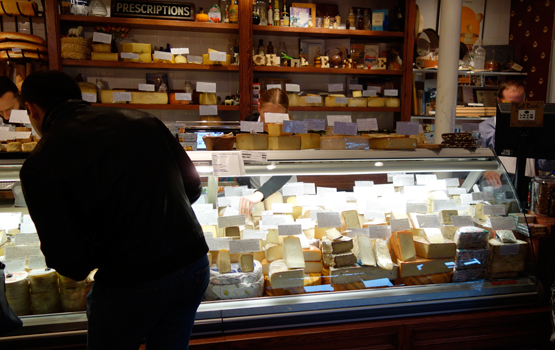
When you open the door of Bedford Cheese Shop, the pungent aromas of cheese hit you. This is a good thing. The cheese descriptions are witty, the staff helpful (they’ll always offer tastes). Salumi comes from small-batch producers.

Brooklyn Cheese Shop, established in 2003

Bedford Cheese Shop, established in 2003

bedford-cheese-shop1486

The whole shop is inviting, with shelves stocked with the best of Brooklyn and beyond. At a second branch on Irving Place in Manhattan, Bedford Cheese now offers classes. Next up, on December 19: whiskey styles and their cheese counterparts.

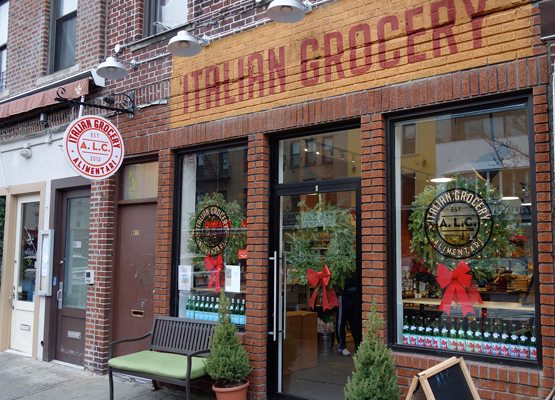
A.L.C. Italian Grocery is a gem of a store in Bay Ridge that has been open less than two months. Owner Louis Coluccio grew up in the specialty food business (he is one of the sons in D. Coluccio & Sons). Now, for his own store, he aims to combine “the best of Italian products and the best of local products,” he told us when we visited last week.

ALC-italian-grocery1699

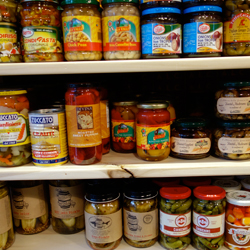
The selection is meticulous and beautifully displayed. You’ll find Parmacotto Salumeria Rosi and smoked pancetta from Leoncini (both Italian) as well as Brooklyn Cured and Mosefund Farm meats.

Italian and Brooklyn products share the shelves at A.L.C. Italian Grocery.

Italian and Brooklyn products share the shelves at A.L.C. Italian Grocery.

Tastings happen often, sometimes twice a week; today was prosciutto—“Genuine prosciutto is made of only four ingredients: hand-selected legs of premier pigs, salt, air and skill.” A.L.C. Grocery is also working on some evening classes at the shop with select producers, which they hope to announce in early January.

Eastern District
1053 Manhattan Avenue, Greenpoint
718-349-1432

D. Coluccio & Sons, Inc.
1214 60th Street, Borough Park
718-436-6700

Bedford Cheese Shop
229 Bedford Avenue, Williamsburg
718-599-7588

A.L.C. Italian Grocery
8613 3rd Avenue, Bay Ridge
718-836-3200

Photographs by Basia Hellwig. Date stamp typographic design by Joy Makon Design. The font is American Typewriter, by Joel Kaden and Tony Stan, ITC, 1974.
 

The Comforts of Tea

Day Nine 12 Sips of Brooklyn
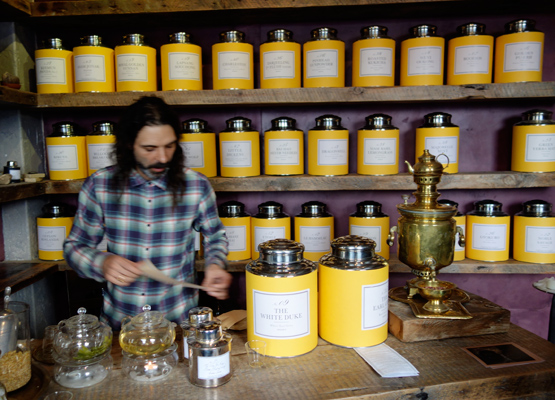
Michael Shannon of Bellocq Tea Atelier

Michael Shannon of Bellocq Tea Atelier brewing tea so visitors can taste.

dec14TAXONOMY, CLADISTICS, SYSTEMATICS, PHYLOGENETICS—so many ways to group and divide living things. Darwin famously sundered the world into “lumpers and splitters”: those who are happy with the general gist, and those who are obsessed with specifics.

The tea trade is one where splitters can run riot: green or black, white or yellow, oolong or pu-erh—all the varieties of Camellia sinensis that have descended through 3,000 years of recorded history. But even within those broad categories, there are nuances piled on subtleties, geography and climate, blends and additives, methods and styles of preparation. Japan and China have elaborate and precise rituals of preparing and serving tea that can last for hours. Even the pragmatic English have woven the drink into their culture and mythology.

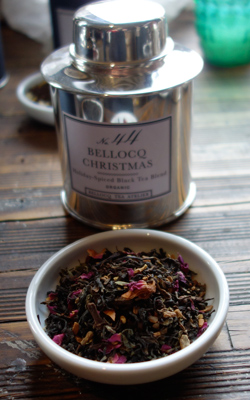
bellocq-christmas-1422

Bellocq Christmas blend in its silver plate caddy

Visit Bellocq in Greenpoint during their limited shop hours and you immediately recognize that here be tea splitters. The neat rows of silver containers with the bold yellow and white labels signal that tea is taken very seriously in these precincts. Yes, you think, this is what a tea shop should be. It is a transport to a quiet and calm that seems centuries and leagues away from the busy streets of North Brooklyn 2012.

It can be a bit daunting. I admit I remain a bit of a lumper and my knowledge of tea is an inch deep and an inch wide, but I stand in awe of the level of awareness and sophistication about the product that is evident at an emporium like Bellocq.

On the day we visited, co-owner Michael Shannon presided in an unhurried manner that was helpful and deeply informative. He brewed tea and explored the intricacies of sourcing teas to avoid the hucksters and scams that abound in that market. He methodically poured samples while revealing a refined sense of the aesthetics of his product. He cracked open canisters to appreciate the aromas while speaking in the same calm fashion about the frenzy the business endured when it was recently cited in O, The Oprah Magazine as one of Oprah’s favorite things. An hour at Bellocq is as warming and refreshing to the spirit as the product they sell.

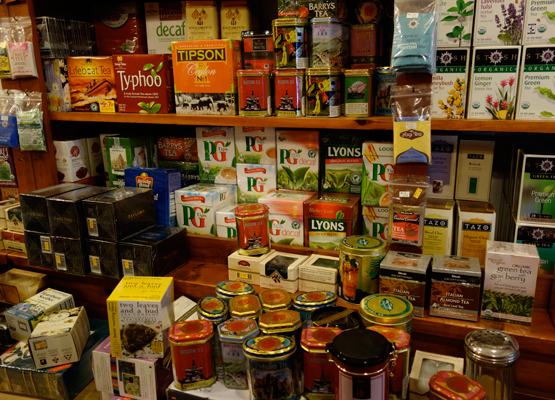
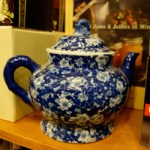
P-and-S-Teas-1197PS Coffee Tea N Spices in Park Slope is a different cup of tea. This store might appeal more to the lumpers among us. Stacks of boxes, cans and jars filled with teas and tisanes and infusions jostle for attention with spices and coffees. Here you feel awed less by the depth of tea esoterica and more by the breadth of stock in a little space. When asked how many teas the store carries, the manager responds, “Two hundred”, which I suspect is a conservative guesstimate. This is a diverse collection, with the old-fashioned packaging of Ty-phoo hard by the elegant boxes of Republic of Tea.tea-pot-p-and-s-1201 I am certain you can find your heart’s desire, a tea for every condition of the spirit. But I like it because most of the time I remain a lumper: “Tea. Earl Grey. Hot.”

Bellocq Tea Atelier
104 West Street, Greenpoint

800-495-5416

PS Coffee Tea N Spices
368 5th Avenue, Park Slope
718-768-5561

Photographs by Basia Hellwig. Date stamp typographic design by Joy Makon Design. The font is Rockwell, by Morris Fuller Benton and Frank Pierpont, Monotype, 1934.

Flavors from Afar, Right Next Door

Day Nine 12 Tastes of Brooklyn
sahadis1816

Sahadi’s has been on Atlantic Avenue for 64 years.

dec14SO MANY OF THE TASTES OF BROOKLYN—and we haven’t even scratched the surface here—have arrived with the waves of immigrants that grew the city into what it is today. Irish and Germans escaping famine or revolution at home—along with Brits and more than a few New England merchants and makers—had already made Brooklyn the third largest city in the U.S. by 1860. Then in the late 1880s came Russian Jews, Italians, Poles and Scandinavians, exploding the population and adding to its diversity again. By then, Brooklyn manufactured more goods than almost anywhere in the nation. The Great Migration brought Southern Blacks; Puerto Ricans arrived to work in the needle trades and cigar factories. Today, there are vital Caribbean and African-American and Chinese and Arab and Italian communities, just to mention a few. So you know where to go—right?— to get the very best patties or black cake or sufganiyot or sweet potato pie or dim sum or baba ganoush. Just head to a neighborhood and ask a local.

tower-of-takeout

Tower of Takeout: makings of a party for less than $20

As times and economics change, ethnic enclaves blossom in a neighborhood and then fade and reappear in new neighborhoods. And always, they bring with them, and leave behind, the tastes of home—grocery stores, restaurants, food trucks. In more than a few cases, the grocers, of necessity, become importers—how else to get the beloved artisanal ingredients their customers need to make the handcrafted recipes that have been passed from generation to generation?

Sahadi’s Importing Co., with its retail grocery on Atlantic Avenue and a warehouse in Sunset Park, is just such a place. Charlie Sahadi’s father, Wade, came from Lebanon in 1919 to work in his uncle’s food business, established in 1895 in Little Syria (or Little Lebanon—Syria and Lebanon were part of the same country at the time) in lower Manhattan. In 1941 Wade decided to start his own business in Brooklyn, moving to the Atlantic Avenue location in 1948. “So I can’t take any credit,” says Charlie, far too modestly.  “I was four at the time. But my brother and I, and now my children also, have kept it going. We’re in our 64th year.” Much of the Atlantic Avenue Arab-American community has moved to Bay Ridge or beyond now, and a thriving Sahadi’s welcomes crowds of multi-ethnic lovers of nuts, dried fruits, spices, olives, cheeses, breads, prepared foods (see above), olive oils and shelves and shelves of Mediterranean and Middle Eastern delicacies.

sahadis-olives-bab-ganoush1854

Olives and baba ganoush from Sahadi’s, in bowls by potter Claire Weissberg of Claireware.

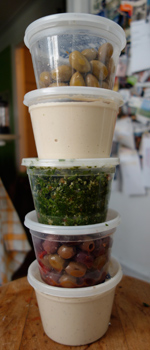
This is the perfect place to go foraging if you’re pulling together drinks and bites for a crowd. The tower of takeout pictured above—from bottom: baba ganoush, Mediterranean olives, tabouleh, hummus, Moroccan picholine olives—came to all of $17.65. The baba ganoush is made with nothing but eggplant, tahini, garlic and lemon juice; the hummus with chick peas, tahini, garlic, lemon juice and water, the chef tells me. Yes, they have chefs because the food is prepared in their kitchens. The tabouleh is more parsley than bulgur, as it should be, and comes out of the kitchen bright green, freshly made.

Since I recently visited Claire Weissberg of Claireware: Urban Folk Pottery in her studio in Gowanus and purchased two beautiful little bowls, seen above, with olives and baba ganoush, I’m ready for my crowds. Well, I may need a few more bowls.

Sahadi’s
187 Atlantic Avenue, Brooklyn Heights
718-624-4550

Claireware
543 Union Street, Gowanus
718-875-3977 (call before making the trip)

Photographs by Basia Hellwig. Date stamp typographic design by Joy Makon Design. The font is Rockwell, by Morris Fuller Benton and Frank Pierpont, Monotype, 1934.

Wednesday Night at the Movies: Soda Fountain Series

OUR GANGNEIGHBORHOOD MOVIES DISAPPEARED FROM THE BIG APPLE in the 90s, bankrupted by mega-Loews showing this week’s poorly acted action films in eye-splitting 3D. Forget about finding old-timey silent movies that have stood the test of time and reached across language  barriers, except late at night on Turner Movie Classics. And except at the Brooklyn Farmacy & Soda Fountain.

Strange? Maybe not. Ben Model, silent film curator and accompanist and the evening’s host, says the earliest movie theaters were converted storefronts like the wonderfully preserved turn-of-the-last-century Farmacy. Wednesday night was the last in the Farmacy’s 2012 soda-fountain film festival, and by the time the show was about to begin, the place was packed with people in their 20s, begging one another for their tables’ empty chairs, sitting on the step where the almighty pharmacist used to hold court, leaning against the soda fountain, and slurping down their famous chocolate egg creams and hot chocolate.

The show Model assembled consisted of four comedy shorts, each 20 minutes in length (or 2 reels long), each converted from flammable acetate to 16 millimeter film (which, he explained, once were mailed to private homes, shown in parlors, then returned—a service much like Netflix). Then decades later each was converted from 16 millimeters to DVDs like the kind sent out by Netflix, and exactly what we would be watching. Before the movies started the Farmacy’s Gia Giasullo warned everyone that fountain service would be suspended during the movies, and then the lights went down.

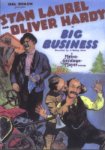
big business posterCharlie Chaplin’s silent short Behind the Screen kicked off the festival. The print, crisp and clear, shows the hero’s antics as an assistant at a movie production company, with typical Chaplin slapstick. The next, Buster Keaton—the Human Medicine Ball, Model labeled him—was up with The Goat, featuring a mistaken identity and police chases galore. Then it was Good Cheer, a sentimental Hal Roach comedy featuring The Gang (sort of a prototype of Our Gang), an archetypical bunch of tenement-dwelling kids who wonder if Santa Claus really exists. This print was poor, but it was a lesson in film preservation, and how acetate film stock decays when the original is not copied to a more permanent material. A huge percentage of silent films have been lost, mostly because there’s no profit motive. (By the way, according to Good Cheer, Santa’s the real deal.) The last on the bill was arguably the most hilarious: Big Business, a rare Laurel and Hardy silent two-reeler (most of their movies were talkies), and a portrayal of Reciprocal Destruction: The pair’s attempt to sell a Christmas tree starts with an irate would-be customer clipping the tree’s top and ends with his house and their car reduced to rubble.

After the show Model took a couple of questions from the audience, and said that like most accompanists back in the day, he doesn’t play by a score. Fascinating stuff for the film buff, and a cheap date for the twentysomethings: the night at the movies was free. If you’re lucky, you can get to go next year.

Executive Editor Phil Scott often writes about travel and aviation.

Distilled in Brooklyn

Day Eight 12 Sips of Brooklyn

kingscountybourbon

dec13 date stamp by Joy Makon Design

TODAY’S SIP TAKES TO HEART THE WORDS of the incomparable Ogden Nash: “Candy is dandy, but Liquor is quicker.” Instead of words, words, words, though, let’s cut to the headline: Brooklyn Brews Booze.

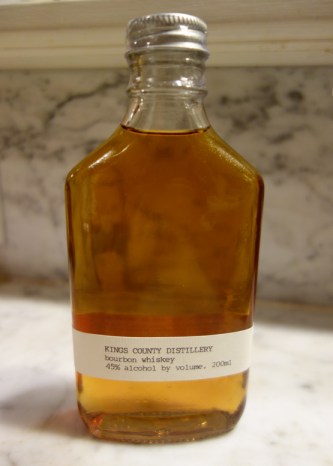
Kings County Bourbon (top) is distilled in the 113-year old Paymaster Building of the Brooklyn Navy Yard. Check out Brooklyn Artisan‘s earlier coverage on a tour of the distillery. Kings County, one of the first small-batch distillers in the state, brews its mash with Scottish barley for authenticity, along with American corn. For true Brooklyn cred, the distillery has added corn picked from a small crop grown in the yard of the distillery into their batches. Best served neat—water breaks things!

dark-brew

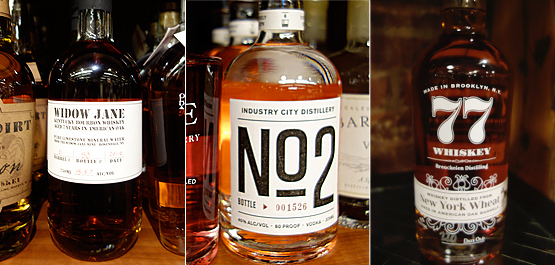
Widow Jane Kentucky Bourbon Whiskey (above, left) is the most recent offering from Cacao Prieto in Red Hook. Released in October 2012 at a party there, Widow Jane is made with water brought from the limestone mine in upstate New York that provided stone for the Brooklyn Bridge and the Empire State Building.

Industry City No. 2 Vodka (above, center) is produced in Sunset Park, where Industry City Distilling creates its sugar beet vodka. They document their progress in building a larger plant on their nicely designed, fun web site, which has videos, photos of the distillers and details about the distilling process. Wonder what happened to No. 1?

77 Whiskey, from Brueckelen Distillery (above, right) in Sunset Park is made from New York State wheat. The distillers were the subject of a beautiful Made by Hand video a couple of years ago.

gins

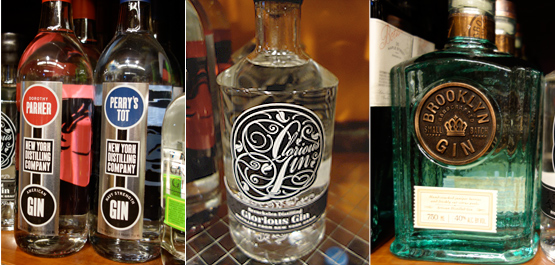
New York Distilling is making gin (above, left) in Williamsburg, including a version named in tribute to Algonquin Round Table denizen Dorothy Parker, who definitely knew gin. They also have a full service bar cum tasting room next to the distillery called The Shanty.

Brueckelen also makes Glorious Gin (above, center) with New York Wheat, keeping it in the family.

 Brooklyn Gin, despite its name (above, right), is actually fabricated in Warwick, New York, which makes it part of that region we like to call Outer Brooklyn. But we take the name as a gin-soaked compliment.

Kings County Distillery
63 Flushing Avenue, Navy Yard

Industry City Distilling
33 35th Street, Sunset Park
917-727-5309

Breuckelen Distilling
77 19th Street, Sunset Park

347-725-4985

Cacao Prieto
218 Conover Street, Red Hook
347-225-0130

New York Distilling Company
79 Richardson Street, Williamsburg
718-412-0874

Brooklyn Distilling Company
Warwick, New York

Many of these drinks are available for consumption at fine Brooklyn booze halls like:

The Drink
228 Washington Avenue, Williamsburg
718-782-8463

Fort Defiance
365 Van Brunt Street, Red Hook
347-453-6672

Photographs by Bruce Campbell. Date stamp typographic design by Joy Makon Design. The font is Shelley Allegro, by Matthew Carter, Linotype, 1972.

Pies, Glorious Pies

Day Eight 12 Tastes of Brooklyn
Felipa-Lopez-Pie-Corps819

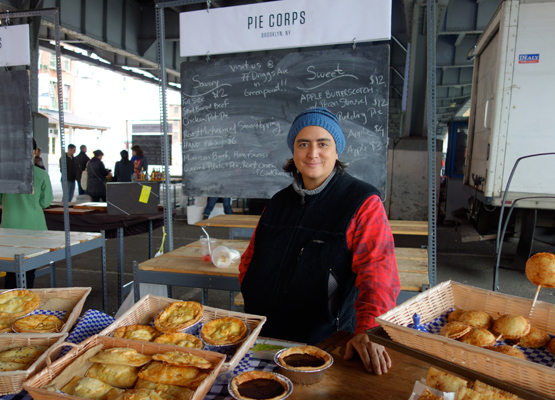
We visited Felipa Lopez, co-owner of Pie Corps, selling pies at New Amsterdam Market this fall.

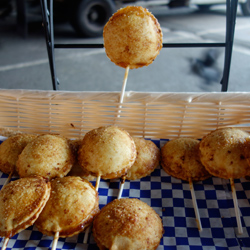
dec13 date stamp by Joy Makon DesignSAVORY PIES BRING YOU A WHOLE NUTRITIOUS MEAL in one perfect packet, which could come in mighty handy as the house fills up with guests and you have more meals than just that one Big Holiday Dinner to plan. Turkey, sweet potato and rosemary pie, lamb curry and pea, stout-braised beef, winter greens with white bean, feta and walnut—is your mouth watering yet?—Moroccan beef with chick pea and almond, red wine mushroom pie: Cheryl Perry and Felipa Lopez of Pie Corps hand make them all in their Greenpoint bakery. Specially for the holidays—still my beating Québec ex-pat heart—they are baking tourtières as well. And just as English miners carried Cornish pasties for a perfect portable lunch, we now have Pie Corps’ hand pies. Plus, of course, those irresistible bite-size Pie Pops—maple bacon, pear or apple cinnamon.

Pie pops are fun to eat!

Pie pops are fun to eat!

Carefully sourced ingredients and creative combos are their trademarks. The pies are all made with organic flour milled in Lancaster, PA, butter from a Vermont cooperative of dairy farmers and fresh produce and meat from their farmer friends all around New York, Pennsylvania and New Jersey. You’ll find the pies at New Amsterdam Market on Sundays, or at their newly opened shop on Driggs Avenue in Greenpoint, where you can grab yourself a cup of Brooklyn Roasting Company coffee as well.  Yes, Pie Corps also makes sweet pies—gingerbread custard among them!

And for DIYers, it has just started giving monthly baking classes: January 23 is “Savory Winter Pies,” $65. (At press time, one or two spots are still open in the December 18th class, too.) Hand pies, $6; savory 10-inch pies, $40; sweet 10-inch, $35.

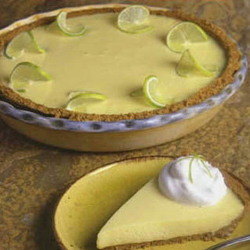
steves-authentic-key-lime-pie

Add lime slices and whipped cream to your pie, if you like. (Photo courtesy Steve’s Authentic Key Lime Pies)

Speaking of sweet, we head over to Red Hook, where, hallelujah, Steve’s Authentic Key Lime Pies is back in production again, after some serious flooding  by Sandy. Baker/owner Steve Tarpin, who grew up in Florida, makes the pies by hand in small batches using 100 percent pure fresh butter for the graham-cracker crust and freshly squeezed key lime juice. Reconstituted juice may be OK “if you’re stripping paint or removing rust, but not not in a food product,” he insists. The key lime (citrus aurantiifolia) is much smaller than the familiar “Persian” lime, about the size of a ping pong or golf ball; he points out it’s not exclusive to the Florida Keys (it’s native to Southeast Asia), but was brought to the Keys and naturalized.

In addition to the elegant and aromatic key lime pies, you’ll want to try a Steve’s Authentic exclusive, the Swingle—a Belgian chocolate–dipped frozen tart on a stick. Wow. Steve delivers his pies around town, including to Union Markets in Brooklyn. Or he’ll sell you one at company headquarters on Pier 41. Walk-in hours vary throughout the week but with more certainty Wednesday, Thursday, Friday and weekends, 11 am–5 pm (at least). Call ahead to be sure. 10-inch pie, $28; 8-inch, $18; 4-inch tart, $5; Swingle, $6.

Pie Corps
77 Driggs Avenue, Greenpoint
917-721-3052 / 917-582-2769

Steve’s Authentic Key Lime Pies
204 Van Dyke Street, Pier 41, Red Hook
888-450-5463, 718-858-5333

Photographs by Basia Hellwig. Date stamp typographic design by Joy Makon Design. The font is Shelley Allegro, by Matthew Carter, Linotype, 1972.

Coffee Conscious

Day Seven 12 Sips of Brooklyn
The author relaxes at Café Grumpy in Greenpoint.

The author relaxes at Café Grumpy in Greenpoint.

OUTSIDE THE CITY LIMITS, businesses and commuters rely on fossil fuel. Here in New York, we know the true engine of enterprise is coffee.

Years ago, while studying graphic design in Greenwich Village, I frequented a diner on Waverly Place that had a unique dispensing system for its coffee. Order a cup and the counterman would turn the tap on what looked to be an ordinary kitchen faucet sticking from the wall. Out came black java. How cool was that! I visualized this vast network of pipes running through the city parallel to the Catskill water lines, and plotted how to get it supplied to my kitchen. Eventually, I realized it was merely a clever positioning of their coffee urn in the kitchen behind, maximizing space in the limited serving area (my naïveté is best explained by two words: art school).

In the past two decades, coffee in the city has gone from commodity to connoisseur. On the one hand, there is the ubiquitous Starbucks, basically a slicker, upscale Chock Full o’Nuts. For mocha’s sake, there are Starbucks in shopping malls (!) and thruway rest areas. Good enough for a quick joe, but basically homogenized brown water dispensed by undertrained baristas. On the other hand are the coffee bars with more highly trained staff, higher quality product and various levels of design finish or stylish marketing as product differentiators.

I prefer my coffee from what I call the roaster/merchant. These shops work on the assumption that there is a market in consumers who want to drink their java not in some plush salon, but in the roastery itself. These are not your fancy wineries perched at the edge of the vineyard, with peacocks wandering about and classical music piped in. No, these are a few tables pushed up against bean bags hard by the coffee roaster. A certain industrial esthetic predominates.

Grumpy-roasted

Café Grumpy in Greenpoint is an excellent example of the roaster/merchant. Here you know the roasted beans are fresh, having travelled all of 20 feet from roasting to cup. Grumpy embodies a trend in the coffee trade that won’t be unfamiliar to other artisanal businesses. The menu in the shop provides some basic information about the origins (country and region—often down to the specific valley) and its website links to photos of the coffee growers in their plantations, taken by staff who are obviously inspecting the product and working closely with the farmers.

I think this trend appeals to a modern desire by sophisticated buyers to be conscious of where a product is from, who made it and how it was made. In another industry, Apple Inc. has lately been beset by bad press covering the working conditions at its Chinese contractors plants. There is a developing insight that our Western consumption practices have real world consequences for people thousands of miles away, and we want and need businesses to care about this.

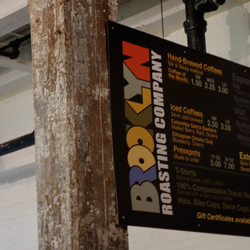
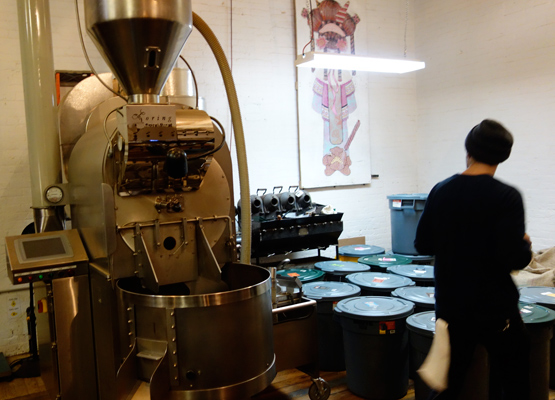
Bkly-Roasting-signBrooklyn Roasting Company is located on a cobblestoned street in DUMBO crisscrossed by old train tracks that used to serve the factories of an earlier era. Its  shop has a hard-edged factory feel, with a gorgeous Loring Kestrel roaster and industrial drums under stark lighting at one end and café seating at the other. Its website quotes its “coffeelosophy,” a listing of coffee awareness buzzwords: “best quality Fair Trade, Rainforest Alliance, and Organic certified and sustainable coffees.” Currently, it also shows pictures of co-owner Jim Munson on a coffee expedition in Sumatra.

Brooklyn Roasting Company

The roaster at Brooklyn Roasting Company

Today’s coffee houses are open about the details of their production, extending down to their care and concern for the small growers that supply them. That vision appears to go beyond mere coffee political correctness or a clever marketing ploy. The American Revolution (and the modern world) was hatched in the coffeehouses of Boston, London and Philadelphia. The concern shown by these new coffee merchants is for a sustainable future for the entire supply chain that leads to the consumer. That vision deserves to be central to any manifesto crafted in the coffeehouses of the artisan/maker movement growing here in Brooklyn.

For the anthem of the movement, I propose the KaffeeKantate by Johann Sebastian Bach, here performed in a coffeehouse by The Amsterdam Baroque Orchestra & Choir:

Brooklyn Roasting Company
25 Jay Street, Dumbo
718-522-2664

Cafe Grumpy
193 Meserole Avenue, Greenpoint
718-349-7623

Photographs by Basia Hellwig. Date stamp typographic design by Joy Makon Design. The font is Gill Sans Ultra Bold, by Eric Gill, Monotype, 1928. 

Ancient Craft, New Artisans

Day Seven 12 Tastes of Brooklyn
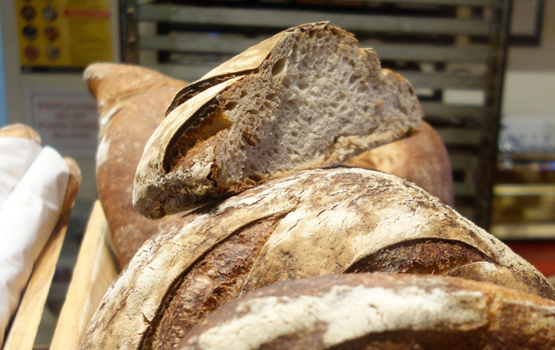
Miche, Bien Cuit's signature artisanal bread

Miche, Bien Cuit’s signature artisanal bread

ARTISANAL BREAD MAKING IS NOT FOR SISSIES. The baker’s day starts before the sun rises, and a small batch of handcrafted loaves can take up to three days to make, from start to finish, with repeated fermentation and kneading and rising stages. The natural yeast starter used is a living organism, combining yeast from the air with lactobacteria from the flour and the air to create a fermenting or leavening agent. It’s not called wild yeast for nothing—it can be temperamental, depending on which exact strains of bacteria develop, how they combine with a particular wheat flour, the temperature, and so on. It is the baker’s art to nurture their starter—the mother yeast (madre, if you’re an Italian baker)—like a baby, keeping it alive often for decades, for that is what gives each baker’s breads their distinct flavor and texture.

This was the way bread was made for centuries—and it’s a craft that is still being practiced in some special places in Brooklyn. So forget that 30-Minute Artisan Bread recipe.

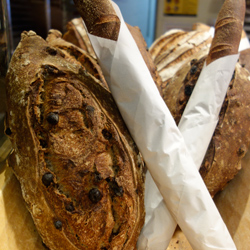
Raisin walnut, baguette, olive—just a few of Bien Cuit's breads.

Raisin walnut, baguette, olive—just a few of Bien Cuit’s other breads.

Go instead to Bien Cuit in Boerum Hill or Settepani Bakery in Williamsburg where you’ll be hit by the most intoxicating smells as you walk through the door. Two of our favorite loaves:

MICHE, from Bien Cuit
This is Bien Cuit’s signature bread (pictured, at top)  made from three wheat and three rye flours and fermented for up to 68 hours. It’s round and beautiful with a well-done (bien cuit) crunchy crust and very tasty crumb texture. Master baker Zachary Golper learned to bake on an Oregon farm at 19, where he watched and learned from a man who made bread by traditional European methods: building up the starter over a few days and baking the loaves in a wood-fired adobe oven. Golper went on to refine his craft, working in France and at the Bec-Fin in Philadelphia, until, luckily for us, he and his wife, Kate Wheatcroft, opened up a bakery in Boerum Hill. We’ve heard he never sleeps, and we believe it because starting at 7 am, baskets at the bakery are full of fresh bread, including the miche, $10 for a 1 lb loaf.

PANETTONE, from Settepani Bakery
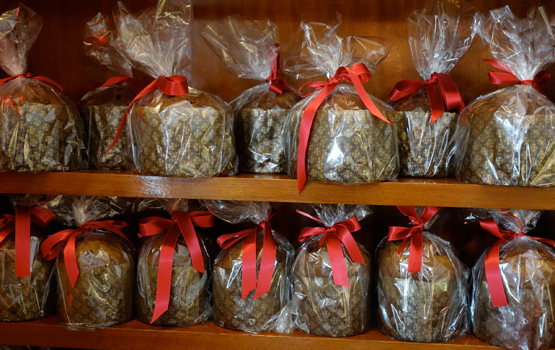
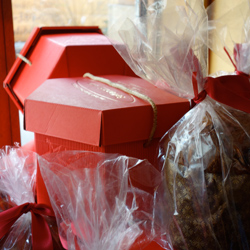
These festive raisin-studded tall round loaves appear in bakeries and groceries around Christmastime, sometimes in beautiful elaborate gift boxes that look good enough to hold the crown jewels. Many are shipped from Italy, where the panettone was invented centuries ago in Milan. (Like all old Italian recipes, there seem to be a lot of  tall tales about how it came it be.) But nothing beats a fresh-baked panettone, which is what you’ll find at Settepani Bakery.

Rows of Milanese panettone at Settepani Bakery in Williamsburg.

Rows of Milanese panettone at Settepani Bakery in Williamsburg

Owner Nino Settepani (the name means “seven breads”—how perfect) was born in Sicily, but has lived here most of his life. A master baker trained at the French Culinary Institute, he’s been baking breads and pastries of all kinds for over 30 years now. Production of the panettone begins in the fall each year. The first step is to “wake up” the yeast starter that he uses year after year, refreshing it every day to make it strong and active.

Settepani's chocolate panettone comes in a beautiful gift-worthy box.

Settepani’s chocolate panettone comes in a beautiful gift-worthy box.

By November 15, he begins making his first batch of panettone, a process that takes up to 30 hours—mixing the dough, proofing it overnight for 12 hours, mixing it again and letting it rise in a temperature-controlled steam box for another 6 or 7 hours. “It might come out at 2 pm, but lately it’s been 4 or 5 pm because it’s so cold,” he tells me. After that the loaves are baked very slowly for two hours. Each holiday season, Settepani Bakery produces more than 600 panettone of various types. The Milanese has raisins and cut dried fruit in it; the Veneziano, almonds, but no raisins. There’s also a chocolate one. They come in 1 lb, 2 lb and “baby” sizes. The Milanese is $16 for 2 lbs, $10 for 1 lb, $2.50 for the baby.

Bien Cuit
120 Smith Street, Boerum Hill
718-852-0200

Settepani Bakery
602 Lorimer Street, Williamsburg
718-349-6524

Photographs by Basia Hellwig. Date stamp typographic design by Joy Makon Design. The font is Gill Sans Ultra Bold, by Eric Gill, Monotype, 1928.