End-of-this-World Hot Chocolate

Day Six 12 Sips of Brooklyn
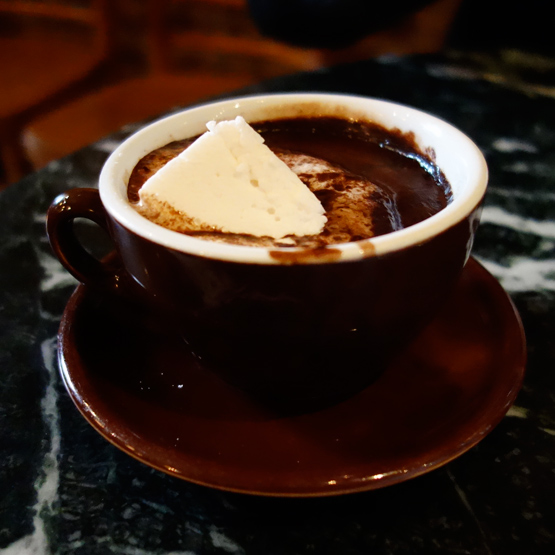
The spicy hot chocolate at The Chocolate Room.

The spiced hot chocolate at The Chocolate Room.

dec11WHAT SHALL WE DRINK AT THE ENDING OF THE WORLD? What better way to honor the end of the Mayan’s Long Calendar (and the destruction of all we know and love) than by serving their favorite beverage: chocolate, preferably hot.

What with Niburu (or is it Planet X?) ready to carom off us in a celestial game of billiards, the impending total blackout, solar flares, devastating meteors and the reversal in the rotation of the Earth, things promise to get pretty busy around here soon. Even NASA is attempting to debunk the rumors, which should only encourage the anxiety: “Man, the government obviously knows all about this and they’re just covering it up to keep the citizens docile.”

So, to stock up for our ultimate Go-bag (in the event that we have to head for our mountain redoubt to rebuild the human race), we went over to The Chocolate Room in the Slope for some hot chocolate. The real star there is the Spiced Dark Hot Chocolate, only available during the cold season or until the collapse of civilization, whichever ends first.
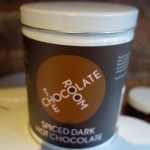
cho-room-choc-mix1236Made with a blend of Belgian chocolate (60% and 72% cocoa), Valhrona (French) cocoa, sugar, cloves and cinnamon, the drink gets its spiciness from Ancho and Chipotle chilis, an authentic addition the Mayans would appreciate. Floating in the middle of the cup was a delicious chunk of artisanal marshmallow.

Spiced Dark Hot Chocolate bears as little relation to supermarket/diner/skating rink hot chocolate as a delay on the F train bears to a collision with a brown dwarf planet. It is rich and loaded with flavonoids and other antioxidants as well as mild stimulants. The science is still out, but there is evidence that chocolate may improve your mood and heart health (when taken in moderation). The chilis also are reputed to have medicinal effects. Of course, the scientists are all busy pooh-poohing the end of the planet, so you can take their advice with a grain of salt.

The Chocolate Room sells its Spiced Dark mix to go in a meteorite-resistant one quart tin for $20 (also available from the website). If you want some marshmallows with that, stay away from those awful pellets sold in the supermarket, and go for Whimsy & Spice’s confections instead. The Brooklyn makers produce marshmallows in cardamom, maple, passionfruit and other flavors. (Available online and from local stores for $6.50 a dozen.)
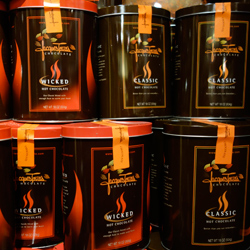
Torres-hot-choc-mix1541Jacques Torres Chocolate is a true Mecca for chocolate, in solid or liquid state. The classic hot chocolate is rich and creamy, and they also have a Wicked version with Ancho and Chipotle chilis. They’ve thrown down the gauntlet by stating that they never use cocoa powder in their blends, and the packaged version is $18 for 16 oz.

I’ll leave it to the chocolate makers to battle over the nuances of cocoa powder vs. no cocoa powder, I’m heading down to my Niburu-proof bunker for some hot chocolate.

The Chocolate Room
86 Fifth Avenue, Park Slope
718-783-2900
269 Court Street, Cobble Hill
718-246-2600

Jacques Torres Chocolate
66 Water Street, DUMBO
718-875-1269

Whimsy & Spice
646-709-6659

Photographs by Basia Hellwig. Date stamp typographic design by Joy Makon Design. The font is Goudy Oldstyle, by Frederick W. Goudy, Linotype, 1915.
Villabate Alba’s Famous Cannoli

Day Six 12 Tastes of Brooklyn 
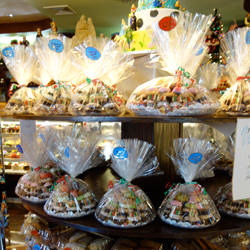
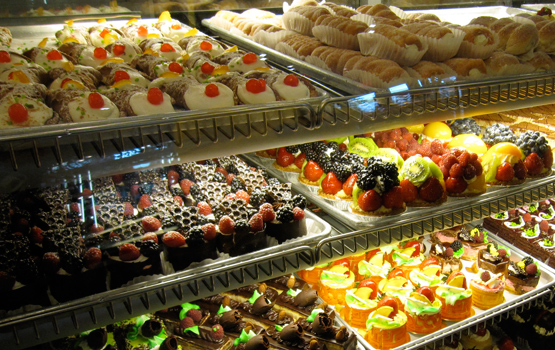
Villabate Alba's pastry displays knock you over when you walk in the store. That's the cannoli, top left.

Villabate Alba’s pastry displays knock you over when you walk in the store. The cannoli are top left.

dec11CANNOLI WERE TRADITIONALLY MADE IN SICILY for Carnevale, or Mardi Gras, a final luxurious burst of richness before Lent. But really, aren’t they perfect for any feast? I have to agree with Mediterranean cooking scholar Clifford A. Wright: “A freshly made cannoli is an extraordinary taste of celestial paradise, a perfect conclusion to a feast.”

Villabate Alba, a family-owned Sicilian pastry shop established three generations ago in Bensonhurst, is the place to experience that paradise—and other seasonal delicacies, too. As the Michelin Guide would say, “Worth a special journey” if you don’t happen to live in the neighborhood. (They also ship.) The cannoli have perfectly crisp shells and are filled with ricotta flown in from Palermo. Candied orange rind at one end and a cherry at the other perfect the package.

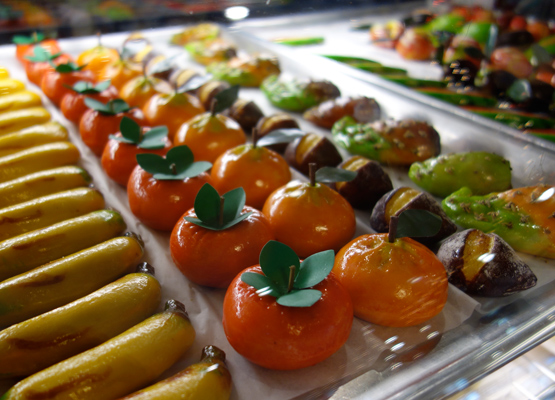
Marzipan fruits, good any time of year.

Marzipan fruits, good any time of year.

Villabate (named after the village in northern Sicily where the shop’s founders, Angelo Alaimo and his son Emanuele, used to bake bread) is bustling every time you go in. But at this time of year, lines form. You’ll find tables stacked high with panettone boxes and lots of special cookies and sweets traditionally made around Christmas.

Villabate-cookies

Christmas cookie plates, ready to go.

They bake mostaccioli cookies, popular all over southern Italy—and Brooklyn—for the holidays. Apparently these used to be made with grape must (we’re talking back in days of the Roman Empire). They’re redolent of the spices of the Silk Road (think Italian gingerbread), filled with figs and topped with chocolate.

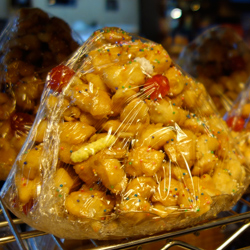
A pyramid of honey-soaked biscuit.

A pyramid of honey-soaked biscuit.

Rococò are crisp wreath-shaped cookies made with ginger and cloves, infused with almonds and studded with whole almonds. Honey balls stacked in a pyramid… The temptations are many. But be careful. You could go into a sugar coma just looking.

Villabate Alba Pasticceria & Bakery
7001 18th Avenue, Bensonhurst

718-331-8430

Photographs by Basia Hellwig. Date stamp typographic design by Joy Makon Design. The font is Goudy Oldstyle, by Frederick W. Goudy, Linotype, 1915.
12 DAYS OF BROOKLYN: Why ‘Chanukah House’ is Dark in 2012

Day Six   12 Views of Brooklyn
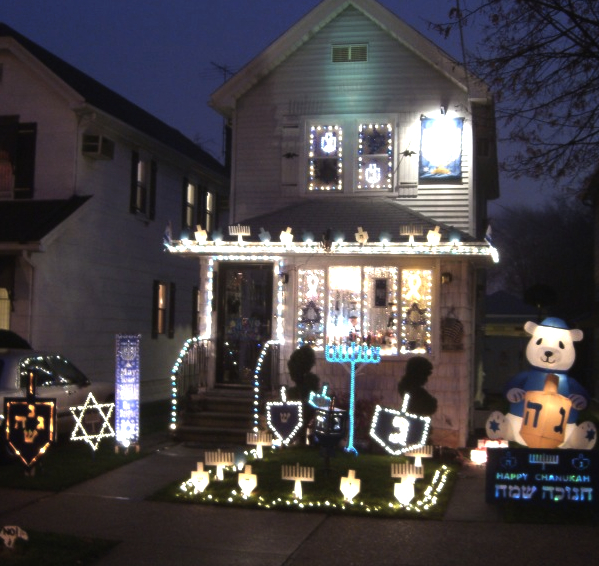
(Used by permission of the homeowner)

(Used by permission of the homeowner)

dec11DANIEL TEITELBAUM GIVES THE HISTORY of the exuberant decorations on his family’s house. “The miracle of Chanukah is supposed to be publicized. That is why Jews all over the world light their menorahs in the windows or doorways of their homes where people passing in the street can see it. We have just taken it a step further.” When their daughter was two years old, “We started with a single dreidle made out of wood and strung with white lights. We then added blue lights that we put up together with white lights around our home. From that time on we tried to add something new every year.” The renown of the house in Mill Basin has grown. “In 2006, we were presented with a proclamation from Brooklyn Borough President Marty Markowitz naming our home, the official Brooklyn Chanukah House.” (More about this in our Who’s Who.) This year is sadly different:  “Due to Hurricane Sandy the Brooklyn Chanukah House is not able to put up its display. We suffered significant damage to our home and the repairs will not be completed before Chanukah. We apologize for this and wish to thank everyone for their messages of support. We will be back next Chanukah better than ever. Chanukah Sameach.”
O Good Ale Comes

Day Five 12 Sips of Brooklyn

winter-ale-1785dec10TELL WHOEVER SOLD US THE CALENDAR (Pope Gregory XIII) that I demand a refund. It tells me winter is still 11 days away—beginning on the solstice. The truth is, December is full winter, the gloomiest part of year with its dark nights and fitful gray days. If we must break the year up into quarters, let’s admit we’ve been in winter for nearly six weeks. The solstice marks the low point of winter, the turning of the year, the slow return of the sun. No wonder my Highland ancestors lit their bonfires for Hogmanay: dispel the night, bring back the day. (Of course, from what I know of my ancestors, they probably also burned their neighbors’ barns and sheds for spite, but let that pass.)

To light up this darkest time of year, the craft brewers of Brooklyn are offering some nice and hearty ales, stouts and porters. Winter is the time of stouts and porters, dark and filling, not for your hefeweisens and pale lagers or (kill me now) light beers. For my taste, ale’s the thing for winter.

I’d hate for Robert Burns to be only remembered for Auld Lang Syne, the anthem of the new year, as he wrote other fine verse. The one that comes to mind here and speaks to the need for lightening the heart:

O gude ale comes and gude ale goes; 
Gude ale gars me sell my hose, 
Sell my hose, and pawn my shoon—
Gude ale keeps my heart aboon!*

Brouwerij-Lane

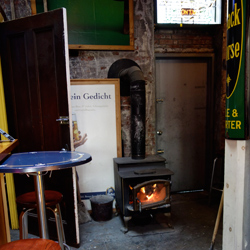
Brouwerij Lane holds back the dark of winter with a wood-burning fireplace.

Brouwerij Lane holds back the dark of winter with a wood-burning fireplace.

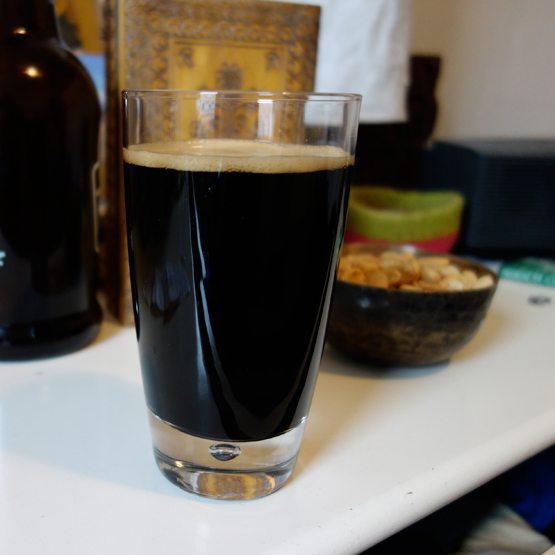
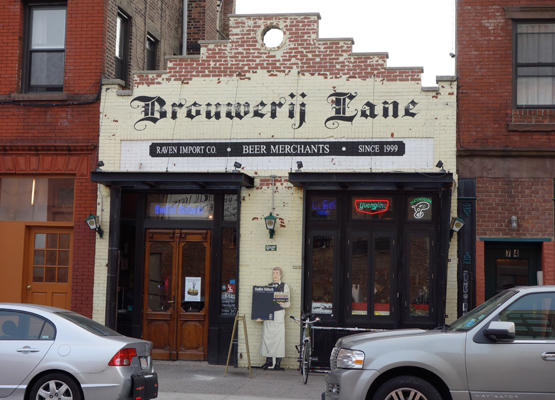
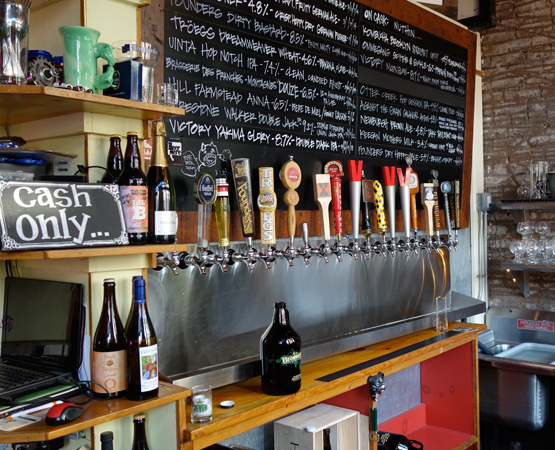
To keep our hearts aboon through winter, let’s find some Brooklyn beer. First up, the Brooklyn Brewery “There Will Be Black,” which I got to sample before a warm wood fire on a gray day at Brouwerij Lane on Greenpoint Avenue. The Lane is a lovely place to spend the winter. The 19 taps and several display cases of bottled beer should get you nicely through our shortest afternoons and longest nights.

“There Will Be Black” is a new release in the Brewmaster’s Reserve series which has, according to their publicity, “a core of black bread and dark chocolate, wrapped in a bright coat of orangey, minty hops”. If that doesn’t sound like a winter drink, nothing does. In addition to the “Black”, Brooklyn Brewery is shipping their standard range of seasonal beers in bottles, including Winter Ale and Black Chocolate Stout.

More elusive is the Sixpoint Brewery offering: Diesel. It seems to be rolling out as we go to press, and in just the last 24 hours, it has begun popping up around the city on the new Sixpoint beer finder. We’re heading out after writing this entry to hunt its “robust chocolate and roasted flavors, with thick pine hop flavor and aroma.”

Brouwerij-Lane-Taps1432

Brouwerij Lane seems to keep at least one Brooklyn brew on tap.
Its website lists the current offerings; this week There Will Be Black is on the list.

I caught up with Kelly Taylor of KelSo Beer Company at Grand Central Terminal tonight where he was offering tastings of their signature Nut Brown Lager, which is as good as an ale in my book. He suggested the KelSo Winter Lager for cold nights and also said they were brewing a Porter. Check out their Facebook page or Twitter for more information on tastings and tap availability (they don’t have a web site). They will be commandeering a number of taps for a tasting at Bierkraft tomorrow, December 11.

It’s going to be a long winter. Be careful not to sell your warm socks.

Brooklyn Brewery
79 North 11th Street, Williamsburg

718-486-7422

Sixpoint Brewery
40 Van Dyke Street, Red Hook
917-696-0438

KelSo Beer Company of Brooklyn
529 Waverly Avenue, Clinton Hill
718-398-2731

Brouwerij Lane
78 Greenpoint Avenue, Greenpoint
347-529-6133

Bierkraft
191 Fifth Avenue, Park Slope
718-230-7600

*For those who find their Broad Scots rusty:

O good ale comes and good ale goes; 
Good ale makes me sell my hose (socks), 
Sell my hose, and pawn my shoes— 
Good ale keeps my heart above (uplifted)!

Photographs by Basia Hellwig. Date stamp typographic design by Joy Makon Design. The font is Chalet Tokyo, by René Albert Chalet (a clothing designer), House Industries, 1970.

Tipsy Quince and a Few of Her Saucy Friends

Day Five 12 Tastes of Brooklyn
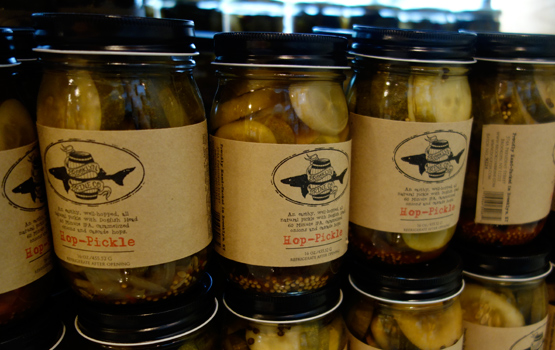
Enough for everyone: Brooklyn Brine's Hop-Pickle at Whole Foods

Enough for everyone: Brooklyn Brine’s Hop-Pickle at Whole Foods

dec10BROOKLYN HAS SO MANY SMALL-BATCH PICKLE MAKERS, you could write a book about them. Rick’s Picks, McClure’s Pickles, Brooklyn Brine, Sour Puss Pickles—so many to choose from, all with great taste combos and interesting stories behind their businesses. And then there are the sauces and relishes and condiments. Or how about a hot honey? I’ll keep sampling them all but for the holiday table, a girl’s gotta choose, so at least for now, here are my favorites for the feasts ahead.

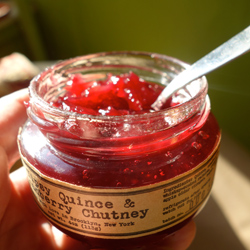
Tipsy Quince and Cranberry Chutney, by Anarchy in a Jar
anarchy-in-a-jar-01145
“The revolution starts in your mouth” is this small-batch producer’s motto, and her combination of two tart fruits with sweet whisky-soaked raisins in this chutney does just that. For the holiday, it’s perfect with poultry or game birds. Founder Laena McCarthy grew up making traditional jams with her family in the Hudson Valley and now makes 14 very flavorful chutneys and jams.

Look for them at Brooklyn Flea or at New Amsterdam Market, or buy online, or at local stores like Eastern District in Greenpoint, Brooklyn.


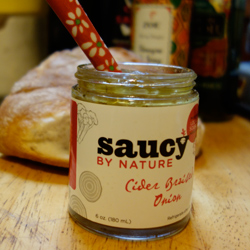
Cider Braised Onion spread, and Cranberry Pear Sauce, both by Saucy by Nature
saucy-by-nature-cider-onion01750
Owners Przemek Adolf and Monika Luczak use locally sources ingredients to make spreads inspired by flavors they experienced during trips to faraway places. In the Cider Braised Onion spread, fennel and rosemary add a little bite to the sweet caramelized onions. Great with pork or poultry. The cranberry pear sauce is more tart than sweet, with a pinch of cardamom that adds complexity. Try it as a glaze for poultry or game birds, such as duck, suggests Saveur.com.

Buy online, at Dean & Deluca, and at small provisioners all around Brooklyn.


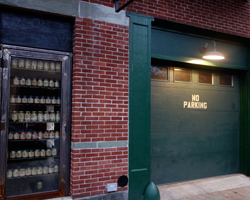
Brooklyn Brine's factory and storefront in Gowanus.

Brooklyn Brine’s factory and storefront in Gowanus.

Hop-Pickle, by Brooklyn Brine Co.
I first tried this hop-pickle when owner Shamus Jones was giving out tastes at Eataly (you know—the Outer Brooklyn place run by Mario Batali). The pickle is the result of a collaboration with Dogfish Head Craft Brewery in Delaware. As Dogfish founder Sam Calagione tells it, he was sitting around one day drinking a 60 Minute IPA and snacking on some Brooklyn Brine pickles. He loved the way they tasted together and called Shamus. The Hop-Pickle is made with Dogfish Head 60 Minute IPA, caramelized onions and Cascade hops.

If you want to make pickles yourself, Brooklyn Brine holds classes on Saturday, noon to 3 pm, at their small Gowanus pickling factory. Sign up Wednesday by noon, for the Saturday class; brooklynbrine@gmail.com. Or  you can buy their pickle-making kit at Whole Foods or Williams-Sonoma.

Look for Hop-Pickles at Whole Foods, small provisioners all around Brooklyn, or direct from the factory.

Brooklyn Brine574A President Street, Gowanus; 347-223-4345

Photographs by Basia Hellwig. Date stamp typographic design by Joy Makon Design. The font is Chalet Tokyo, by René Albert Chalet (a clothing designer), House Industries, 1970.

12 DAYS OF BROOKLYN: Diversity Is in Our Cultural DNA

Day Five  12 Views of Brooklyn

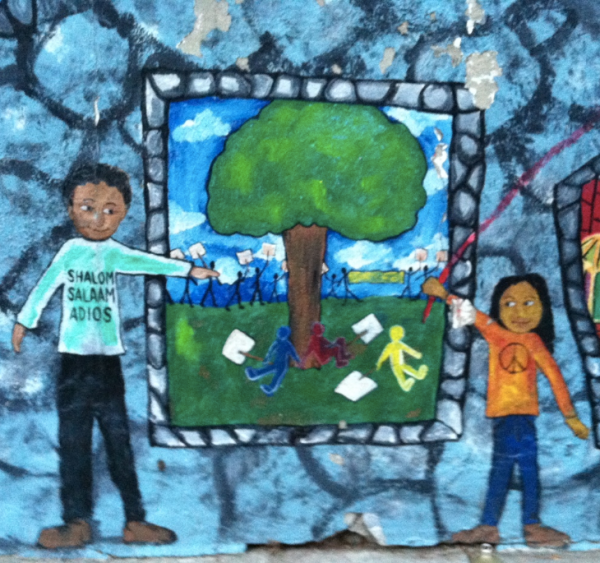
Peace Detail from a mural in Park Slope, boy and girl

dec10THE GREAT 20TH CENTURY ANTHROPOLOGIST DR. MARGARET MEAD observed in one of her magazine columns in the late 1960s that the only true citizens of a culture are the children born into it, not the adults who have created it. You have only to see a three year old with an iPad to get her point. The self-consciousness of the peace movement of the 60s, of affirmative action, of busing and political correctness have made a difference. Out of that tradition comes this panel of a larger mural. The little girl has a peace symbol on her shirt; the little boy’s shirt says, “Shalom. Salaam. Adios” – all of them versions of Peace and go with God. Society’s problems of racial and religious intolerance have not been solved, but they’ve certainly been  shrunk. The signature for the artist (s) for this multi-panel mural in Park Slope, on 8th Street and the corner of 6th Avenue, is not on the wall; the message is everything. (More from this mural in Who’s Who.)

The Red Terroir

Day Four 12 Sips of Brooklyn
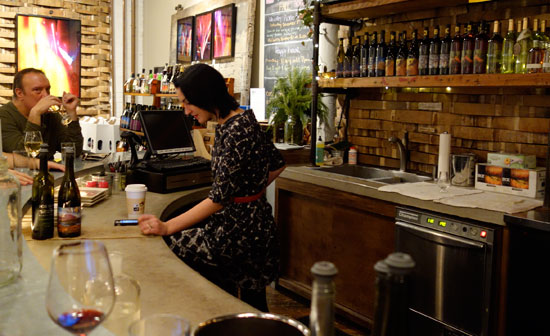
The Brooklyn Oenology tasting room.

The Brooklyn Oenology tasting room.

dec9HERE IN CONCRETE-LANDSCAPED NEW YORK, we tend to think of wine as a product of elsewhere;  foreign lands with exotic cultures and languages, like California or France. But in the past four years, two wineries have sprung up in Brooklyn alone: Red Hook Winery (established 2008) and Brooklyn Winery (2010), committed to actual production within the borough limits. Another approach is that taken by Brooklyn Oenology, which focuses on regional grapes and produces its wines outside the city. But it has set up a tasting room in Williamsburg to help promote its production.

Wine has a long history of being made in one place and consumed in anotherremember all those ancient amphorae dredged up from the bottom of the Mediterranean? But local production has its merits. It is one of those tropes of the wine culture that to be in the know, one has to taste those wines that “never get shipped outside the little town in [insert name of region here] where they are made,” with the implication that the locals snare the best for themselves, leaving the rest of us to sip the leavings from the barrels. As well, in our increasingly environmentally aware culture, many question whether it is a good idea to be shipping quite so many goods, including wine bottles, thousands of miles, burning fossil fuels and polluting the planet.

When the French use the term terroir to refer to the effect of a geographical region on its agricultural products, they sometimes elevate that to a mythical level. But they are on to something. The number of steps in getting a wine from a little vineyard in Europe to our dinner table can appear daunting. Very different from the winemaker leaning over and drawing off a bottle for you from the barrel.

Cheese pairing at Brooklyn Oenology

Cheese pairing at Brooklyn Oenology

A good place to begin to sample the local terroir is the Brooklyn Oenology tasting room. They have a nice selection of wines they are making from New York State grapes. They have three reds currently, with two 2006 vintages (unlike the other Brooklyn wineries, which haven’t been around long enough to actually have wines more than a couple of years old).

  • 2006 Merlot: 93% Merlot with 5% Cabernet Sauvignon and 2% Petit Verdot (all grapes from Long Island’s North Fork).
  • 2008 Motley Cru: 40% Petit Verdot, 37% Cabernet Sauvignon,18% Syrah, and 5% Merlot (all North Fork grapes, as well).
  • 2006 Social Club Red: a blend of 62% Merlot, 26% Cabernet Franc, 8% Cabernet Sauvignon, 3% Malbec, 2% Petit Verdot, 1% Syrah. I would categorize this last as outside the terroir as 2/3 of the grapes are from the Finger Lakes region and hence had to cross bridges to get here.

The staff at the tasting room are helpful and friendly, there is a variety of regionally sourced cheeses and charcuterie on the menu, and the facility hosts a number of events including movie nights and a happy hour on weeknights before 7 pm that offers two glasses of wine for the price of one.

We’ve talked about Brooklyn Winery elsewhere, and they have a nice selection of reds, including the 2010 North Fork Blend (81% Merlot and 19% Cabernet Franc), which we’ll be saving for our Christmas table. The winery encourages you to bring your own growler so you can enjoy that “out-of-barrel” experience directly.

These Red Hook Winery bottles at the Brooklyn Wine Exchange survived Sandy. Collector's items?

These Red Hook Winery bottles at the Brooklyn Wine Exchange survived Sandy. Collector’s items?

The Red Hook winery was badly damaged during Sandy and is currently offering “survival packs” of their wine in an effort to rebuild. Their wines are also available at the Brooklyn Wine Exchange on Court Street.

And some time soon, perhaps some wine connoisseur will lean over his dinner table to whisper of a wine bottle he snagged “that, you know, never even gets across the BQE.”

Postscript: Noticed on an old Brooklyn Historical Society blog post that December 7 th was the anniversary of the repeal of Prohibition. That reminded me that although we now welcome the new winemakers to Brooklyn, we are probably far from the high point of Brooklyn winemaking. Many immigrant families, particularly from Italy, were used to making wines. During Prohibition, thousands of personal winemaking operations went on in the borough, taking advantage of a loophole that allowed manufacture for personal or religious consumption. The grape consumption in the borough must have been truly spectacular through the 1920s and early 1930s.

Brooklyn Oenology
209 Wythe Avenue, Williamsburg
718-599-1259

Brooklyn Winery
213 North 8th Street, Williamsburg
347-763-1506

Red Hook Winery
175 – 204 Van Dyke Street, Red Hook
347-689-2432

Brooklyn Wine Exchange
138 Court Street, Cobble Hill
718-855-9463

Photographs by Basia Hellwig. Date stamp typographic design by Joy Makon Design. The font is Cochin, by Georges Peignot, Linotype, 1912.

The New Artisan Butchers

Day Four 12 Tastes of Brooklyn
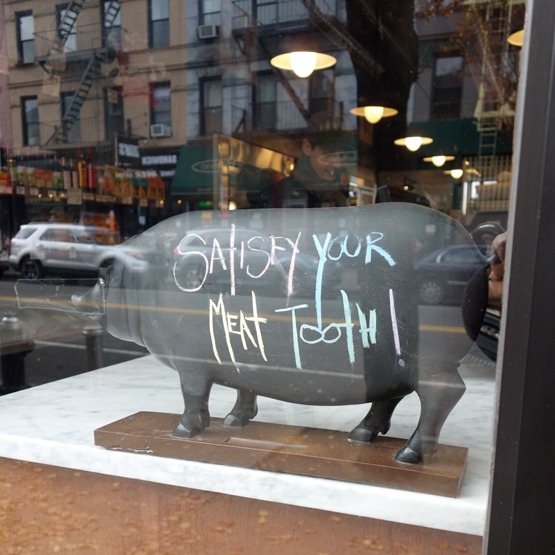
Window at Fleisher's Grass-fed and Organic Meats

Window at Fleisher’s Grass-fed and Organic Meats

dec9IT’S BEEN A LONG TIME SINCE EVERY NEIGHBORHOOD in the city had its own butcher—someone who took a whole animal carcass (or even slaughtered the animal) and then dressed and cut it into sellable meat. By the early 1960s, meat was being packed and boxed in the Midwest, for handy delivery to supermarkets in plastic wrap. (See Robin Shulman’s Eat the City for more about the fascinating history of meat production in New York City.) Some butchers have hung on in the borough, of course—places like Staubitz Market in Carroll Gardens since 1917, and Paisanos Meat Market in Park Slope, established in 1960.

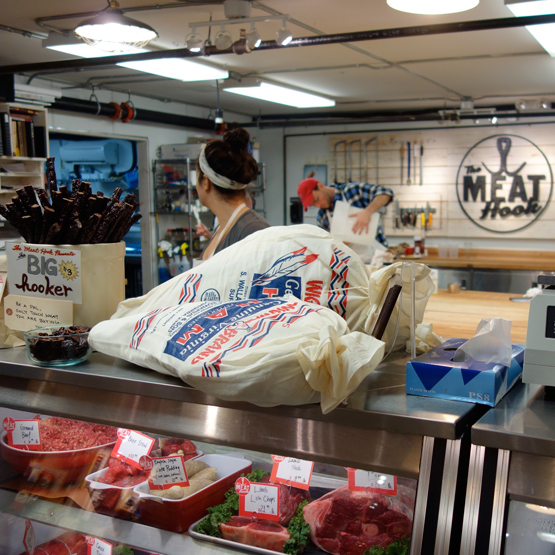
The meat counter at The Meat Hook, where you can see butchers dressing the meat.

The meat counter at The Meat Hook, where you can see butchers dressing the meat just behind.

But in the last five years or so, new artisan butchers have been popping up all over it seems—Fleisher’s, originally in Kingston, NY, now in Park Slope, too; Marlow & Daughters, The Meat Hook. For these butchers, the artisan label is well earned: This is handcrafted meat, using time-honored skills that take a lot of practice to do well. They get grass-fed and pastured whole animals from small, local farms (even a New York City farm, in the case of pigs from Queens County Farm Museum) and are careful not to waste any part, from nose to tail. They are all active in training and apprenticing new butchers—and educating the public, whether in an extensive professional program  or individual classes. Tom Mylan, of The Meat Hook (and before that, of Marlow & Daughters), apparently spent a year sleeping at the home of Jessica and Joshua Applestone, owners of Fleisher’s, in Kingston, as he apprenticed with Josh. At The Meat Hook, we met a young woman butcher apprentice who told us her grandfather had been a butcher.

meat-counter-at-fleishers

One of two meat counters at Fleisher’s, in Park Slope

Handcrafted meat will cost 15 percent more a pound, but the customer gets something  for that: meat from a sustainable source, advice on cuts that work best for different dishes—or how to cook more inexpensive cuts, and the exact cut you need, trimmed the way you want it.

If you know you’ll need a particular cut of meat for a particular day, do call ahead. Holiday orders, especially, will need to be made at least a week ahead, to be safe.

Fleisher’s Grass-fed and Organic Meats
192 Fifth Avenue, Park Slope
718-398-6666
Holiday order deadline: “as soon as possible, since things may go”
Special items: standing rib roast, rack of lamb, goose, duck, plus “all your other holiday favorites”

Marlow & Daughters
95 Broadway, Williamsburg
718-388-5700
Holiday order deadline: at least a week ahead; they may be able to do something with less notice, but no guarantee
Special items: local NY goose, pheasant, turkey (must be preordered); dry aged beef; house-made foie gras terrines

The Meat Hook
100 Frost Street, Williamsburg
718-349-5033
Holiday order deadline: Sunday, December 16
Special items: rib roast, rack of lamb, goose, guinea hen, capon, Muscovy duck, broad-breasted white turkeys, whole rabbit

Paisanos Meat Market
162 Smith Street, Cobble Hill
718-855-2641

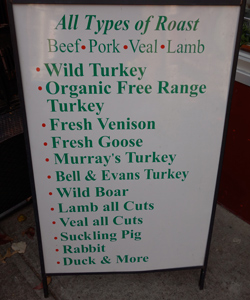
Paisanos Meat Market sign outside store advertises what's available.

Staubitz Market
222 Court Street, Carroll Gardens
718-624-0014

Sidewalk chalkboard outside Staubitz.

Photographs by Basia Hellwig. Date stamp typographic design by Joy Makon Design. The font is Cochin, by Georges Peignot, Linotype, 1912.

12 DAYS OF BROOKLYN: Families in the Winter Wonderland

Day Four  12 Views of Brooklyn
Painting by Ella Yang; see Who's Who

Painting by Ella Yang; see Who’s Who

BROOKLYN CHILDREN AND GROWNUPS are blessed to be able to play in beloved Prospect Park. The 585 acres include Brooklyn’s only lake, the lovely Lullwater. In 1861, after Frederick Law Olmsted and Calvert Vaux had practiced up on Central Park on Manhattan, the great design team moved on to Brooklyn to start work on their masterpiece. There’s plenty of credit to go around,  but some say the true father of the park was James S. T. Stanahan, city parks commission from 1860 to 1885, who championed its creation and expansion. (Stanahan also favored the merger into New York City, which some grumblers still say was the very, very worst possible thing to happen to Brooklyn – until the Dodgers left town, that is.) This snow scene, like yesterday’s, dates from the spectacular snowfall of 2009. The artist who captured it, Ella Yang, explains, “We finally had enough snow to transform Prospect Park into a winter playground. I was taking a somewhat slippery walk through the Park when I ran across this family heading home after an afternoon of sledding. The sun was low and threw pinks, ochres and purples across the different snowy surfaces. Great fun to paint!”