How to Eat Those Veggies No Matter What

When your power’s out for who knows how long, you start to appreciate some of life’s simpler things. You realize that canning is civilization’s third-greatest invention, right behind 10-speed bicycles and grandma’s knitted sweaters. Artisanal, DIY types might have Ball jars full of home-grown preserves in their well-stocked pantries, but if you’re me you head directly to the canned-green-bean aisle at Key Food.
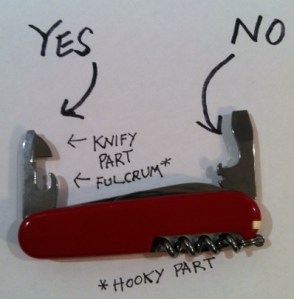
How to recognize the can opener on your Swiss Army KnifeOpening a can without power is no problem to me these days. When my electric can opener shot craps—it was during the Great New York City Blackout of ’02 or ’03 when it suddenly stopped working—I trashed it and devolved to the manual one with the butterfly handles that turn the circular blade that presses against the gear that presses against the can’s lip.

Then I discovered one on my Swiss Army Knife. Within a few minutes and a couple of failed tries that resulted in minor wounds, I figured out how it works—and simultaneously realized that this is undoubtedly how people did it in the old, old early days of American canning. And now I’m passing on that wisdom to you.

Better pay attention: I hear a nor’easter is headed our way on Thursday.   [Read more…]

A Guys’ Guy’s First Step Down the Slippery Slope to …

…CANNING CLASS.

Author Phil Scott in disguide as survivalist

“New York Magazine may think artisanal pickles are ‘twee,’ but I don’t. Not one little bit.”
(Photo: Mollie Ann Smith)

I’m a five-foot-eleven-inch, 175-pound manly male, comfortable climbing Kilimanjaro or sleeping on the cold metal floor of a transport headed to or from Afghanistan, comfortable surviving on MREs. I once tried to have The Food Channel removed from my cable package and replaced with The Manly Adventure Channel. Last time I stepped foot in a kitchen was to nuke a couple of hot dogs. Otherwise it’s the room I have to cross through to get from my bedroom to the bathroom. And now because I’m always looking to cut costs, I’m signed up for what could be one of the most complex operations known to cooking kind—canning. And I’m the only guy in the class.

Catherine, who’s teaching the canning class at the Brooklyn Society for Ethical Culture, explains that it’s been a part of her life for her whole life. Her grandmother’s last words were, “Well girls, I guess we won’t be canning this year.” At the beginning of the two-hour class she says that anything can be pickled, from green beans to eggs. Yeah, eggs. They taste gross, but they’re still pickleable. That’s probably why they’re usually only found in bars.

Us novices, we’re going to start with green beans. Not a big fan of green beans.

Catherine really emphasizes exactitude. This whole canning business isn’t so much an art as a precise chemistry problem. “Follow directions,” she says. “It’s really easy to get botulism.” For those who haven’t had botulism, or botulitis, or whatever it’s called, the stuff’s pretty toxic. [Read more…]

Brooklyn Makers at Martha Stewart’s American Made Show

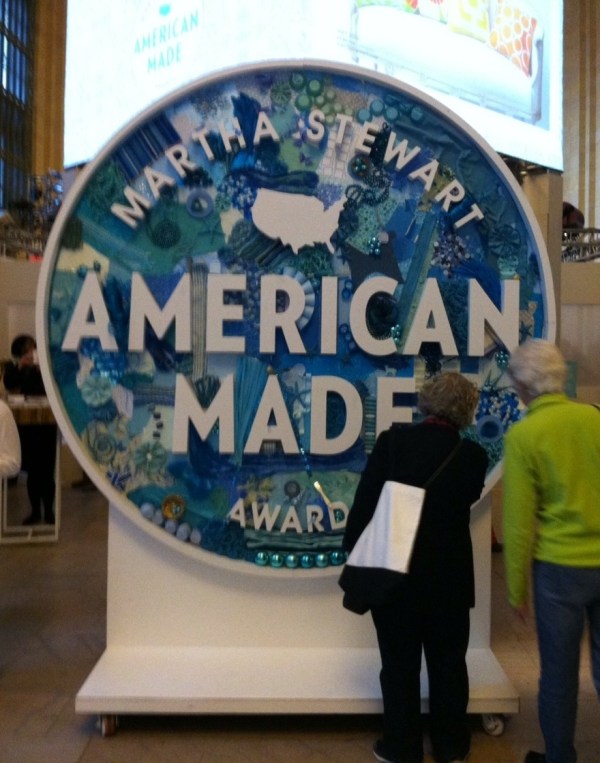
THE DETAILS: A huge American Made sign in Grand Central Station gets
a going-over by Brooklyn Artisan inspectors. (Photos for BA/Mollie Ann Smith)

MY FIRST ENCOUNTER WITH THE UNDERGROUND BUZZ about Martha Stewart’s big Grand Central Station event is literally that – underground: in the food court, where I am buying a quick chicken caesar. Something (the Brooklyn Artisan tote bag over my shoulder?) must’ve tipped off Maria who is taking food orders at Tri Tip.

Martha Stewart's American Made was a big event for Maria, working at Tri Tip.

In the food court, Maria is excited that Martha Stewart’s upstairs.

“Have you been up to the Martha Stewart exhibit? It’s really fun,” she confides. “I made a key chain and I’m going back after my shift to make a necklace.” Usually she knits or crochets, but she says she has gotten a bunch of new ideas from the show. No, Maria didn’t see Martha Stewart in person, but to know she was there was…a good thing.

Up in Vanderbilt Hall, one long line snakes around to the silkscreening of custom tote bags, another waits on the food tastings, and a third crowd will attend the next class session in a screened off area behind the silver Toyota. Toyota, Westin Hotels, and JCP (as in James Cash Penny) are among the event sponsors. The craft tables are on the eastern side of the hall along with the UPS and Avery sponsor/information tables.

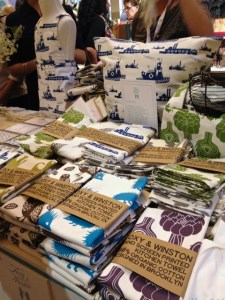
Foxy & Winston towels designed by Jane Buck, Red Hook, Brooklyn

Brooklyn’s Red Hook is the creative home of Jane Buck’s whimsical designs. (BA photo: Joy Makon)

Brooklyn is well represented at the craft tables. Red Hook’s Foxy & Winston display, for instance, shows tea towels, children’s aprons, pillow covers, wispy neck scarves, and letterpress cards printed with whimsical designs by Jane Buck: artichokes, hedgehogs, paddleboats, tugboats, peacocks.

Jane tells us her designs are printed in India on Indian cotton, and then the bolts are cut and the pieces sewn in the USA. She herself is an import, she mentions. As an art history and fashion student in London for five years, she was making a living by waiting tables. She met and was courted by a New Zealander. When his English visa ran out, he had to go home, and the closest spot to her he could find to live was New York. He is a wine importer. They traveled back and forth and then made the leap: 13 years ago on October 1, they were married in Central Park. It’s a love story that stretches halfway round the world and ends up in Brooklyn.

Jane Buck set up her design studio in Red Hook and opened a little retail area in the front. Now through that store and other outlets, her business has enough volume for her to afford an assistant three days a week. “Before that,” she says, laughing, “‘I’d be working in the back and when someone came in, I’d have to pop out from behind the curtain: ‘Hello, may I help you?'” [Read more…]

Live from Gowanus Girls Indie Mart


It’s a beautiful day and the crowd is fun. We’re enjoying The Fat Beagle pulled pork and brisket sliders, along with squash soup, sangria and Brooklyn brand East India Pale Ale. Site is right by the Carroll Street Bridge—will walk over that next just as soon as we finish the red velvet twinkies from Trois Pommes. Today and next Saturday.

Better Than a Petting Zoo? The Kings County Fiber Arts Festival

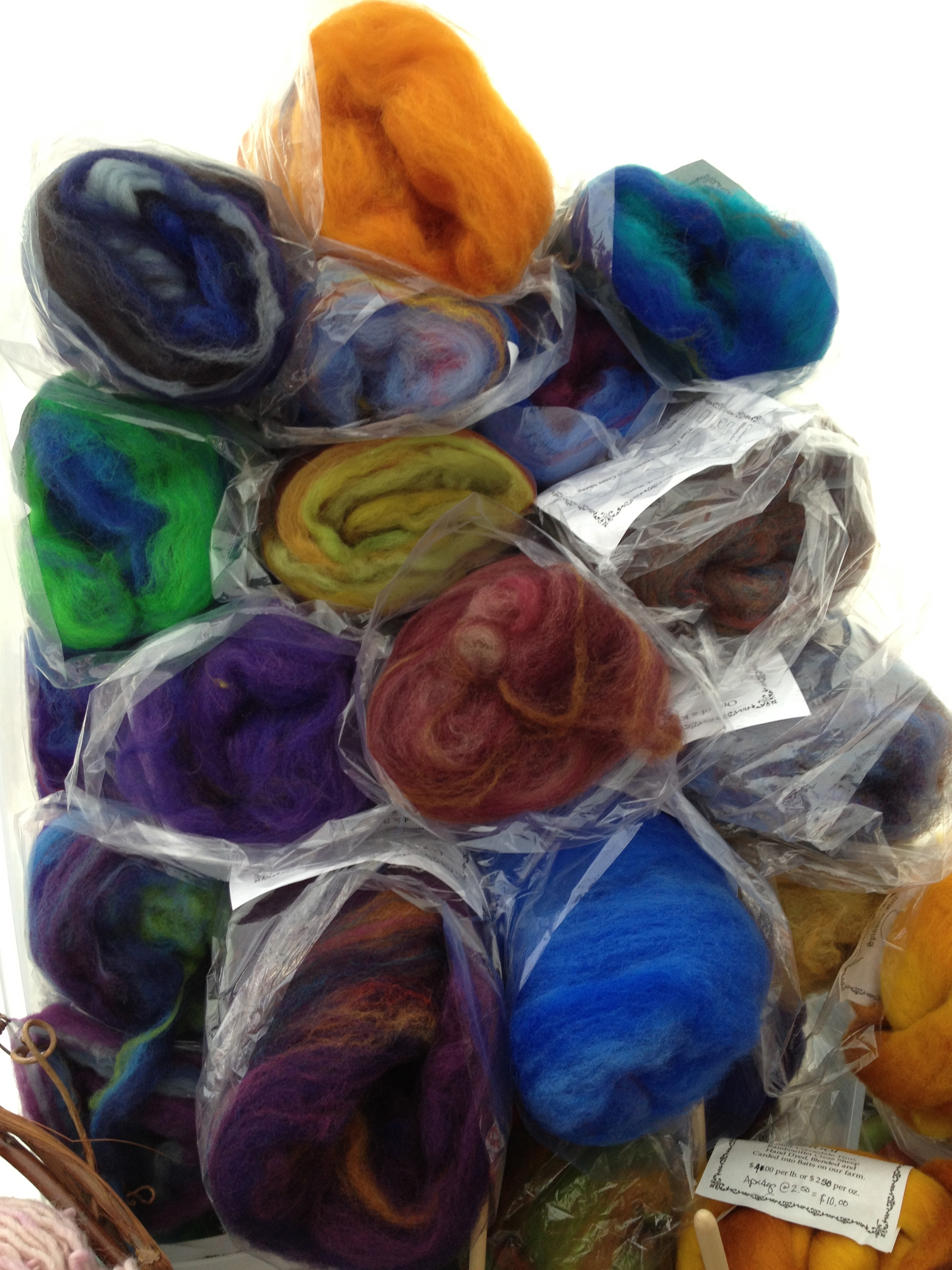
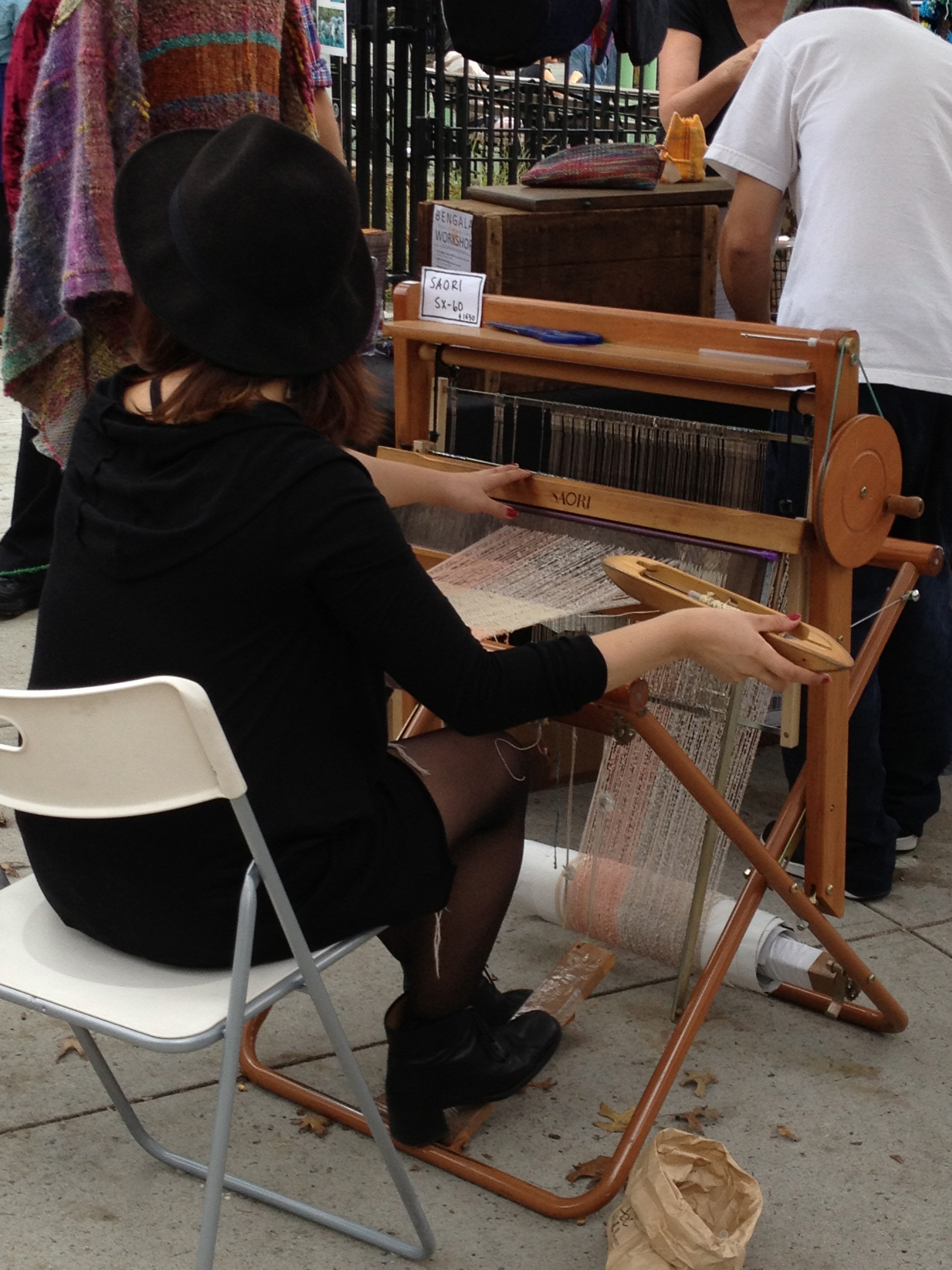
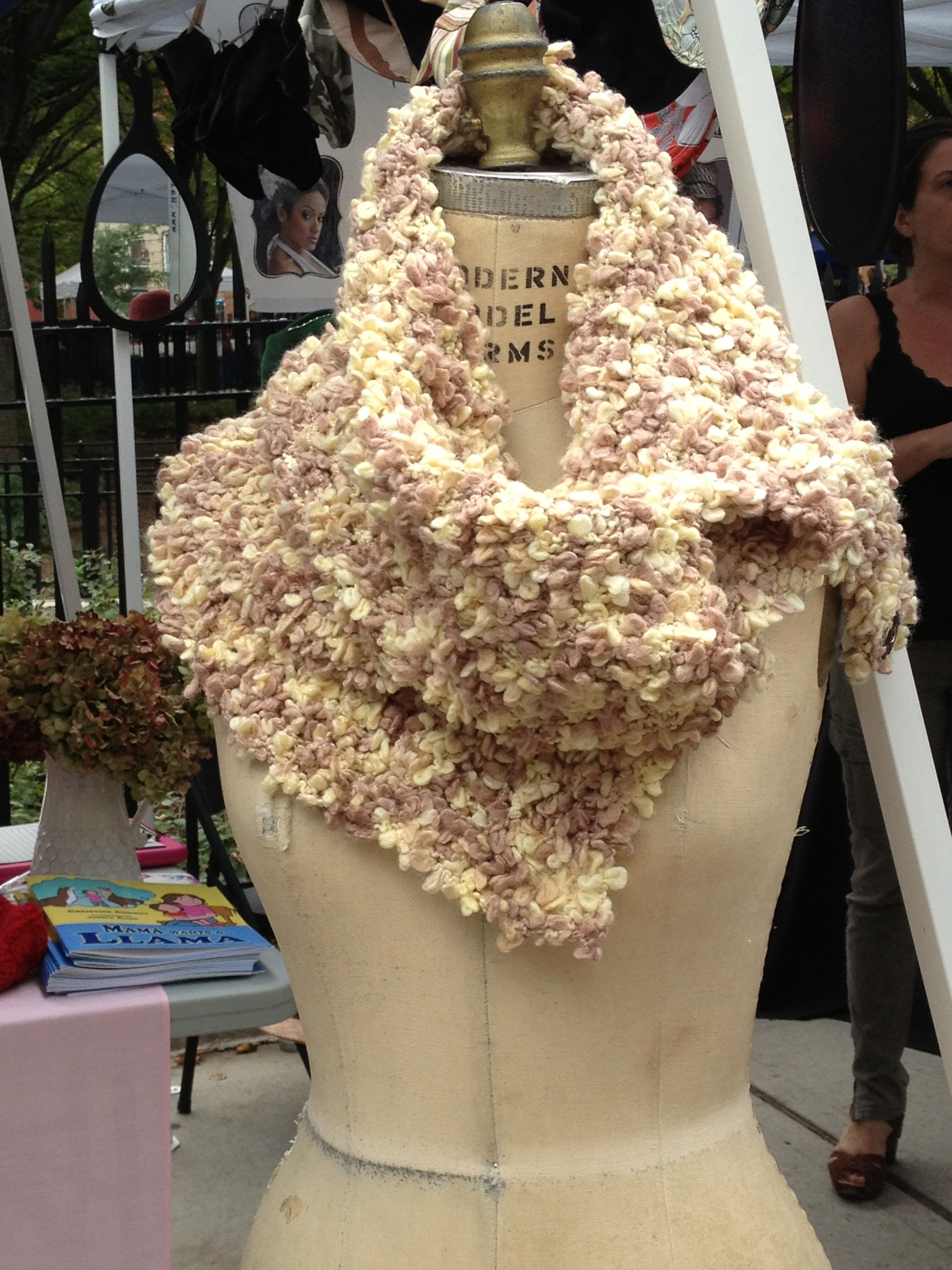
Kings County Fiber Festival was a visual feast Saturday afternoon at the Old Stone House on Fourth Street between 4th and 5th Avenues, Park Slope. Lots of wooly things to purchase, learn about and pet, including unspun wool, soft-as-air Angora, and two huge Angora bunnies!

Understanding the Hollywood Smoke

I WAS REMINDED by John J. Kochevar’s comments in An Artisanal Author Confronts His Pencils of how many traditional skills are fast disappearing these days. Here is another.

Montgomery Clift shows the classic cowboy roll on the set of Red River.

How to Roll a – uh, a Cigarette like a Pro.

The intent here is not to skirt Mayor Bloomberg’s efforts to ban public smoking in New York City , but rather to address the high cost of a pack of cigarettes as well as record some ways of working with one’s hands once glamorized by Hollywood. 

Rolling  a smoke is a two-handed operation (see inset). Remove the cigarette rolling paper from its pack. Gently spread the paper horizontally,  and delicately grasp it between the tips of both index fingers and thumbs, roughly at the paper’s midpoint. The gummy strip should run along the top facing you. Carefully—yet  confidently—roll the paper back and forth three or four times with your thumbs and index fingers until it forms a U, with the gummy strip higher than the un-gummy side.

Gently now, gently, very gently, grasp the paper by one end. Remove one hand and take a pinch of tobacco. The tobacco should not be lumpy (and chewing tobacco should not be substituted. Nor should hamster food or your grandmother’s loose black tea—you will be discovered and publicly humiliated). [Read more…]

October 1 Already? (One Camera’s Eye on Coney Island)

I don’t want summer to end just yet. Here’s a photo-recap from today’s trip to Coney Island.

Colorful images from Coney Island

A lot of work has gone into updating Coney’s image.
Very evident this season on the boardwalk and somewhat on the nearby avenues.

Artworks by the aquarium

Art at the Aquarium. Bottom: The First Symphony of the Sea, by Toshio Sasaki, 1991.
Cast concrete terrazzo and ceramic tile. Commissioned by the
Department of Cultural Affairs, Percent for Art Program.

old and new buildings
Old and new contrasts. Will anyone ever do anything with this old bathhouse
structure? Bottom right: My Coney Island Baby, by Robert Wilson, 2003.
Silk-screened glass brick. Commissioned by the MTA Arts for Transit.

the beach

And of course, the real reason we go…

How to Shave with a Brush and Soap in Today’s World

EVER NOTICE HOW some people can smuggle an AK-47 in their checked luggage but you can’t sneak a can of shaving cream past alert Transportation Security Agents without them tossing that and your toothpaste in a large plastic garbage can? Well, I have. Also, and this is more important, I’m so cheap I won’t even pay attention.

That’s why, after wasting my third can or so in the TSA trash, I’ve taken to shaving with the old-fashioned brush and shaving soap. Not only have I never been wrestled to the ground and handcuffed by alert agents trying to confiscate my beaver-hair shaving brush, but past the initial investment I’m pretty much home free.

Plus – and this is a big plus – I’ve found it gets my day off to the proper artisanal start, taking this time to work with my hands. So here’s how you pull off that close shave the authentic, old-fashioned way.

BB00 96.tif

The man seen shaving here is not Phil Scott, nor does he play him on TV.

1. You’re going to need a shaving brush, a ceramic mug of some sort, and a bar of soap. I prefer a thick china mug with an old Air Force logo, but you can maybe find one with a Brooklyn Dodgers logo or a Yogi Berra quote. Whatever you choose, the majority of the mug must be a light color.

And don’t forget the razor. That’s really the most important part, the razor. I prefer the triple-blade types. Disposables blow. Straight razors are dangerous and scary and you’ll never get one through an airport anyway.

2. Place the soap inside the mug somehow. I prefer to nuke the combination in the microwave (no need to carry this authenticity thing too far) for maybe 20 seconds until the soap gets a little soft, then flatten it with my thumbs into what is called a soap puck. You’ll have to do this each time you add a new bar of soap, which means maybe twice a year. (See, it’s already less expensive than canned shaving cream.)

Even toss in soap scraps from the sink or shower. If your mug’s dark (see no 1. above) it will block the magic hot rays that are supposed to turn the soap into a soft goo. Same with metallic elements, like gold rims. I’m not sure why, just take my word for it.

Now you’re ready to shave! Fill the mug to the top with hot water, and work up a lather with the brush. Brush the lather all over the area destined for shaving. Really work it in there, too – coating those whiskers makes for a smooth shave.

3. It is not strictly necessary to don long pants, a dirty wifebeater, and suspenders that you can drop off your shoulders while you lather up, like in those early episodes of Mad Men. Today you can do this in boxers, briefs, boxer-briefs, or a towel, or less.

4. Scrape all the soap lather off with the razor. And there you have it! You’re done! And your face is smoother than if you’d used shaving cream, or an electric razor.

NOTE: A styptic pencil is what you need to control the bleeding.

Executive Editor Phil Scott has written seven book and numerous articles for national magazines.

Just Try Holding That iPhone to Your Ear While You Type

FROM BROOKLYN’S COMMUNITY OF ARTISANS I’ve learned how important it is that skills with traditional tools should not become lost arts. At first it was hard to apply this insight to my own work, for I am a journalist. But reading John J. Kochevar’s recent piece on artisanal writing with pencils inspired me.

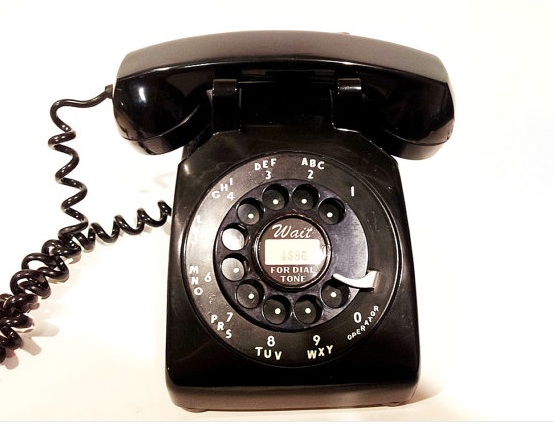
This vintage rotary in working order sells in the neighborhood of $50 at Etsy.com.

Here is the missing manual for another traditional reporter’s tool. Master this, and you step into a stream of greatness: Edward R. Murrow, Woodward and Bernstein, Lois and Clark.

How to Dial a Rotary Telephone

Before keypads, telephones used to come equipped with dials. Thus the expression, “dial the telephone.”

1. The dial is the round object in the center of the phone at right, with a series of evenly spaced holes running along the perimeter of the disc.

2. Insert your index finger into the hole that corresponds to the number or letter you wish to “dial.”

3. Move the finger in a clockwise fashion until it rests against a thin stop, usually located on the right side of the dial. Remove your finger, and the dial automatically  returns to its original position.

4. Perform the same operation for the subsequent numbers that you wish to dial until you‘ve completed dialing the entire number. Once connected to your party, remember to keep your fingers a safe distance away from the dial to avoid service interruptions.

Note: A rotary dial telephone can not be used for texting.